Drum notation symbols
— visual guide.
A complete guide to reading drum sheet music. Every note head, staff position, rhythmic value, and special symbol explained with clear descriptions.
Note Heads
Normal note
Standard hit at normal velocity. Used for most drum voices.
Cross note
Hi-hat, ride cymbal, or other metallic sounds. Placed on specific staff positions.
Ghost note
A normal notehead wrapped in parentheses. Very soft hit, barely audible — felt more than heard.
Open hi-hat
An × notehead with a small ○ above it. Let the hi-hat ring until the next closed hit.
Staff Positions
Crash Cymbal
Crash sits on a ledger line above the staff, higher than the hi-hat.
Hi-Hat
Closed hi-hat sits just above the top line with an × note head. A small ○ above means open.
Ride Cymbal
Ride sits on the top line of the staff.
High Tom
High tom in the top space of the staff.
Mid Tom
Mid tom on the middle line of the staff.
Snare Drum
Snare sits in the third space from the bottom. The most common voice.
Floor Tom
Floor tom in the second space from the bottom.
Bass Drum
Kick drum in the bottom space of the staff.
Hi-Hat Foot
Hi-hat foot pedal shown below the staff with × note head.
Rhythmic Values
Whole note
4 beats. Rare in drum notation but used for sustained cymbal rolls.
Half note
2 beats. Used for longer ring-out notes or half-bar patterns.
Quarter note
1 beat. The basic pulse unit in most time signatures.
Eighth note
Half a beat. The backbone of rock and pop drumming.
Sixteenth note
Quarter of a beat. The grid resolution for most detailed patterns.
Special Symbols
Accent
Hit harder than normal. An articulation mark written above the note, not a note head.
Fermata
Hold the note longer than written. Used at the end of phrases or for dramatic pauses.
Repeat signs
Play the section again. Essential for looping patterns.
Slash notation
Repeat the previous beat or bar. Keep playing the same pattern.
Roll (tremolo)
Slashes on the stem mean a roll — rapid repeated strokes. A z through the stem means a buzz roll.
Grace note
Small note before the main note. The grace note is softer and leads into the primary stroke.
See notation come alive
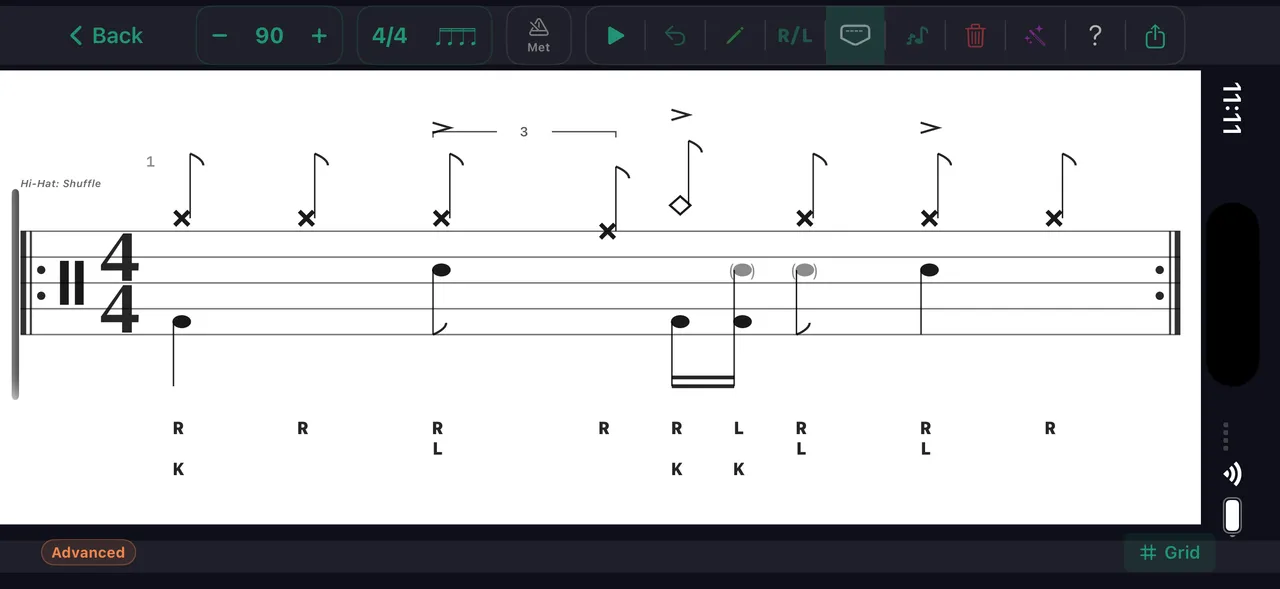
DrumShed's notation view renders these symbols in real time as a pattern plays, the playhead moving note to note. When the × on the top line sounds like a ride and the dot in the bottom space sounds like the kick, the page stops being a puzzle. The same reference ships inside the app as the Reading Notation help screen, with every symbol rendered live by the notation engine.
Practice this in DrumShed
Coming to iPhone, iPad & Android
Capture it. Shed it.
Keep it.
Watch notation play in real time.