Stuck playing
the same grooves?
You sit down, and your hands go where they always go. Same backbeat, same 90 BPM, same fill into the chorus. Here's a week of practice that points your hands somewhere new.
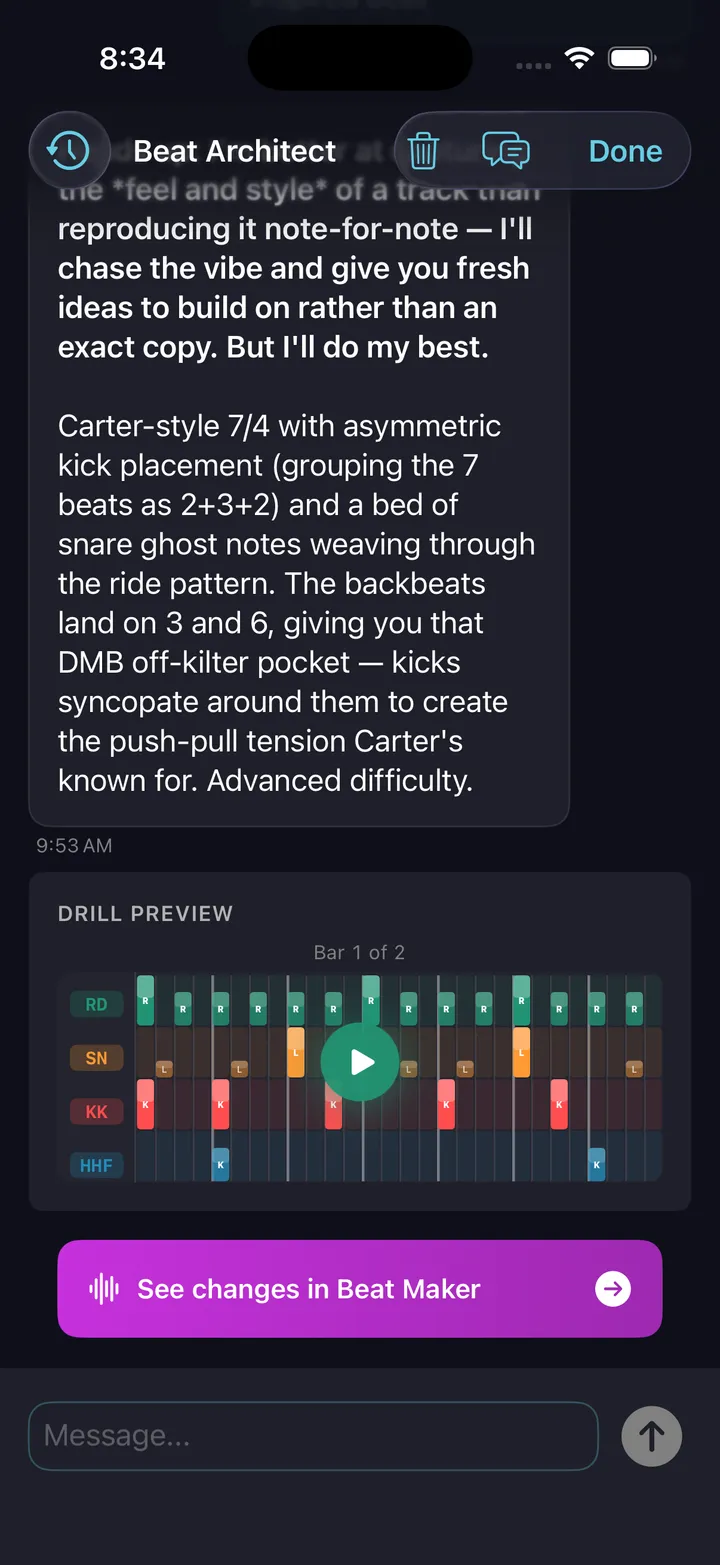
Know the shape of yours?
Most ruts are just the path of least resistance worn into your hands. You stop pushing where you stop noticing.
The 90-BPM problem
Your hands warm up at one tempo and never leave it. Faster feels sloppy, slower feels pointless.
The same fill
You land on the same crash, every time. Even when the song doesn't want it.
The same one bar
Four bars of groove, one bar of the same fill. Every time. You know the shape.
The metronome-to-jam pipeline
You open the metronome, get bored, end up jamming to a record. The discipline gets skipped.
A week out of the rut
One drill, one new pattern, or one new genre per day. DrumShed picks the target so you can't default to what you already know.
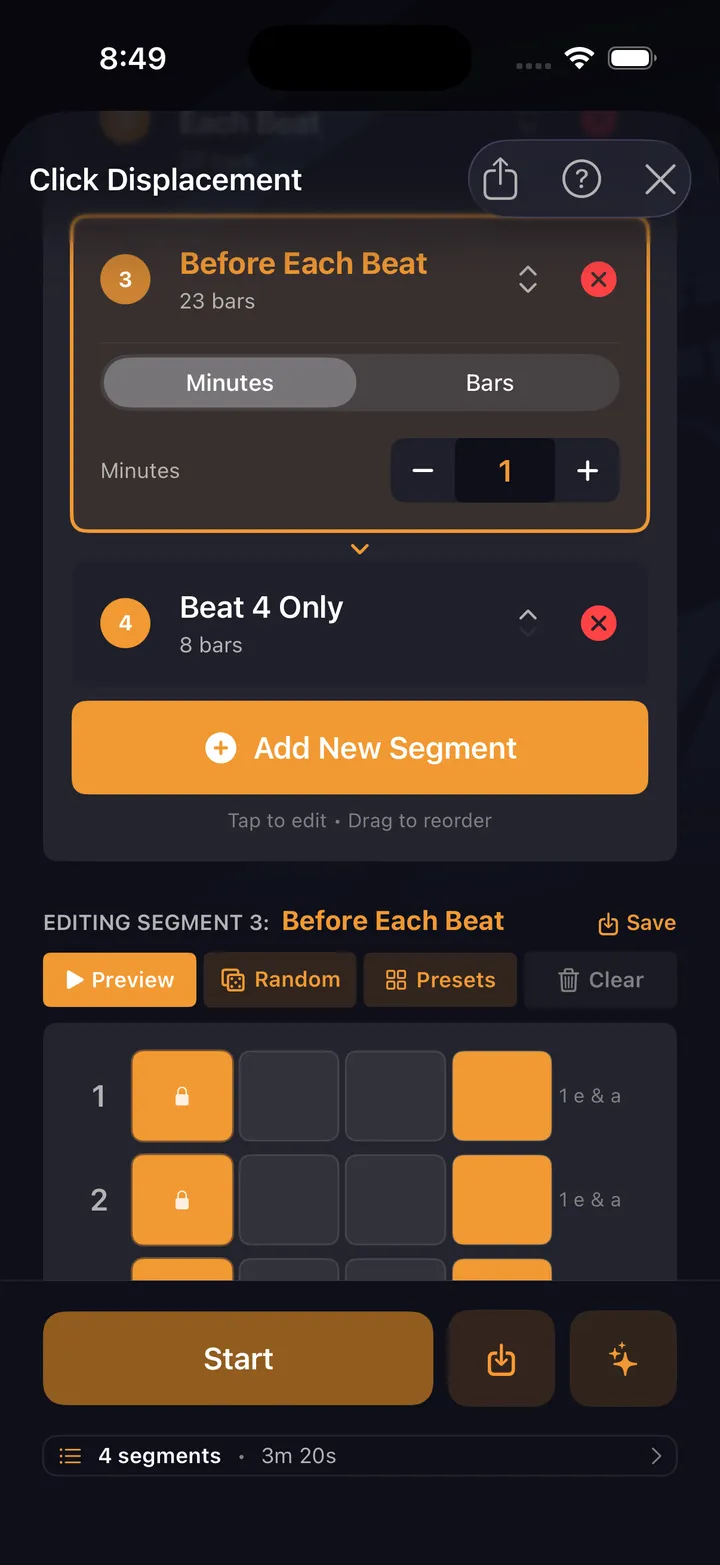
Click Displacement
Move the click off the downbeat. Force yourself to hear the &s, the e, or the a as the pulse. Twenty minutes will rewire how you hear time.
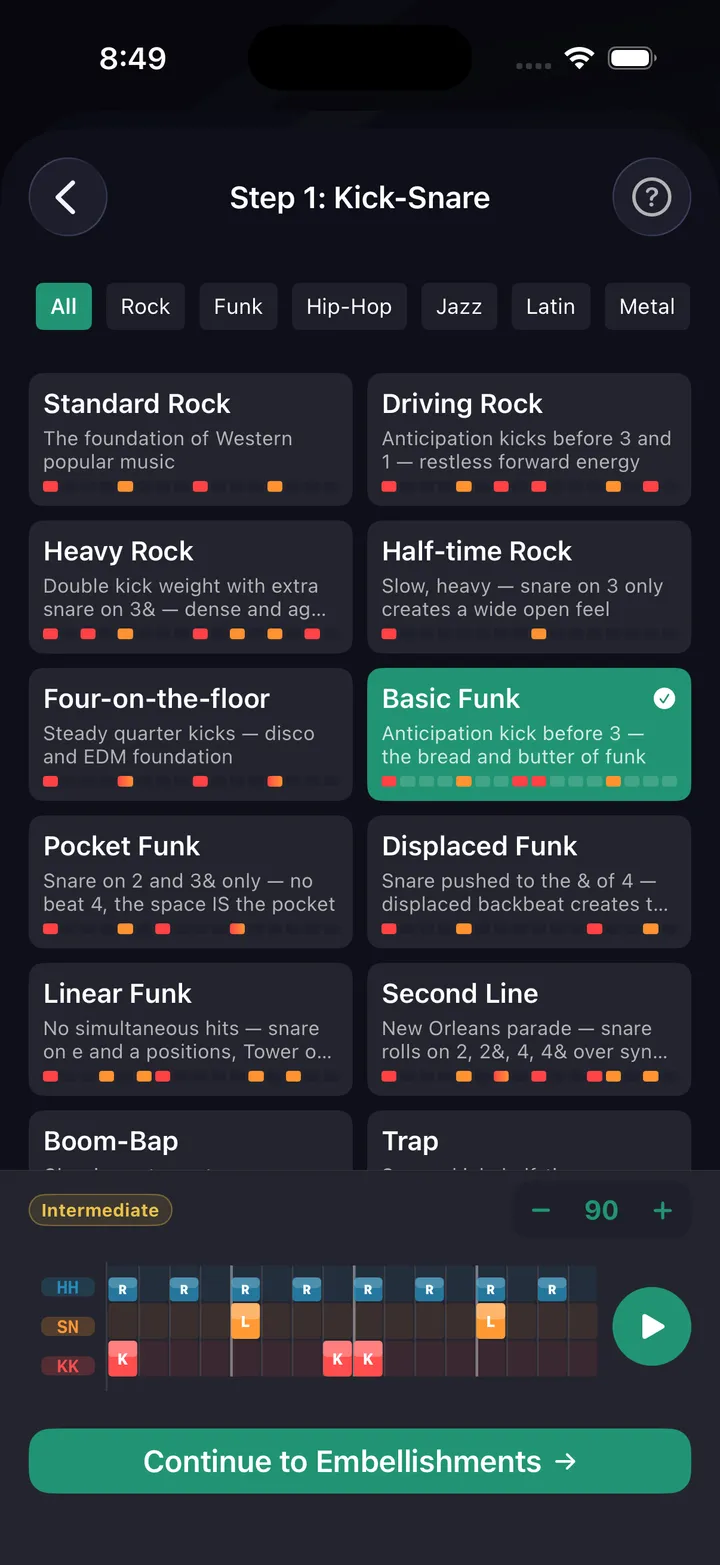
A genre you don't play
Open Beat Builder and pick a genre you'd never naturally choose — gospel, Latin, R&B. Let the wizard build it. Slow it down. Drill it.
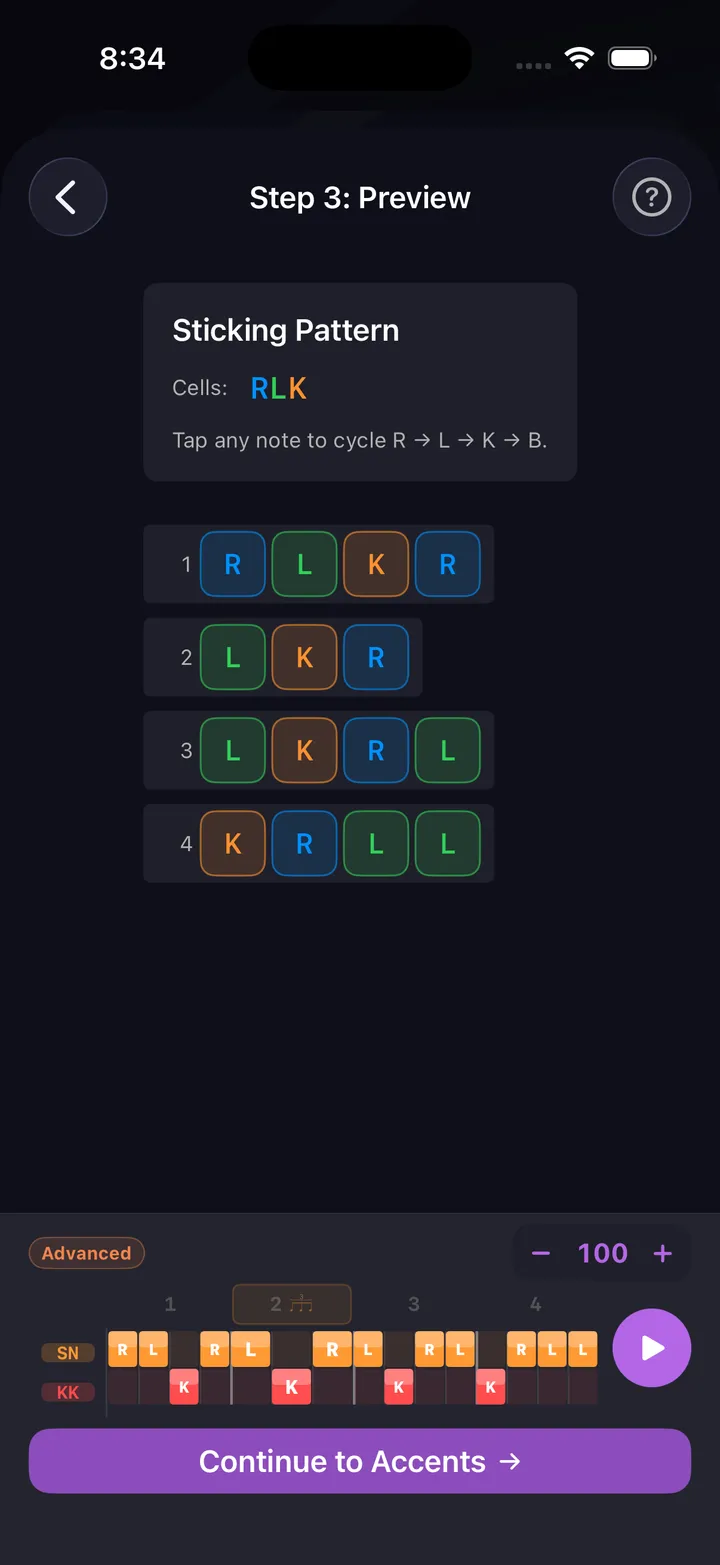
A sticking you've never tried
Fill Builder. Pick a six-stroke or paradiddle-diddle you don't know. Loop it slow. Add accents. Route it across the kit. Today's your "huh, that's new" fill.
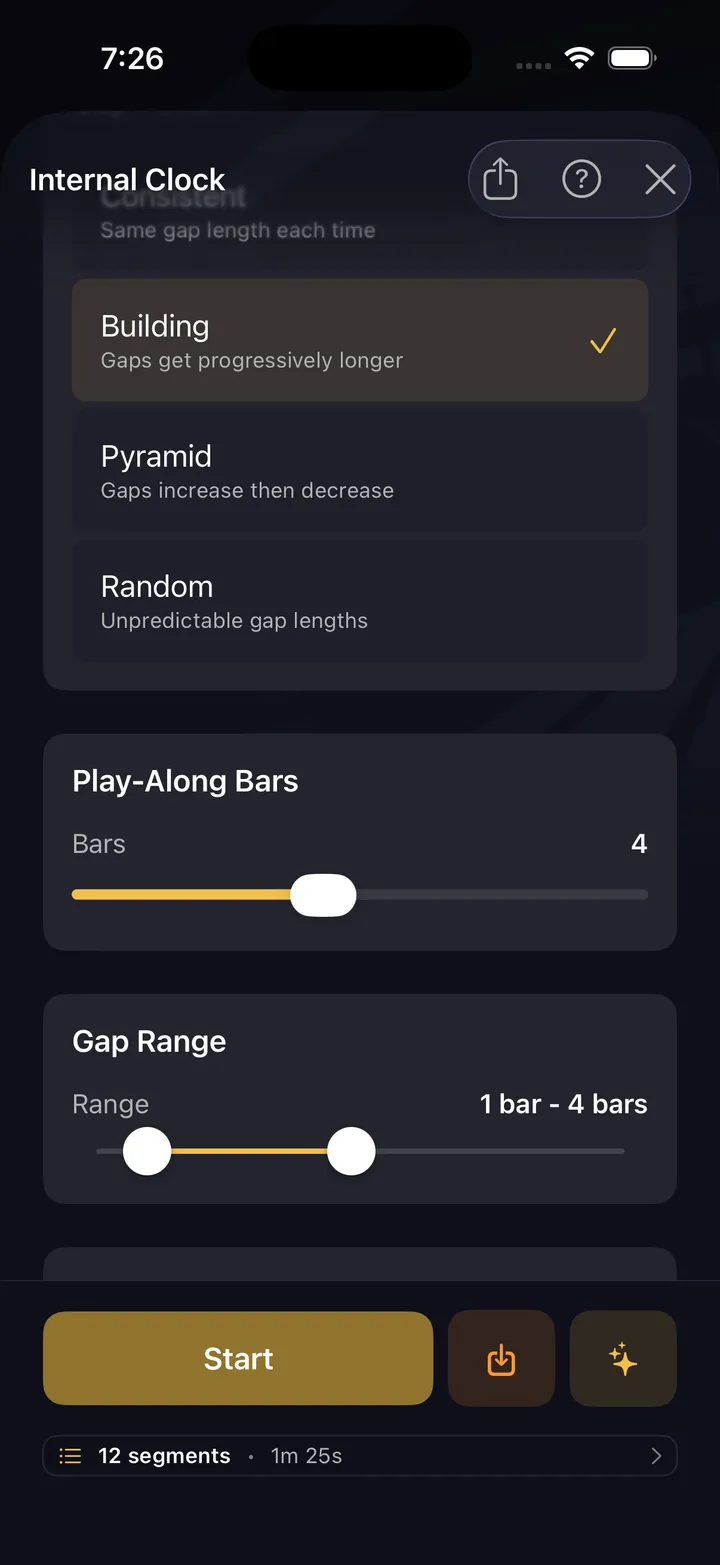
Internal Clock
The metronome cuts out for bars at a time. You keep playing. Did you drift? This is the drill that proves your time is yours, not the click's.
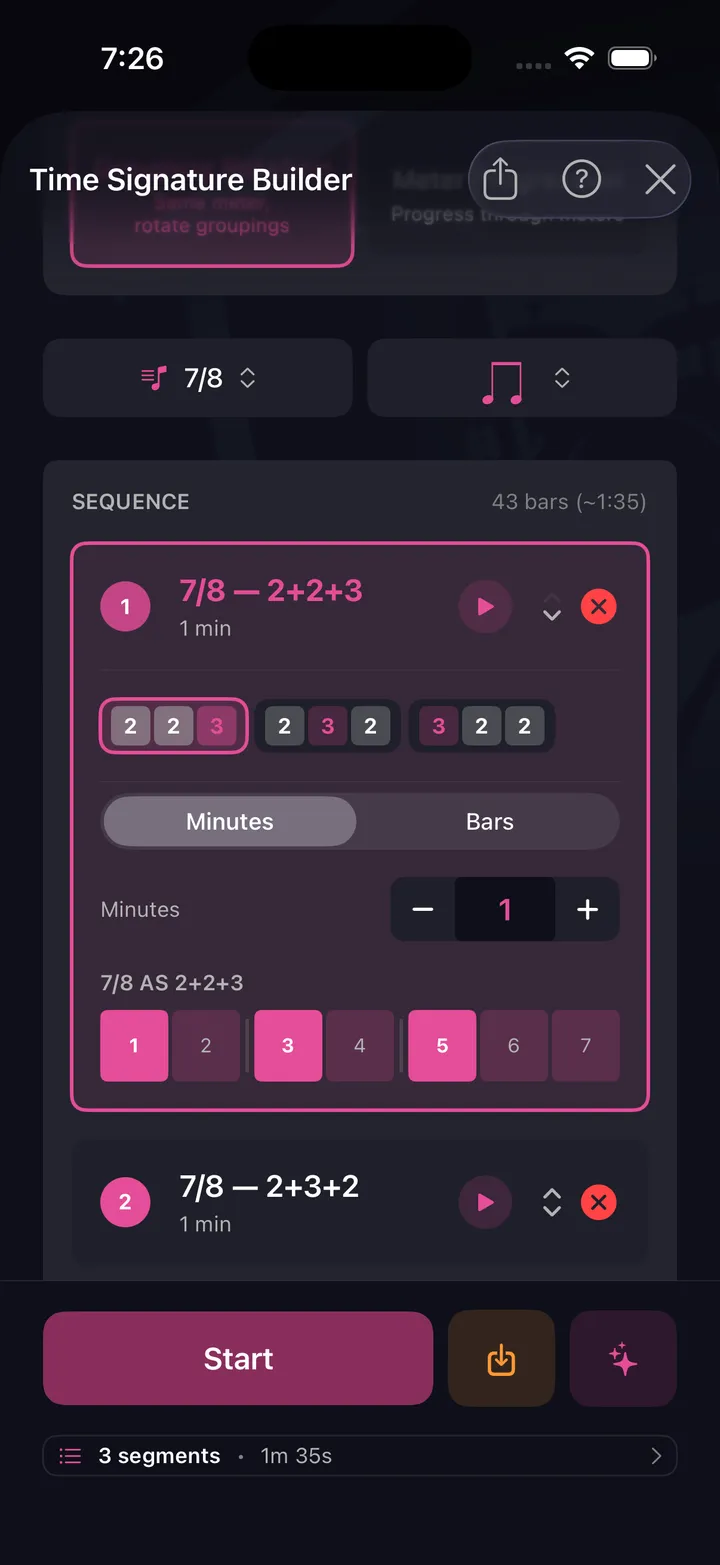
Odd time
Build a beat in 7/8 or 5/4. Your hands will resist — that's the point. The Time Signature Builder breaks the meter into groupings so the math becomes feel.
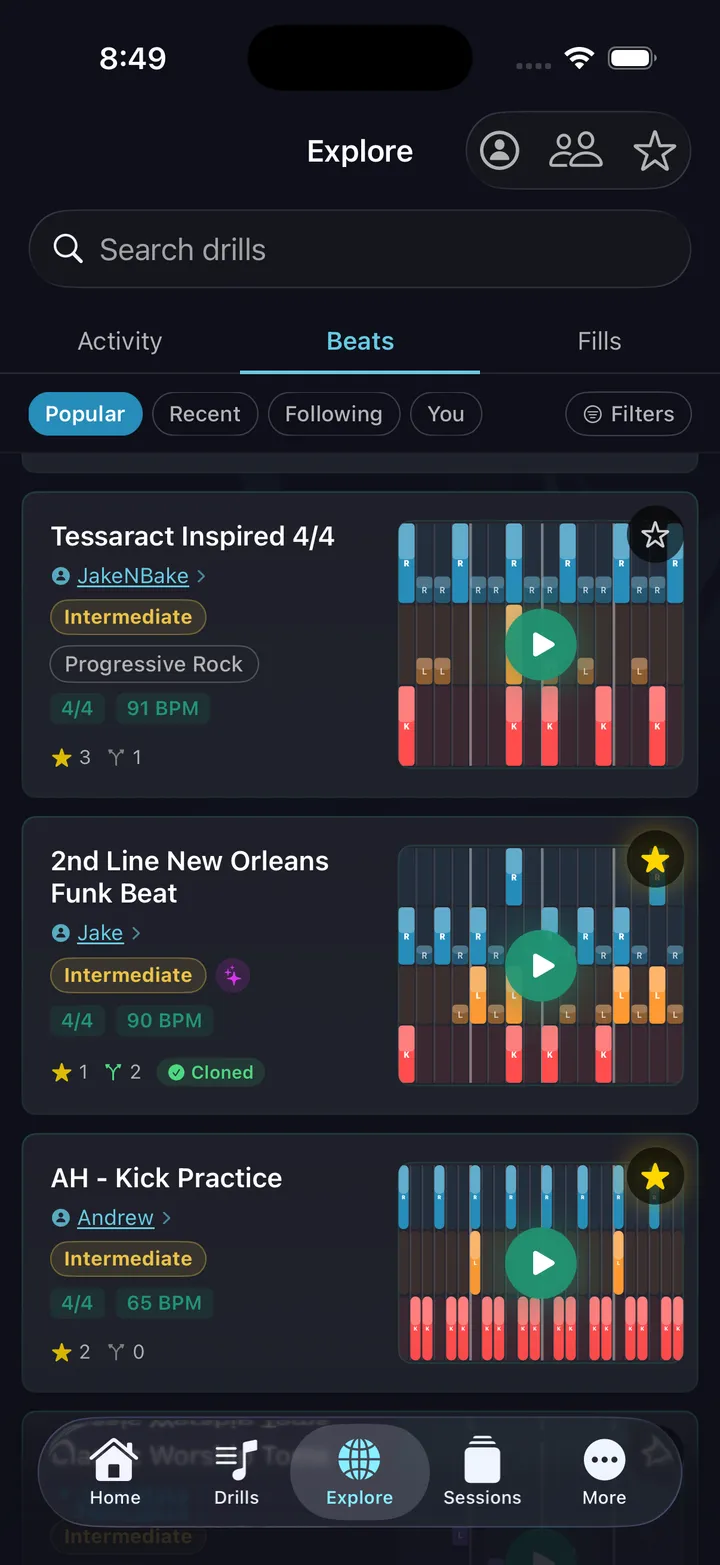
Steal something
Open Explore. Filter to a difficulty above where you sit. Clone the first beat that catches your ear. Drill it for ten minutes. Ideas are free here.
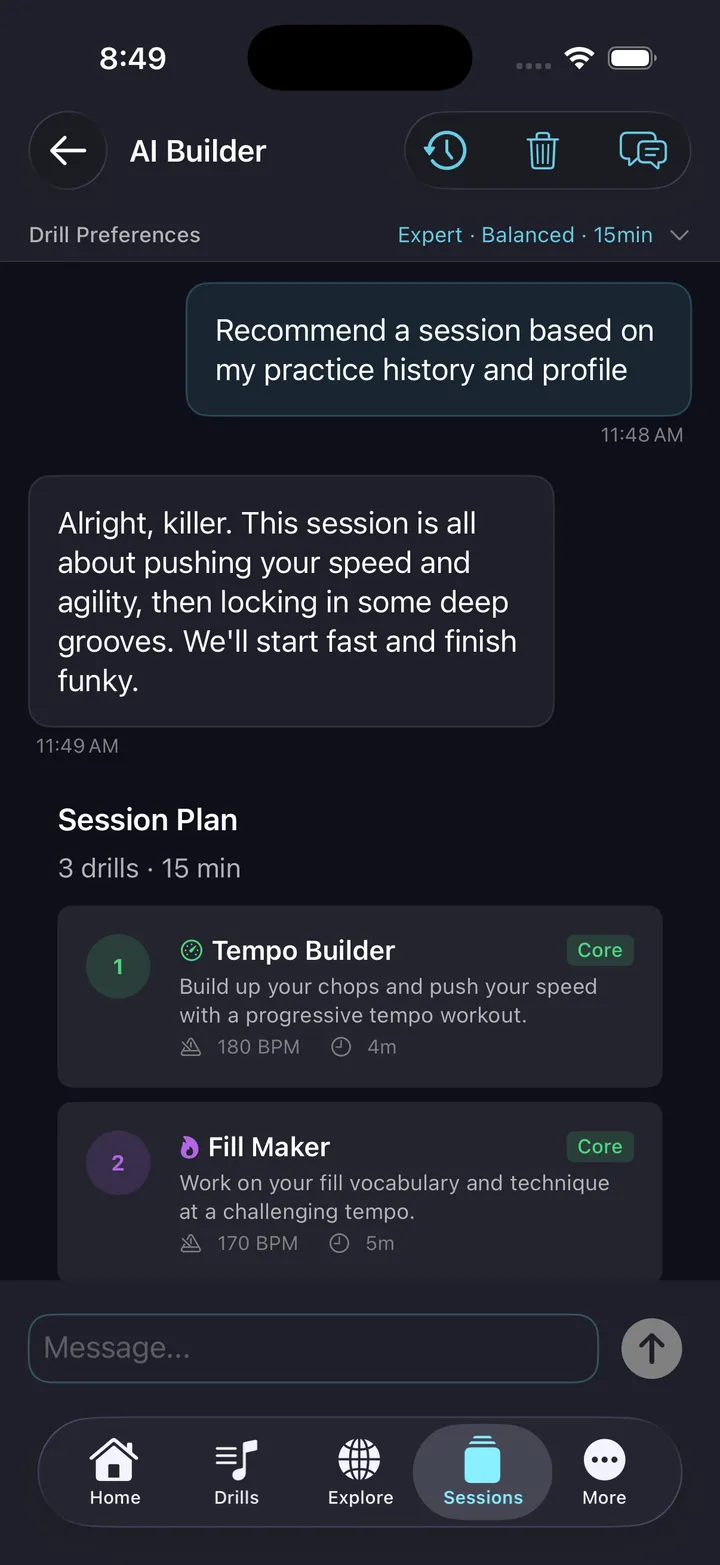
One hands-free session
Stack the week into a single AI-built session. Press play. Voice cues take over. Twenty minutes later you've practiced six things you never would have on your own.
Four ways DrumShed breaks the loop
Each one hands you something your hands wouldn't have reached for.
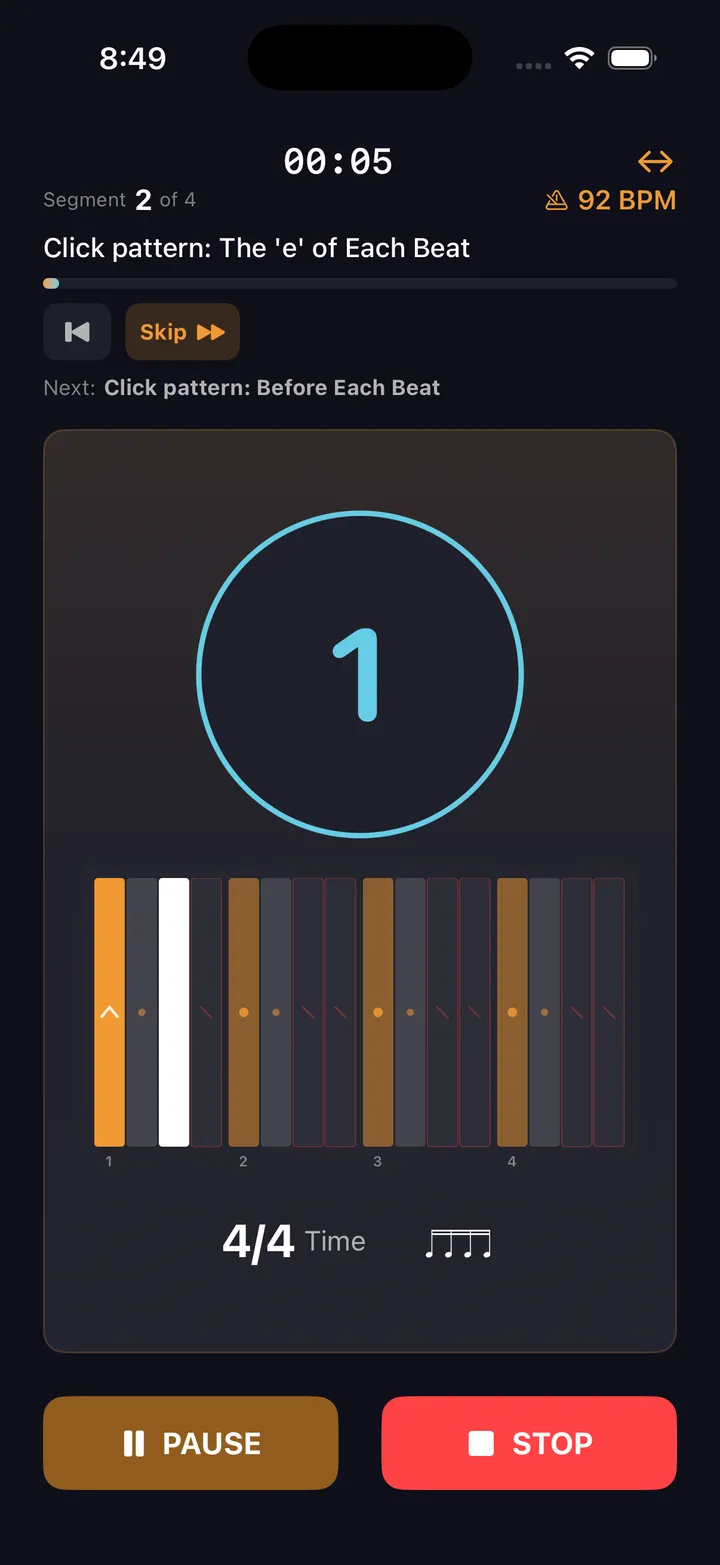
When the click stops landing on 1.
Drag the metronome off beat 1 and onto the &, the e, or the a. Now you have to generate the pulse internally and play against the click instead of along with it.
It's the single drill most drummers credit with rewiring how they hear time. Twenty minutes a day for a week and your default sense of "where the beat is" gets a serious upgrade.
Describe a groove you've never played.
Not "generate a beat." Tell it: "a half-time funk shuffle at 76 with ghost notes on the snare and a dropped backbeat on 4." It comes back musical and playable — the groove you described, ready to drum.
Then iterate: "add a flam on beat 3," "swing the hat," "make it harder." Every result is editable. Drill it the moment you like it.
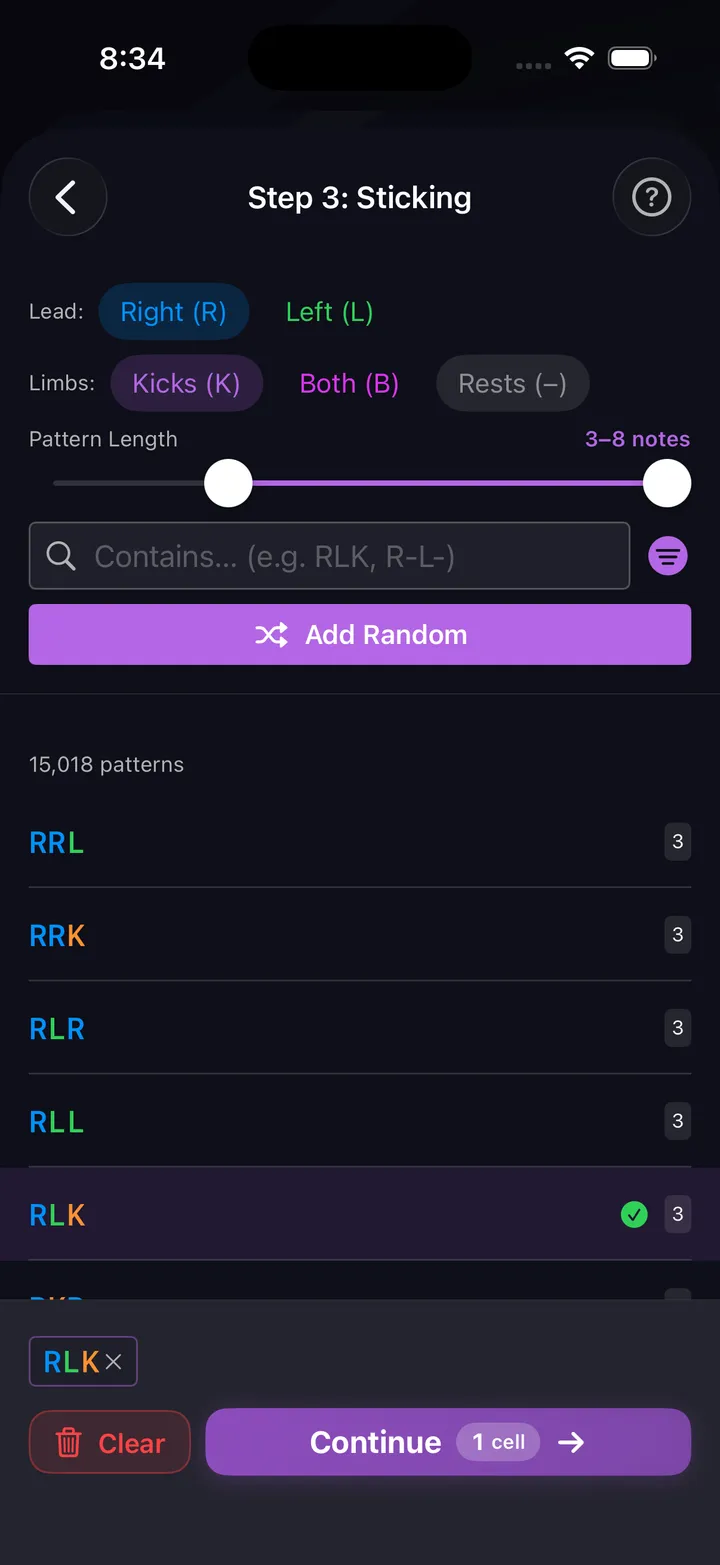
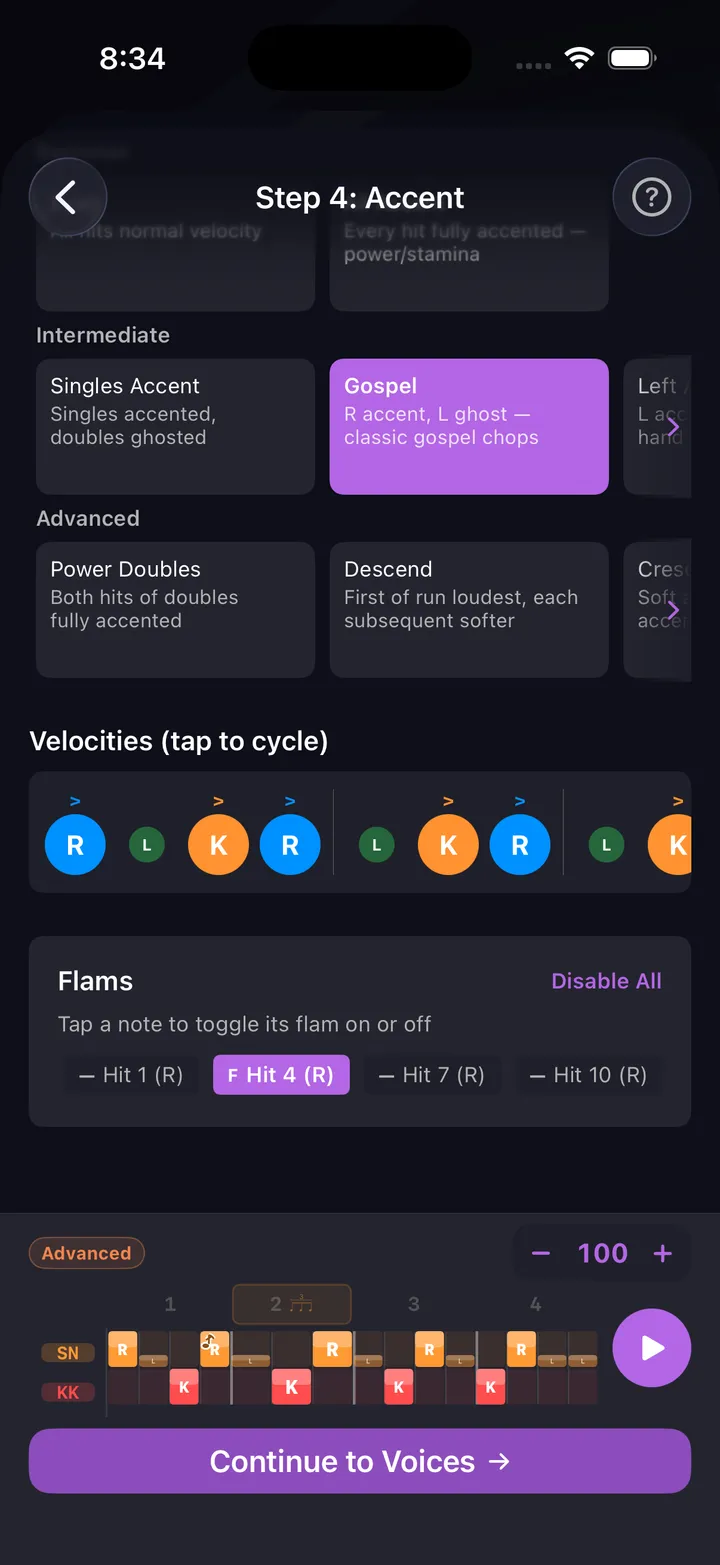
36,700+ stickings you haven't played yet.
Pick any sticking — singles, doubles, paradiddles, six-strokes, gospel chops. Preview how it sits across the bar. Add accents. Place flams. Route the hits to toms, cymbals, snare, kick.
The point isn't generating new fills. It's generating the specific fill that's outside your defaults — and then drilling it until it isn't.
What other drummers are working on, right now.
Browse beats and fills built by drummers around the world. Filter by genre and difficulty, or search. Clone anything you like — it lands in your library, ready to drill.
The rut is partly an isolation problem. Explore is the antidote: a steady stream of patterns from outside your head.
More rut-breakers under the hood
Your practice log knows where you haven't been.
Plans from your history
The AI plans from your practice history — it fills sessions with drills and tempos your log shows you haven't touched.
AI sessions (beta)
Tell it your time, your skill, your goal. It builds a complete practice — drills, tempos, transitions — pulling from gaps in your history.
180+ presets across 14 genres
Rock, jazz, funk, Latin, hip-hop, metal, worship, R&B, gospel, punk, country, reggae, Afrobeat, blues. Every preset is a doorway out of your default genre.
A path out, on a calendar
Pick one thing that scares you — a fill from Explore, a groove you can't sit in yet — tap Learn This, and enroll in the multi-day plan it drafts. A rut ends when next week is already decided.
Every drummer needs
a home base.
Break through the wall. One week is all it takes.