How to actually
practice drums effectively.
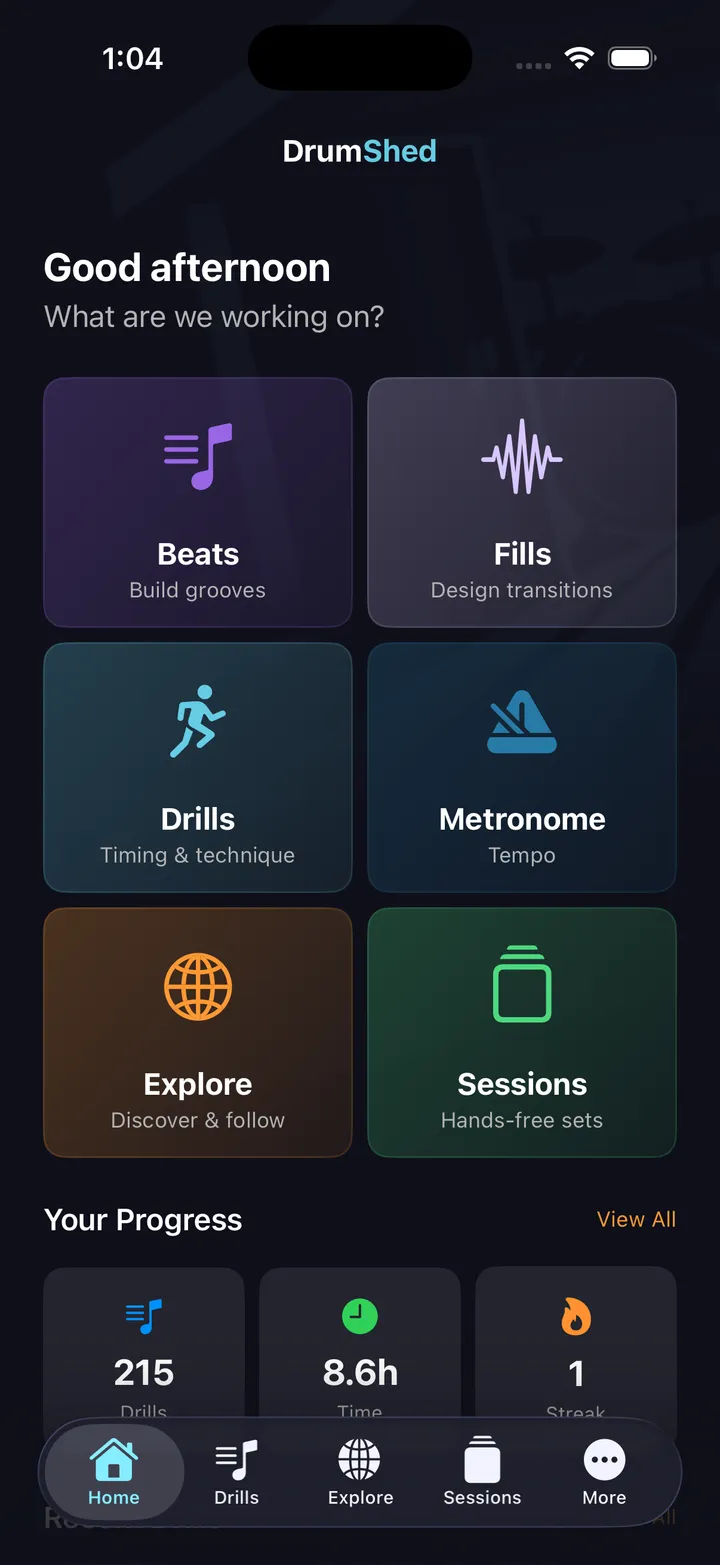
Make the thing you're excited about — a beat you invented, a fill you heard — then drill it until it's yours. An hour of playing what you already know changes nothing. Real practice means a drill with a target, a tempo that climbs, and a record of where you left off. DrumShed runs all three.
The problem with unstructured practice
Jamming your favorite beats keeps the skills you already have warm. Getting better means working the things you can't do yet, slow, on purpose, until you can — with ten drill engines for the reps and practice paths to spread them across the week.
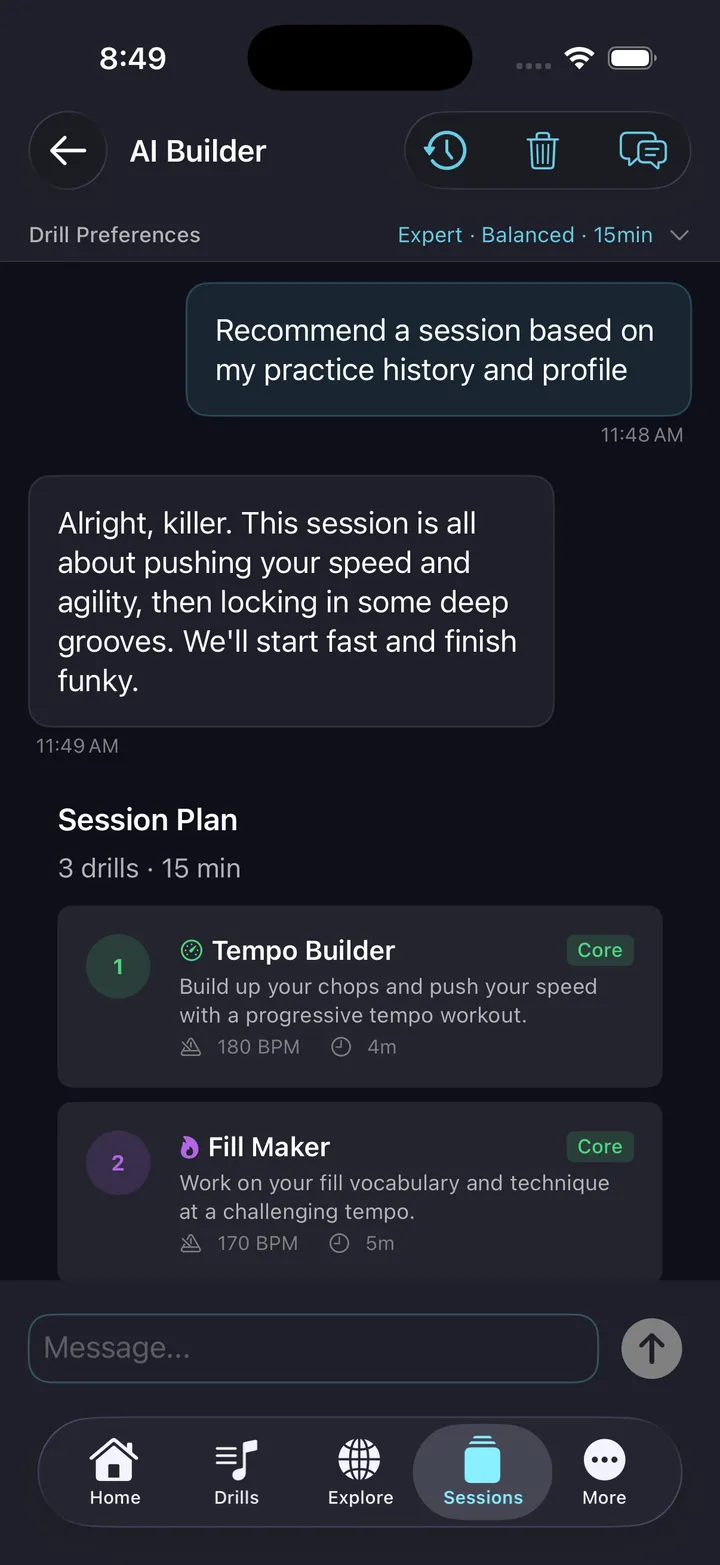
Session builder
Stack drills into a structured routine: warm-up, skill work, creative time. Save sessions and reuse them.
Practice Paths
Turn practice into a plan that spans days, not sittings: build a multi-day path from your own material, or tap Learn This on any beat or fill and follow the day-by-day tempo ramp it drafts — enrolled on the weekdays you actually practice.
Targeted drills
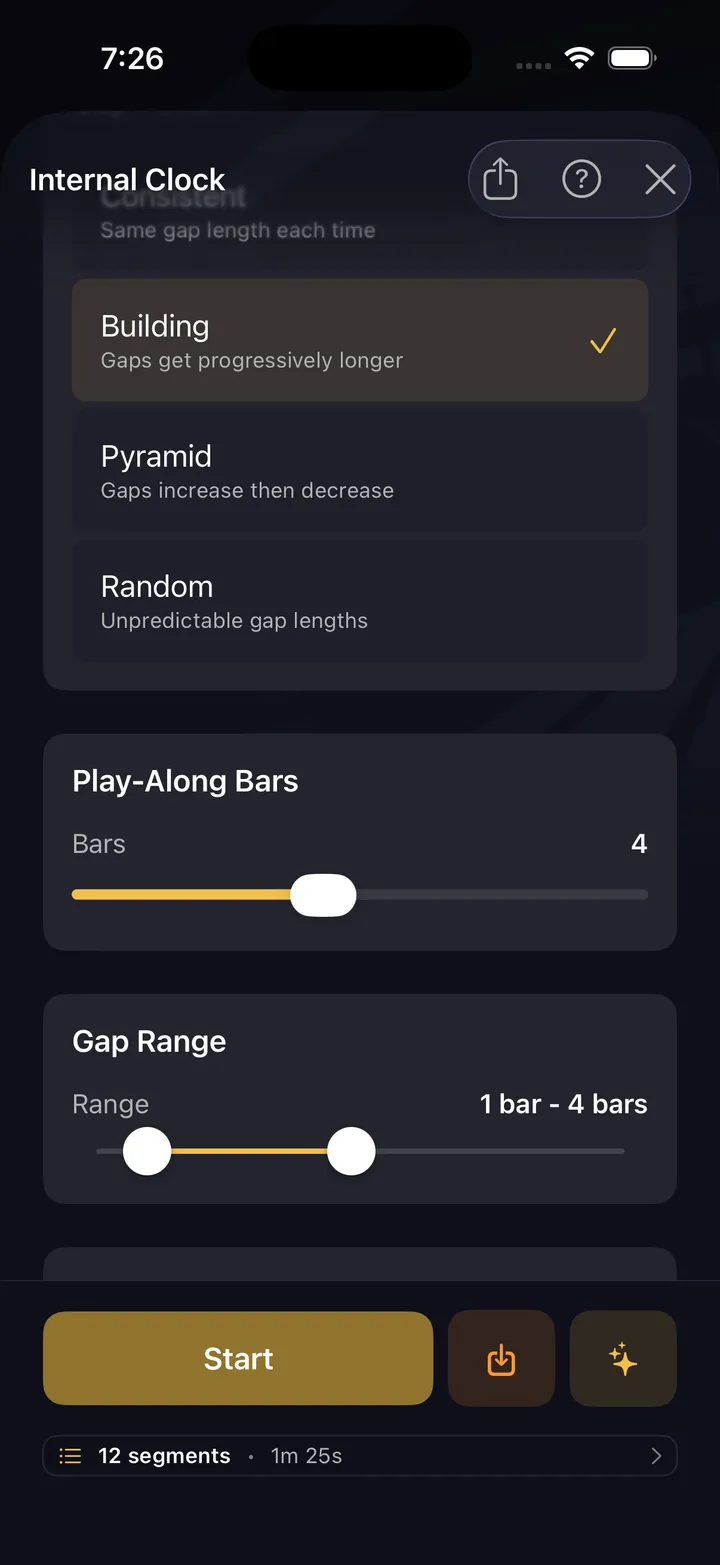
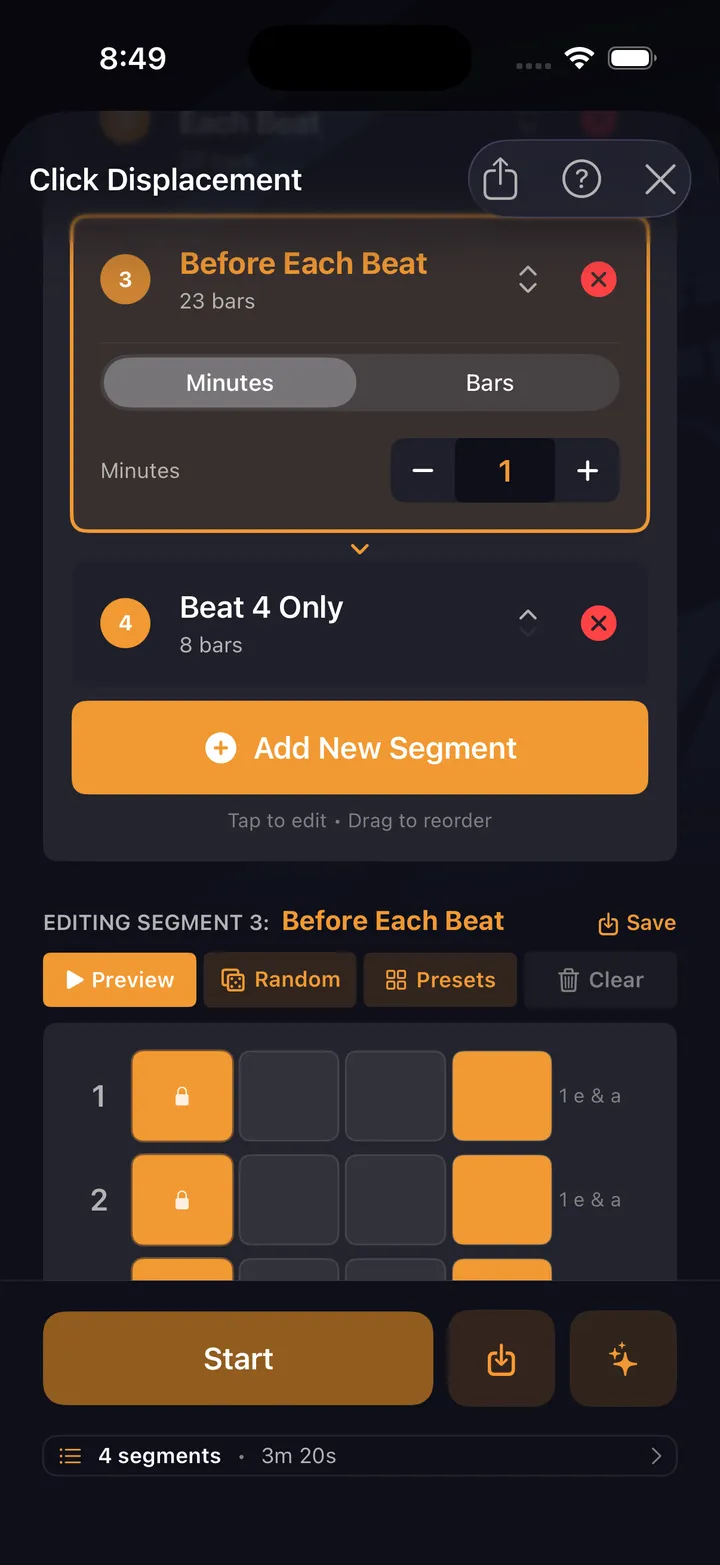
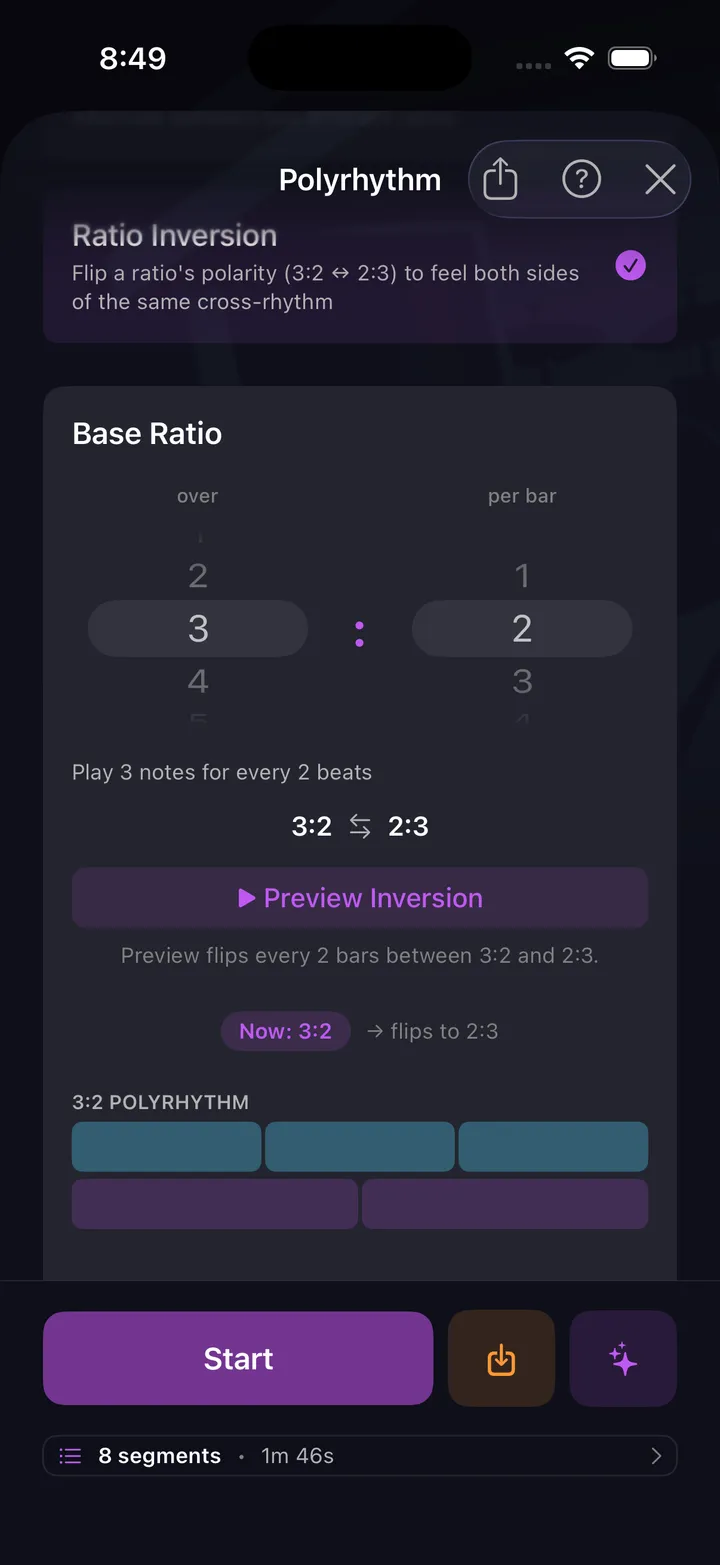
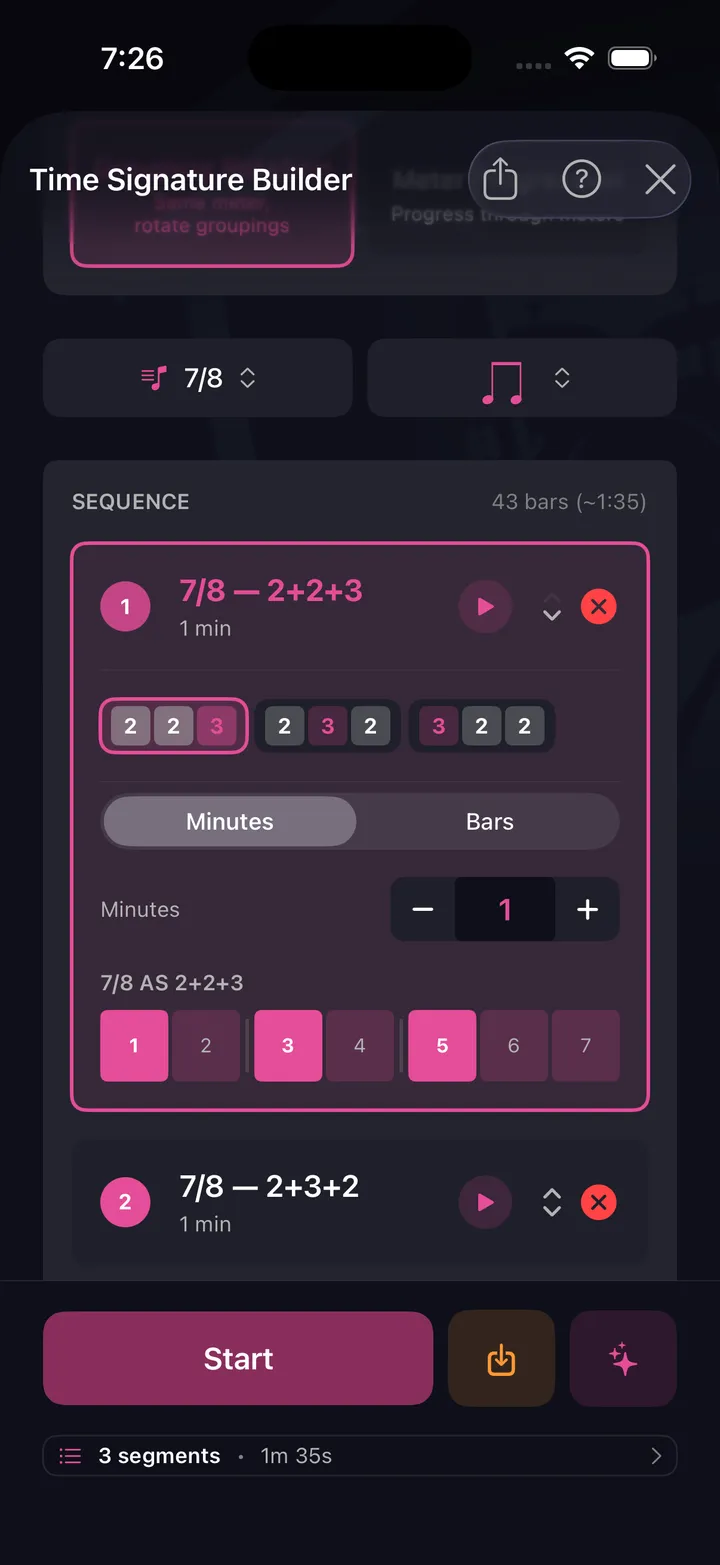
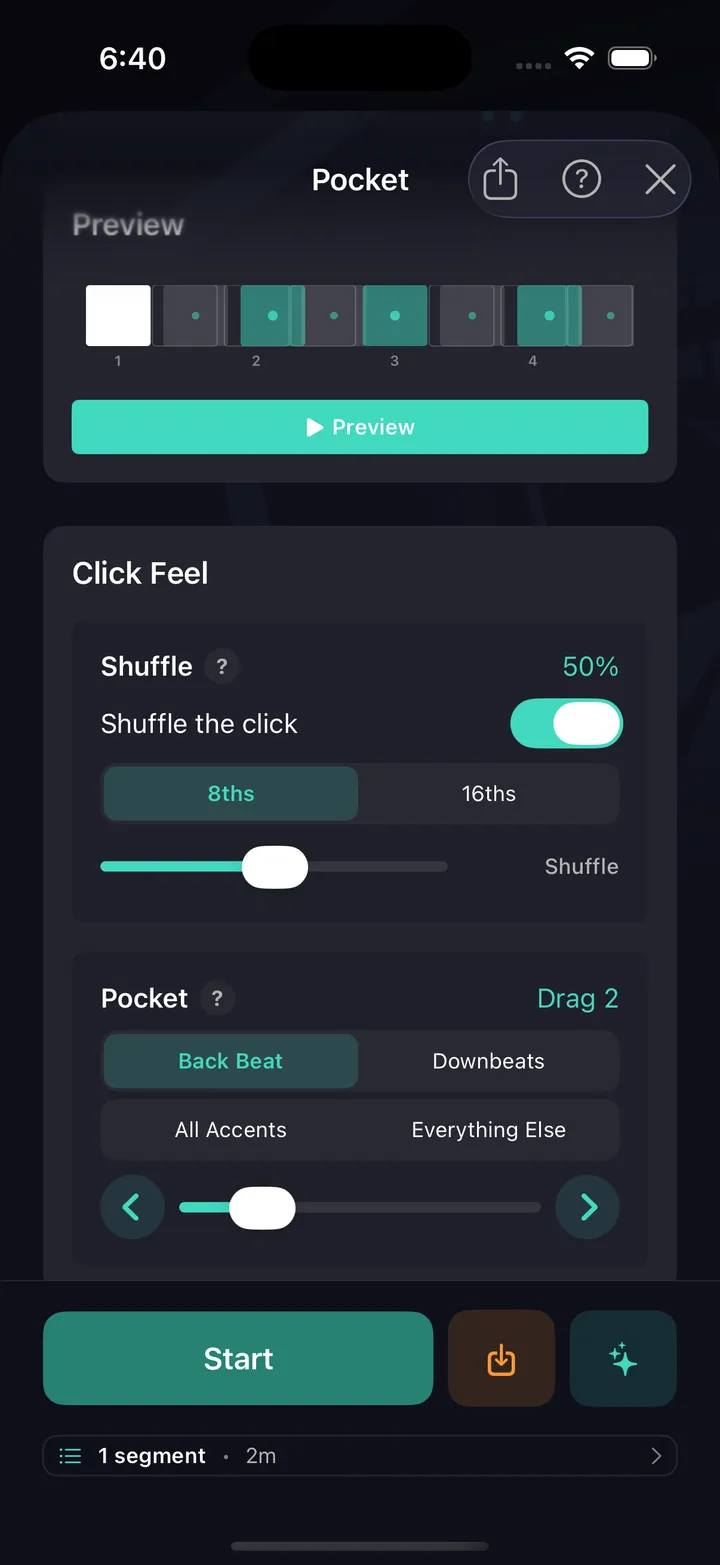
Ten drill engines, each isolating one skill — internal clock, click displacement, dynamics, accents, pocket. You drill the weakness, not the whole kit.
Progressive difficulty
Tempo builder, increasing gap lengths, harder accent patterns — every drill has a difficulty curve.
Hands-free sessions
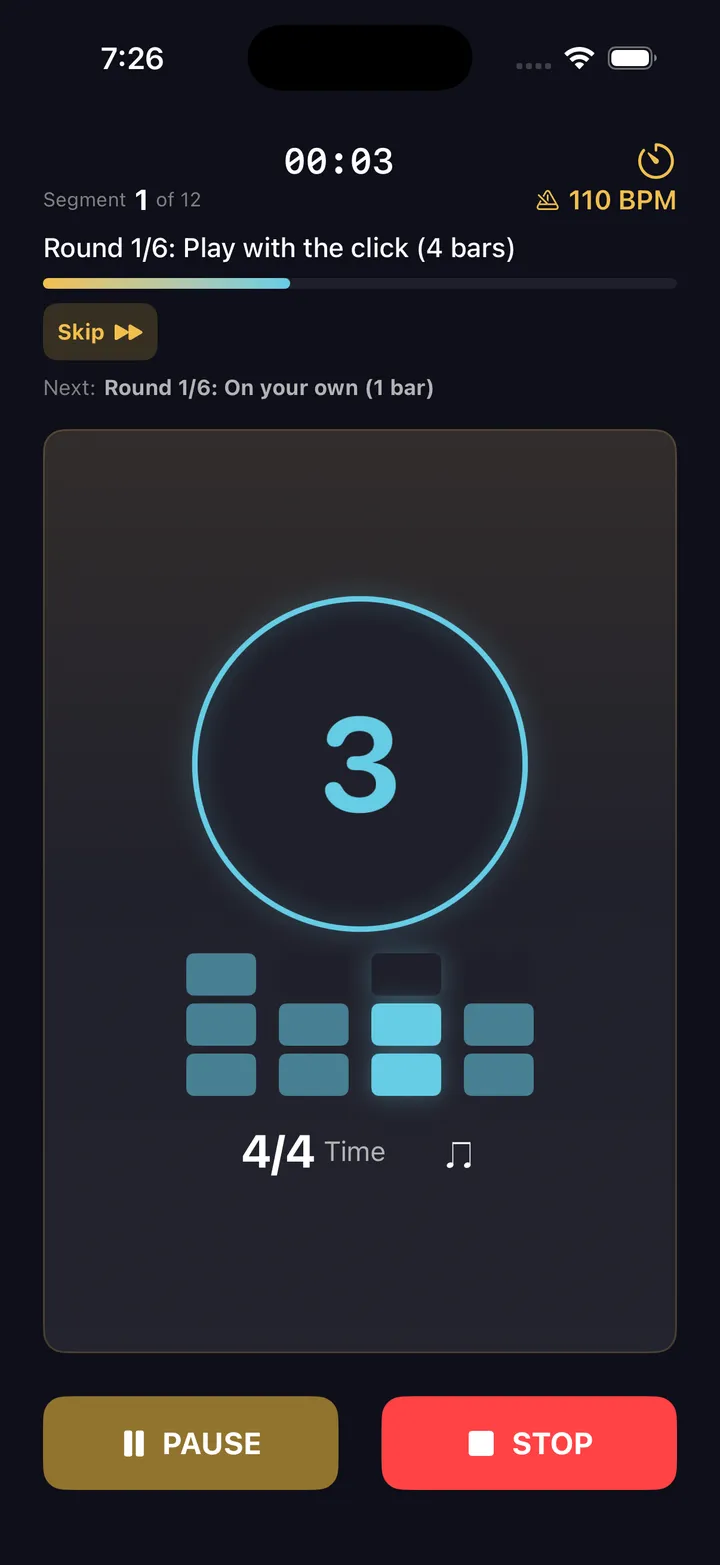
Voice cues tell you what's next. Keep your hands on the sticks and your eyes on the kit.
Track everything
Every session is logged. Next time you sit down, you know the tempo you stopped at instead of guessing.
AI session planning (beta)
Tell the AI what you want to work on and how long you have. It drafts a complete practice session — every generated session is editable before you run it.
The anatomy of a good 30 minutes
Warm-up, skill work, creative time. Here's what that actually looks like on a Tuesday.
Warm-up
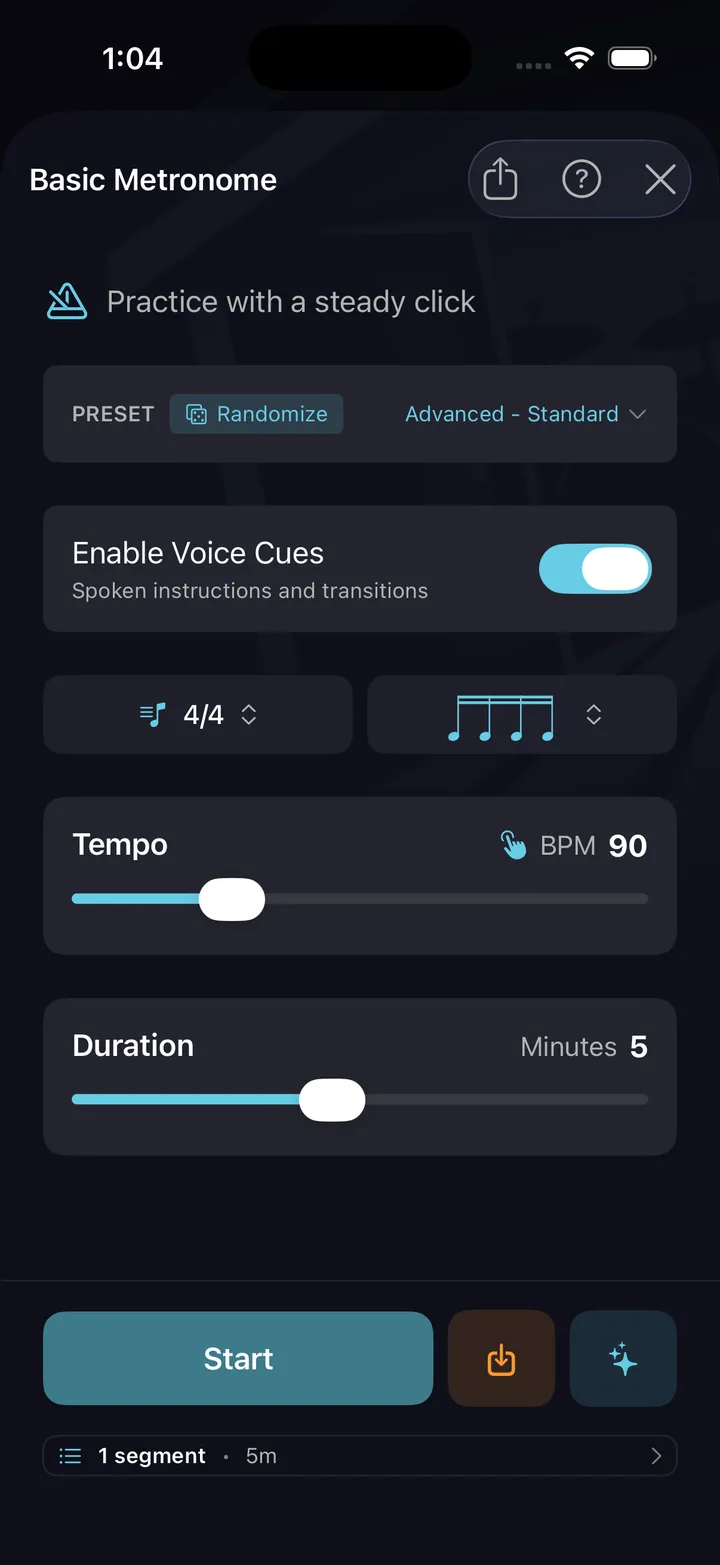
Basic Metronome at 80 BPM. Singles on the snare, quarter notes into sixteenths and back. Nothing clever — you're waking up your hands and settling into the click.
Skill work
One weakness, one drill. Say it's accent placement: run the Accent Placement drill and walk the accent off the downbeat, onto the e, then the a. Slow enough to stay clean.
Creative time
Open the Beat Builder and mess with something new — ghost notes under yesterday's groove, a flipped hat pattern. This is the part that gets you back on the throne tomorrow.
Save it as a session once and voice cues run the whole thing hands-free. The log records where you stopped, so Wednesday starts where Tuesday ended.
Practice this in DrumShed
Free on the App Store & Google Play
Ten drills, one skill each
Practice works when each rep has a target. These ten each isolate a single timing problem so a session has a point.
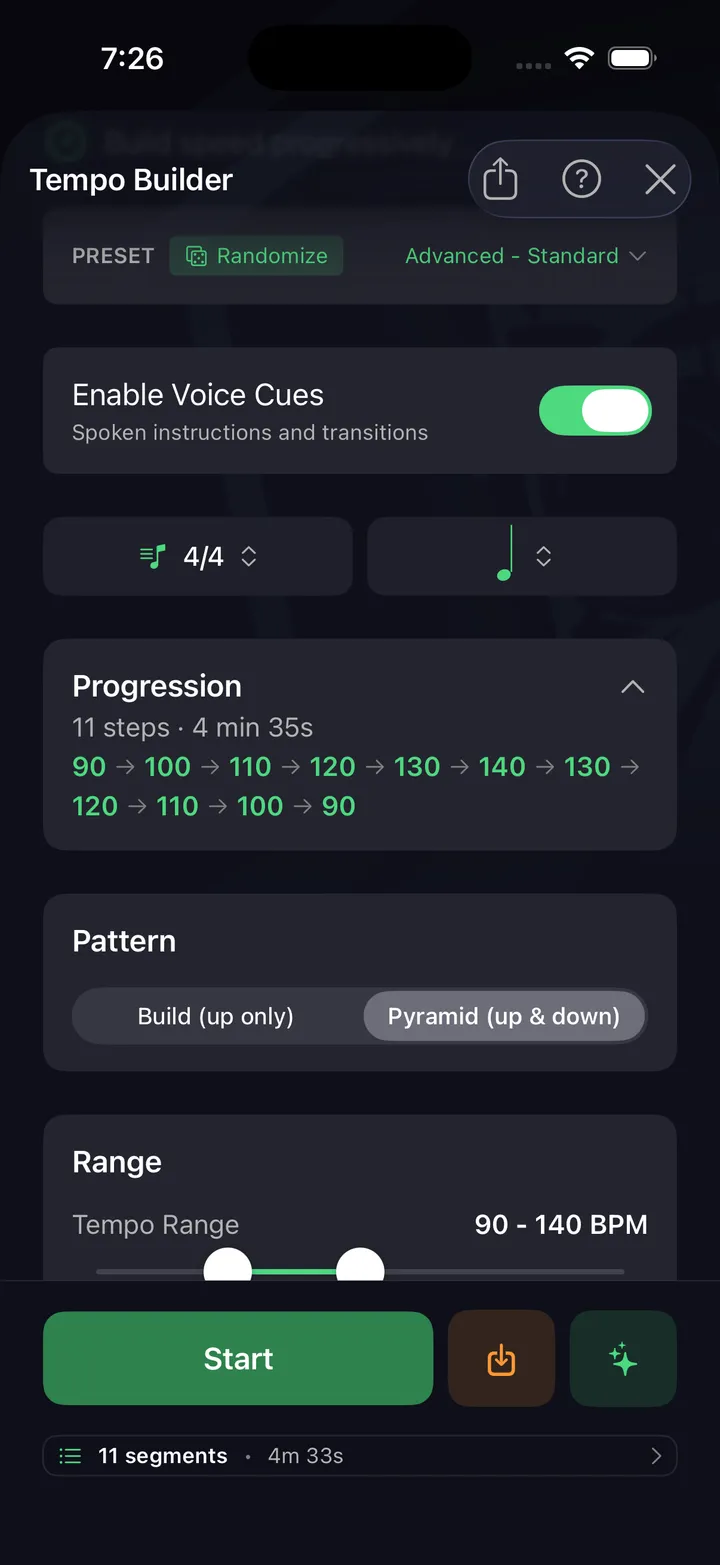
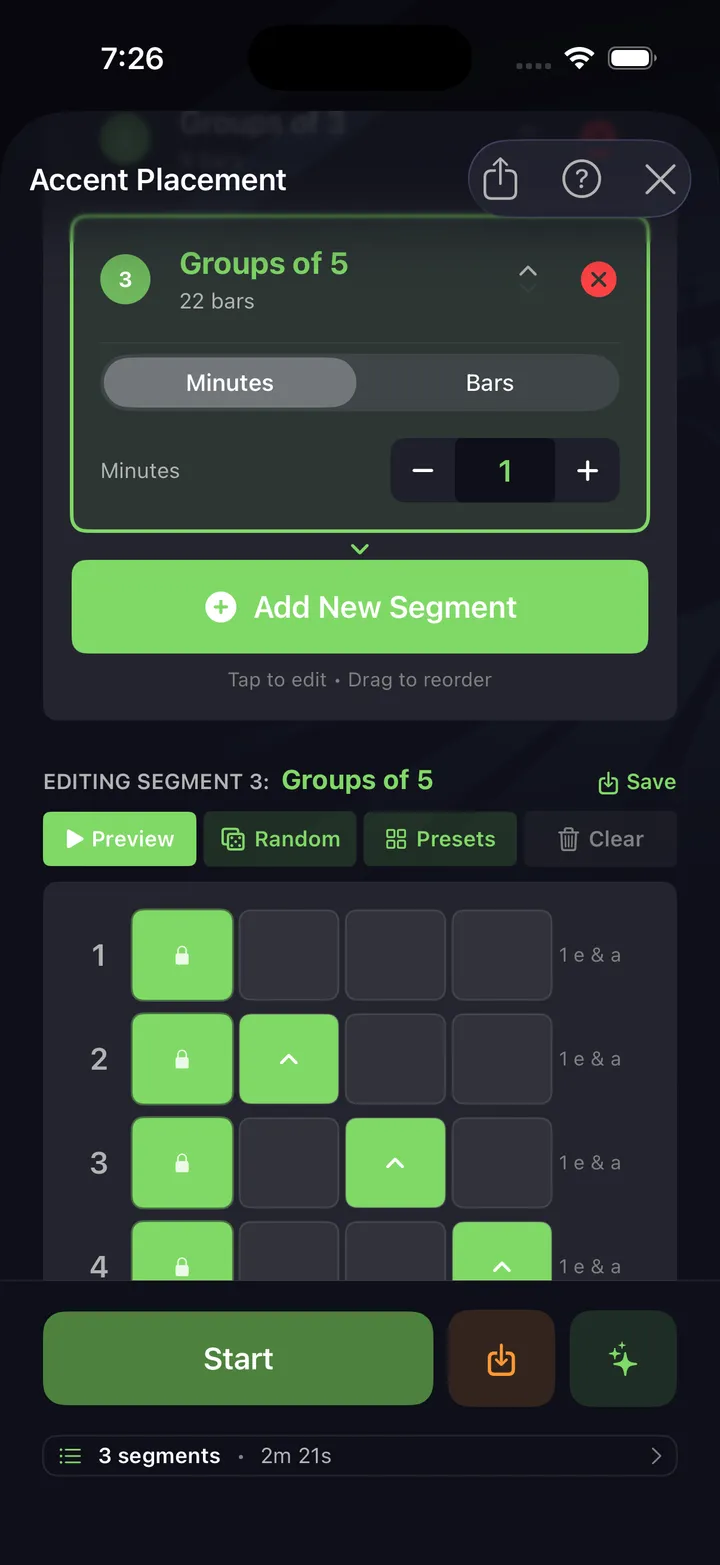
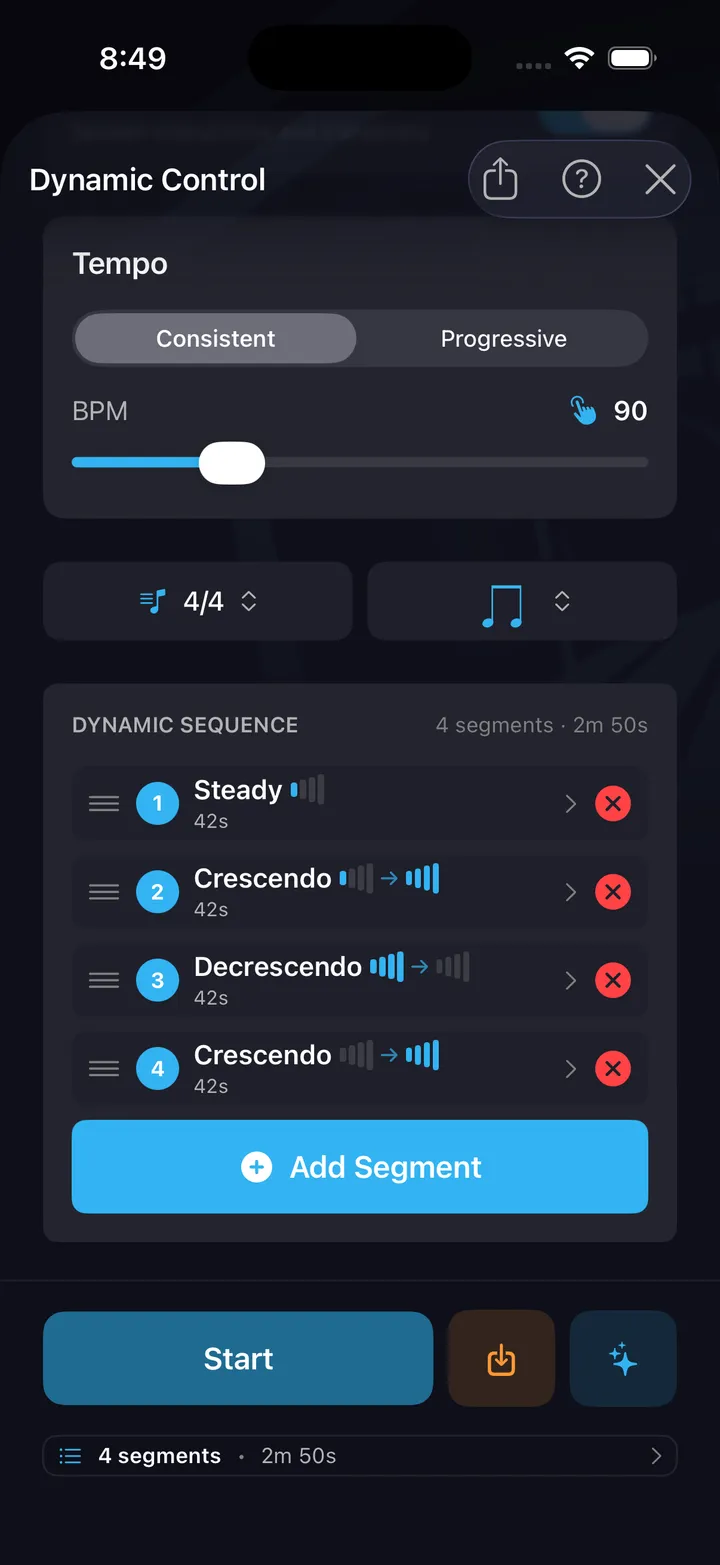
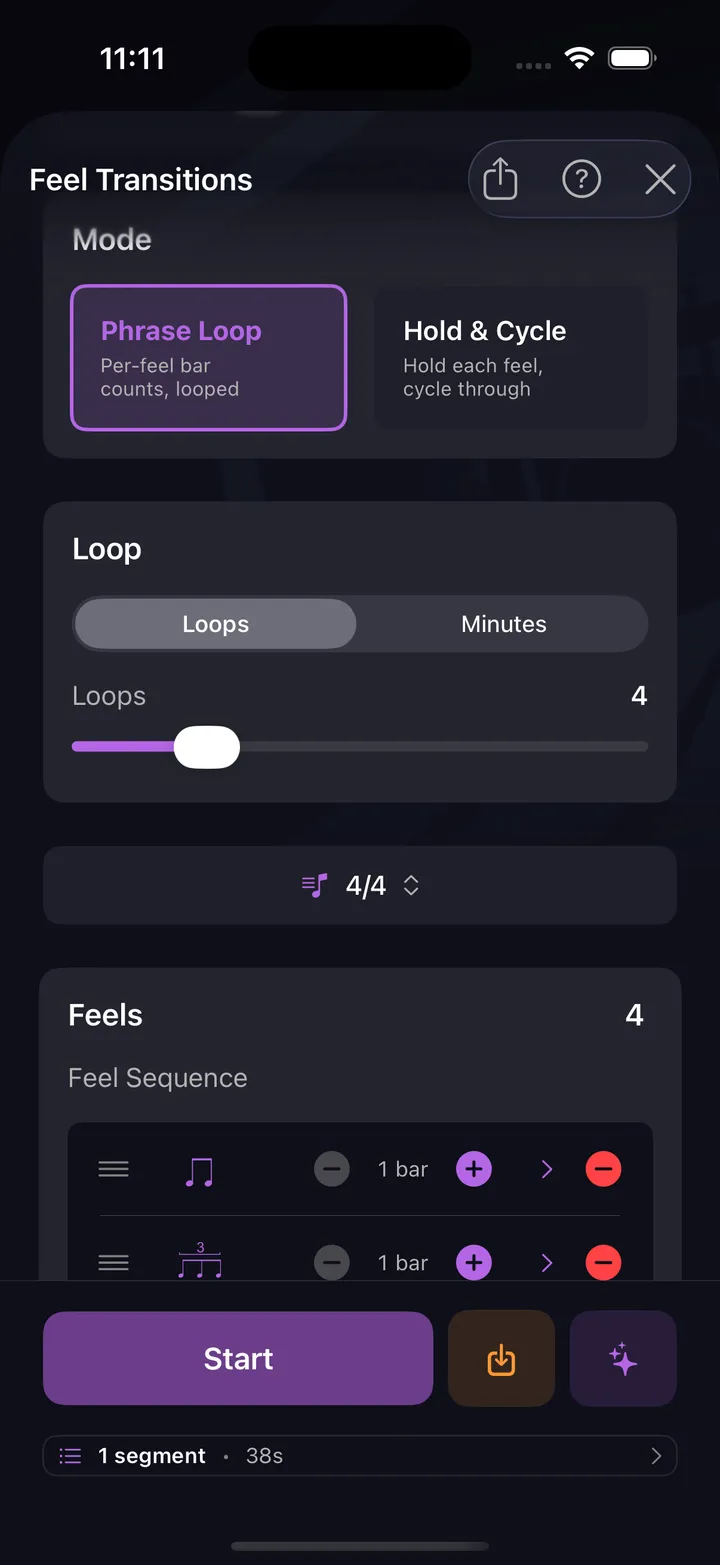
All ten are free — no card, not a timed trial. See every drill explained.
Every drummer needs
a home base.
Start your first structured session.