Four-way coordination
you configure, not transcribe.
In the Coordination Lab every limb carries its own repeating cell, cycling on its own length. Give the hands a two and the kick a three and they interlock polymetrically — an ostinato system with the parameters exposed, rather than a page you read.
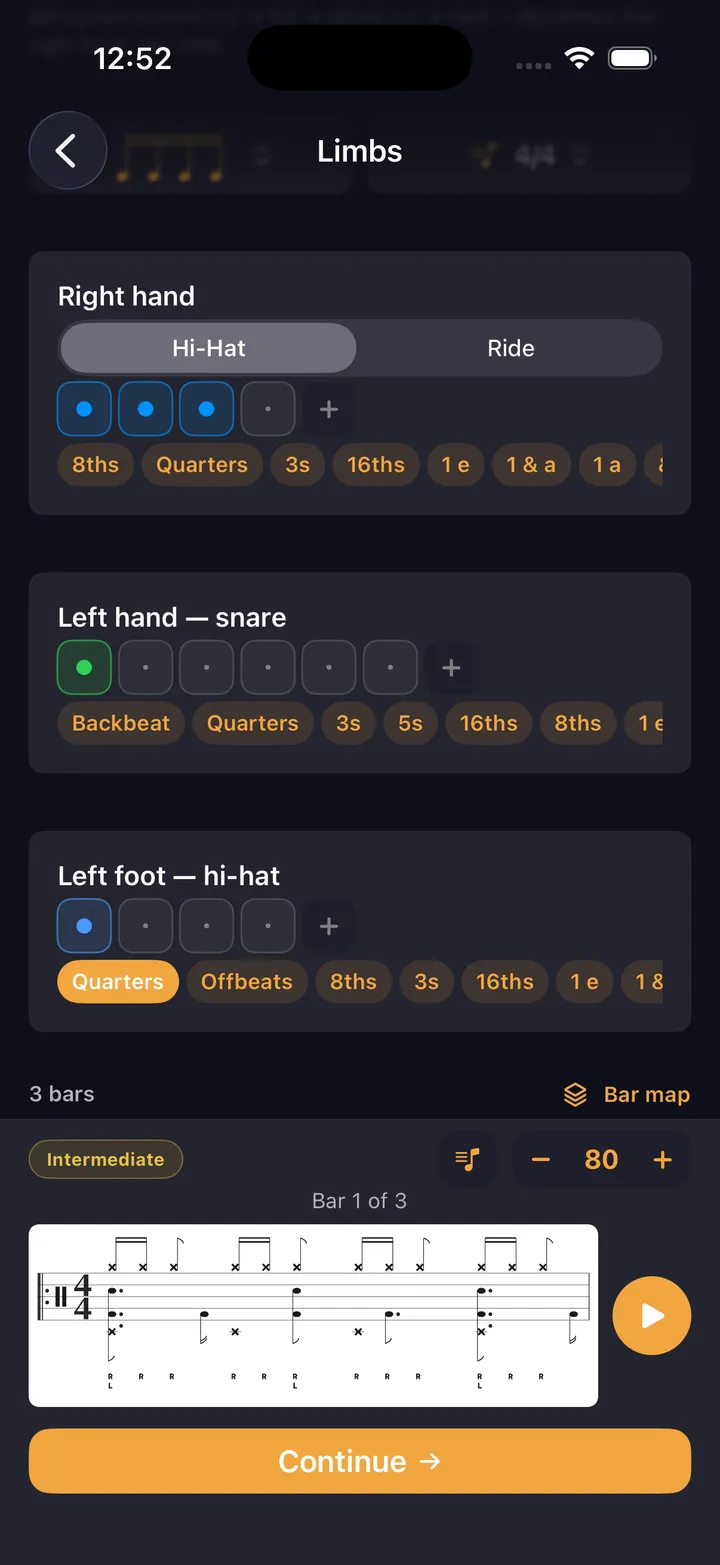
Four cells, four cycle lengths
Right hand, left hand, hi-hat foot, kick. Each gets a hit-and-rest cell in plain language — X for a hit, A for an accent, G for a ghost, dash for a rest — and each tiles the grid on its own length. Cells of different lengths is where independence starts.
Independent cycle lengths
A two-note right hand under a three-note kick realigns every six ticks. Nothing repeats until every cycle does, so you learn the relationship instead of memorizing a bar.
Velocity lives in the cell
Accents and ghosts are part of each limb's own pattern rather than a separate layer painted over the top — so the left hand can ghost while the right hand accents, which is most of what makes a groove sound like one.
Hats or ride
Put the right hand on the hi-hat or move it to the ride. Same cell, different surface, genuinely different coordination once the left foot has an opinion.
Start with three
The hi-hat foot is silent by default. Three limbs is already a four-way problem for most drummers, and a fourth limb nobody asked for is the one that gets quietly ignored — which teaches playing through a layer instead of against it.
See the whole cycle
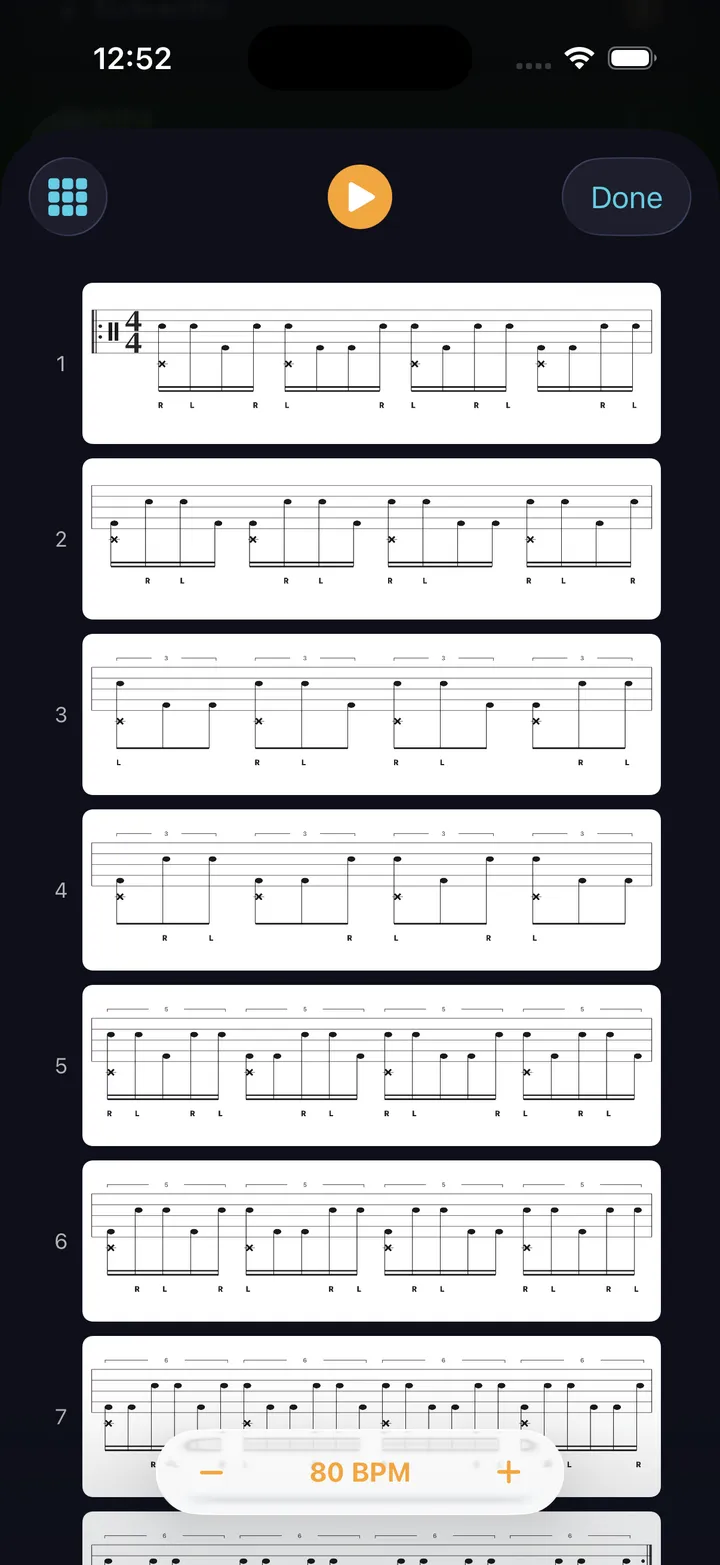
The bar map stacks every bar of the generated exercise, one row each. When three cycles realign, you can see where — before you spend twenty minutes finding out by ear.
A tempo ladder
Coordination is a slow-practice problem. Set a start, a target and a step, and let the drill climb rather than sitting at the tempo you can already almost do.
Four coordination drills, in order
Each one adds exactly one thing. Skipping to the last is how coordination practice becomes twenty minutes of failing at the same bar.
Hands apart
RH X- · LH ----X---Two limbs before four. Right hand on eighths, left hand on the backbeat, nothing on the feet. It sounds like a beat because it is one — the difference is that each hand is a cell you can lengthen independently, so the next step is one keystroke away.
Four limbs in
RH X- · LH ----X--- · K X------- · HH ---XAdd the kick and the hi-hat foot. Everything still lines up on a common cycle, so nothing is fighting yet — this is the drill where four limbs is just bookkeeping. Get it boring before you make it interesting.
Interlocking cycles
RH cycle of 3 · LH cycle of 4 · K cycle of 5Now give the limbs different lengths. A three against a four against a five does not repeat for sixty ticks, so the combination on beat one keeps changing and you cannot play it from muscle memory. The bar map shows you the whole cycle before you start.
Ostinato plus a moving limb
three limbs held · one limb varyingThe New Breed idea: lock three limbs into a repeating figure and let the fourth read something that changes every bar. Hold the ostinato, ladder the free limb through subdivisions, and the drill writes itself.
Then read it back
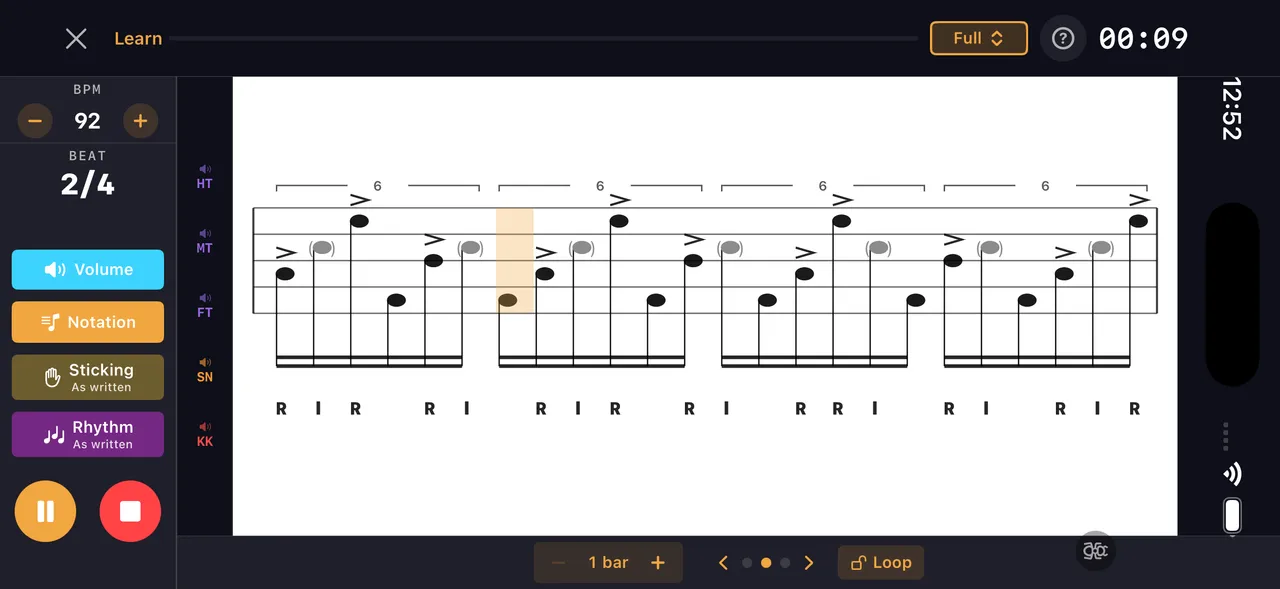
Four independent limbs is exactly the case where the grid and the notation tell you different things. Both views are one tap apart, and the playhead tracks the bar you’re in.
Every drummer needs
a home base.
Four limbs, four cycles, one drill.