Drum warm-ups
worth the first ten minutes.
Five warm-up exercises — hands, dynamics, then feet — each written in playable notation with sticking labels. Loop them slow, leave them loose.
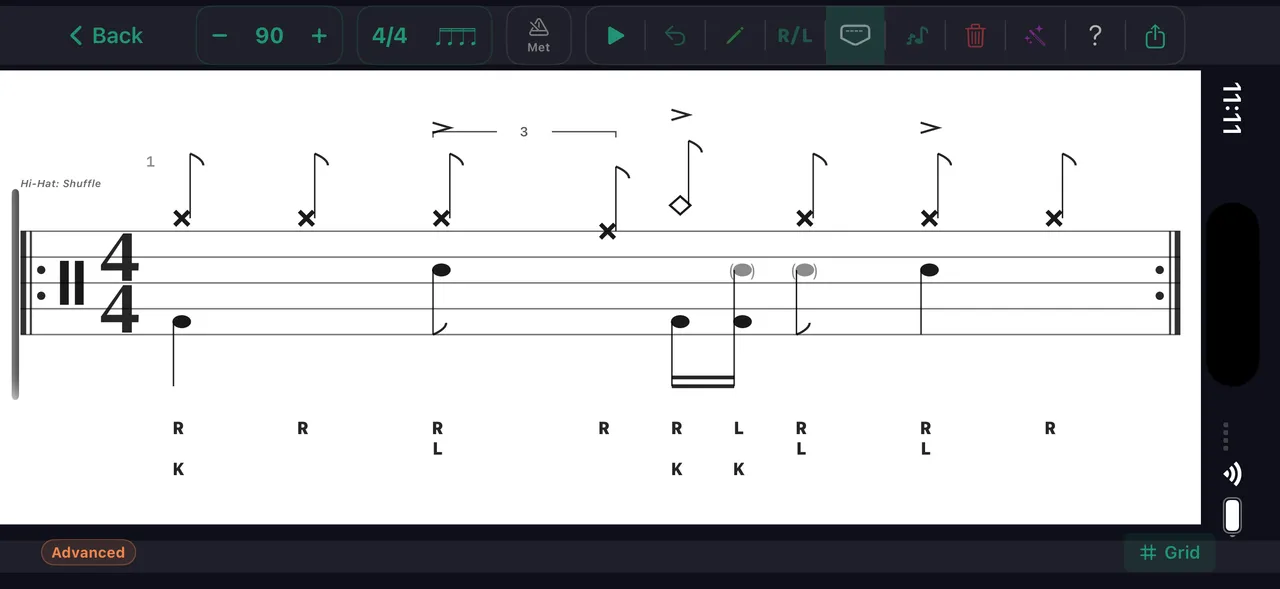
A good warm-up routine does three jobs: gets blood into the hands, reconnects you to the metronome, and rehearses evenness before you play anything hard. These five exercises do all three in about ten minutes. The letters under each staff are sticking labels — R for right hand, L for left, K for kick (see the full notation guide).
1. Single strokes
Alternating sixteenths (R-L-R-L) on the snare or a practice pad. Start around 60–70 BPM, aim for every note identical — same height, same sound, no flams. This is the warm-up: two relaxed minutes here does more than anything else you can play.
2. Double strokes
Two per hand: R-R-L-L. At slow tempos play both notes as full strokes — don't let the second note bounce weakly. The evenness you build here is the whole foundation of the double stroke roll.
3. Accent tap
Same alternating sixteenths, but accent only the first note of each beat and play everything else as quiet taps. The distance between your accents and your taps is your dynamic range — this exercise stretches it before you play a single groove.
4. Wake up the feet
Kick drum on every eighth note with the hi-hat foot stepping quarters on top. Feet warm up slower than hands and almost nobody warms them up at all — one minute of this and your kick placement stops being the sloppiest thing in your groove.
5. Hands and feet together
Two snare sixteenths into two kick sixteenths (R-L-K-K), around and around. The hand-to-foot handoff is where most beginners hesitate — smoothing this seam is the point, not speed.
Turning a warm-up into a routine
Run the five in order, one to two minutes each, at a tempo where nothing tenses. Then rotate a deeper exercise in per day: single stroke roll work on Monday, doubles Tuesday, paradiddles Wednesday. If you only have a quarter hour total, our 15-minute practice plan budgets the warm-up for you.
Warm-up FAQ
How long should a drum warm-up be?
Five to ten minutes is plenty for most sessions: a couple of minutes of relaxed single strokes, then doubles, then something dynamic like accent taps. The goal is loose hands and a connected sense of time — not exhaustion before the real practicing starts.
Do I need a drum kit to warm up?
No — every hand exercise on this page works on a practice pad, a pillow, or your knee. Only the foot exercises need a pedal. Warming up on a pad before rehearsals and gigs is exactly what most working drummers do.
What tempo should drum warm-ups be?
Start slower than feels necessary — 60–70 BPM — and let the tempo drift up only while everything stays relaxed. If your forearms tense up, you've raised the speed too early. Warm-ups are about blood flow and evenness, not personal records.
Should I warm up with rudiments?
Yes — single strokes, double strokes, and paradiddles are the classic warm-up trio precisely because they cycle both hands evenly. Rotating one accent or sticking variation in each day quietly turns your warm-up into technique practice.
Warm up in DrumShed
Build these into a daily session in the app — the metronome counts you in, the playhead keeps you honest, and your practice history shows the streak growing. Sticking warm-ups live in the builder's exercise mode: a pattern looped back-to-back, no groove bars needed.
Every drummer needs
a home base.
Loose hands, locked time.