Ostinato exercises
hold three, move one.
The oldest independence method there is: lock some limbs into a repeating figure and let one of them do something else. Build both halves — the ostinato you hold and the part that varies — instead of holding one in your head.
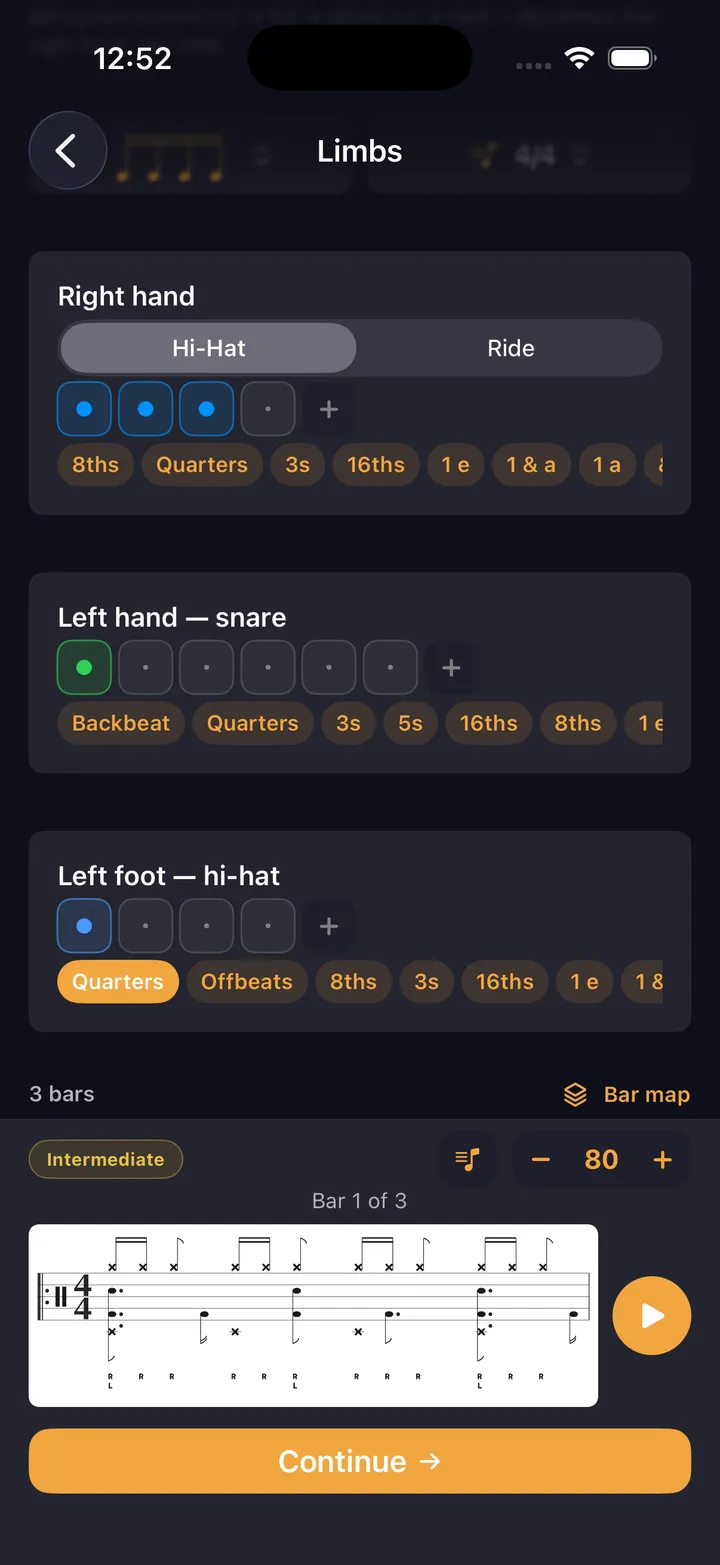
The hard part is the part that doesn’t change
Ostinato practice fails quietly: the held pattern drifts to match the moving one and you don’t notice, because you’re listening to the interesting limb. Having both written down, playing back, and rendered on a staff is most of the fix.
Hold any limbs you like
Right hand, left hand, hi-hat foot, kick — each carries its own repeating cell. Freeze three and vary the fourth, or freeze two and vary two.
Cycles that don't line up
Cells tile on their own lengths, so a three under a four genuinely interlocks rather than resolving every bar. That mismatch is the exercise.
Ladder the free limb
Send the moving limb through a subdivision ladder or an accent shift while everything else stays put. One variable at a time is the entire method.
Ghosts inside the ostinato
Accents and ghost notes live in each limb's own cell, so a held left-hand figure can sit under the ride at ghost level instead of competing with it.
Both parts, one staff
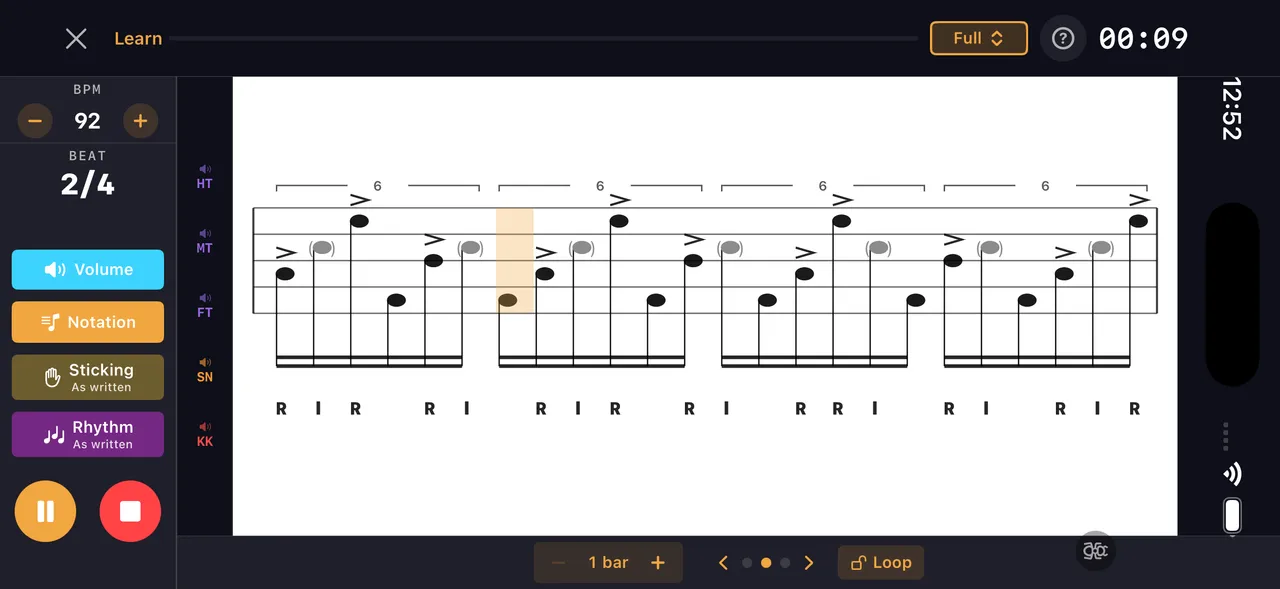
The held figure and the moving one render together in standard notation with the playhead tracking your bar — so you can see the relationship rather than infer it.
Stack it into a routine
Ostinato work rewards short daily reps. Put the drill in a hands-free session or schedule it across a practice path so the same ostinato comes back tomorrow.
Four ostinatos to build
Jazz ride ostinato, snare reading over it
hold: ride + hi-hat foot on 2 and 4The oldest version of the idea and still the most useful. Lock the ride pattern and the foot, then let the left hand comp something that changes every bar. The test is whether the ride survives — it will flatten out the moment the snare gets interesting.
Bossa foot, hands free
hold: kick clave + hi-hat foot on the andsHold a clave figure in the feet and improvise above it. An irregular foot pattern is much harder to keep than a regular one, because there is no pulse to lean on — you have to actually know the figure.
Hands held, feet laddered
hold: eighth hats + backbeatInvert the usual arrangement: freeze the hands on a plain groove and let the kick climb a density ladder from quarters to sixteenths and back down. Everything above stays identical, so any wobble is the feet.
Interlocking cycle lengths
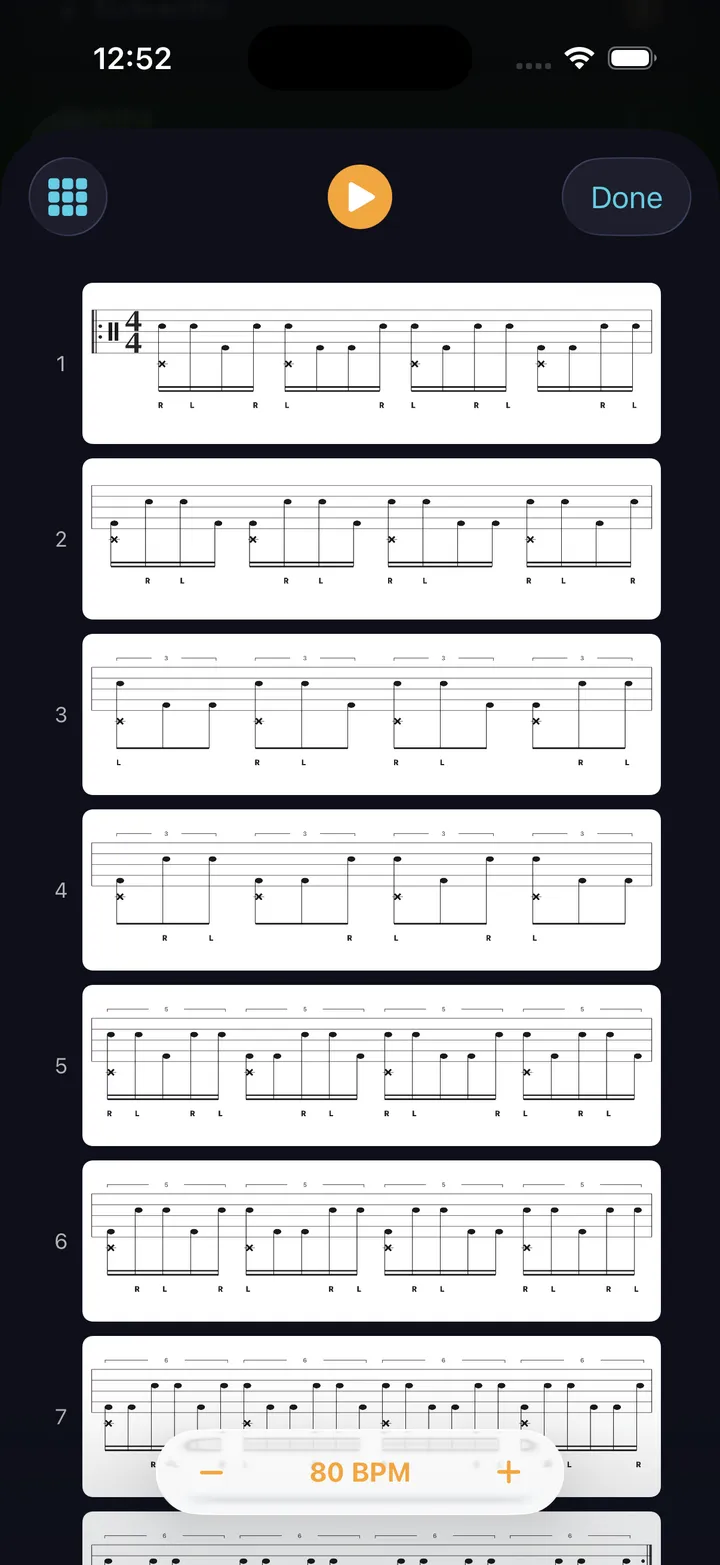
hold: each limb on its own cycleGive the right hand a two, the left hand a four, and the kick a three. The combination on beat one changes every cycle and the whole thing does not repeat until all three realign — a polymetric ostinato you can read off the bar map before you play it.
See the whole cycle first
When limbs run on different lengths, the useful question is where they realign. The bar map answers it before you spend the practice session finding out by ear.
Every drummer needs
a home base.
Hold it. Then move something.