Subdivision ladders
and pyramids, generated.
Check the subdivisions you want to work — eighths, triplets, sixteenths, quintuplets, sextuplets — then climb them up, down, or as a pyramid that peaks and returns. Same sticking throughout; only the grid underneath moves.
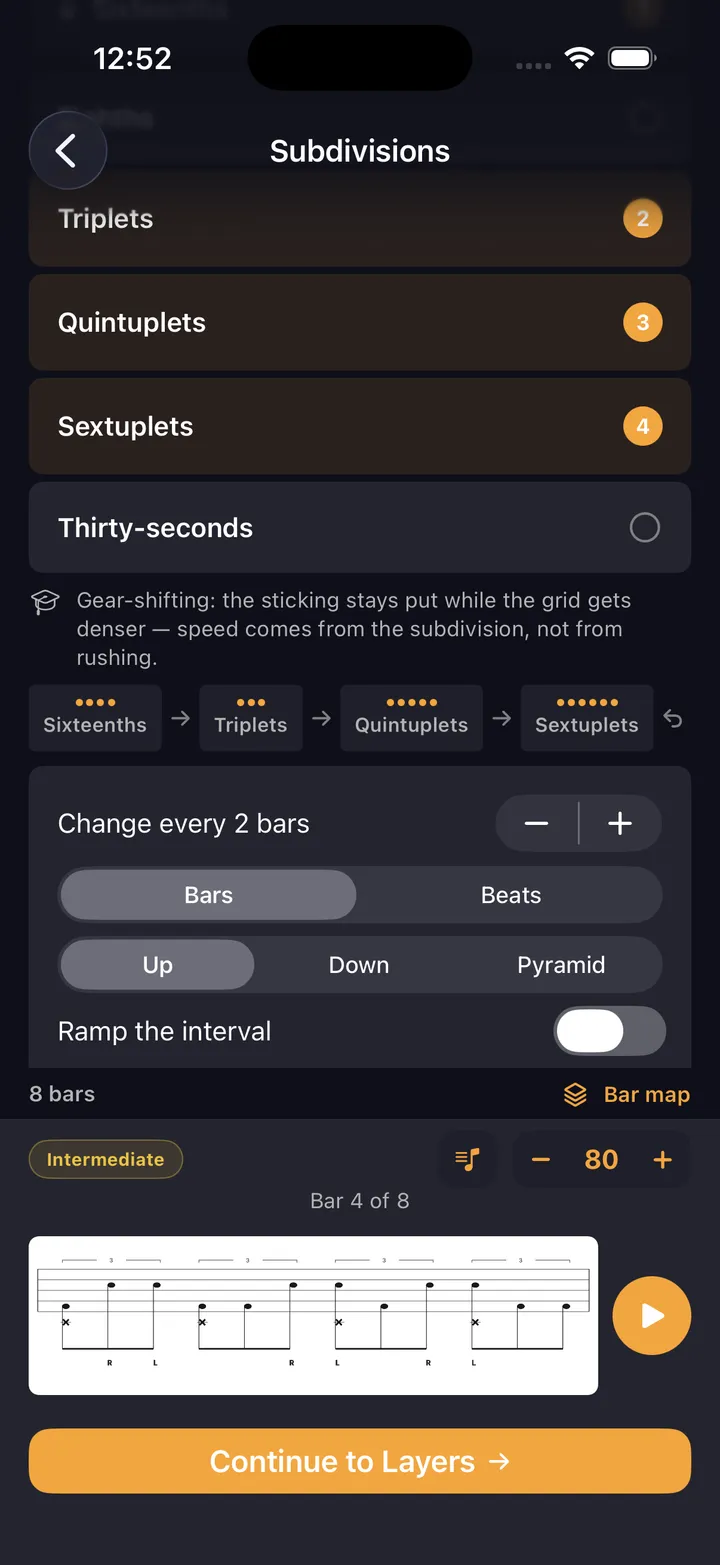
The rate changes, nothing else does
A subdivision drill only works if the transitions are clean, and transitions are exactly what a static exercise can’t give you. Building the ladder as a plan means the change is scheduled rather than remembered.
Pick your rungs
Check up to four working subdivisions in any order. Quarters through sextuplets, plus quintuplets when you want the ladder to stop being comfortable.
Up, down, or pyramid
Pyramid climbs and returns without doubling the bar at the top — a small detail that matters, because a repeated apex bar is a rest you didn't ask for.
Change every n bars, or n beats
A change every four bars is a study. A change every beat is a different exercise entirely. The cadence is a setting, so both are one tap apart.
Ramp the interval
Let the change interval itself shrink each cycle: every four bars, then every two, then every one. The material never changes; the pressure does.
Notated per bar
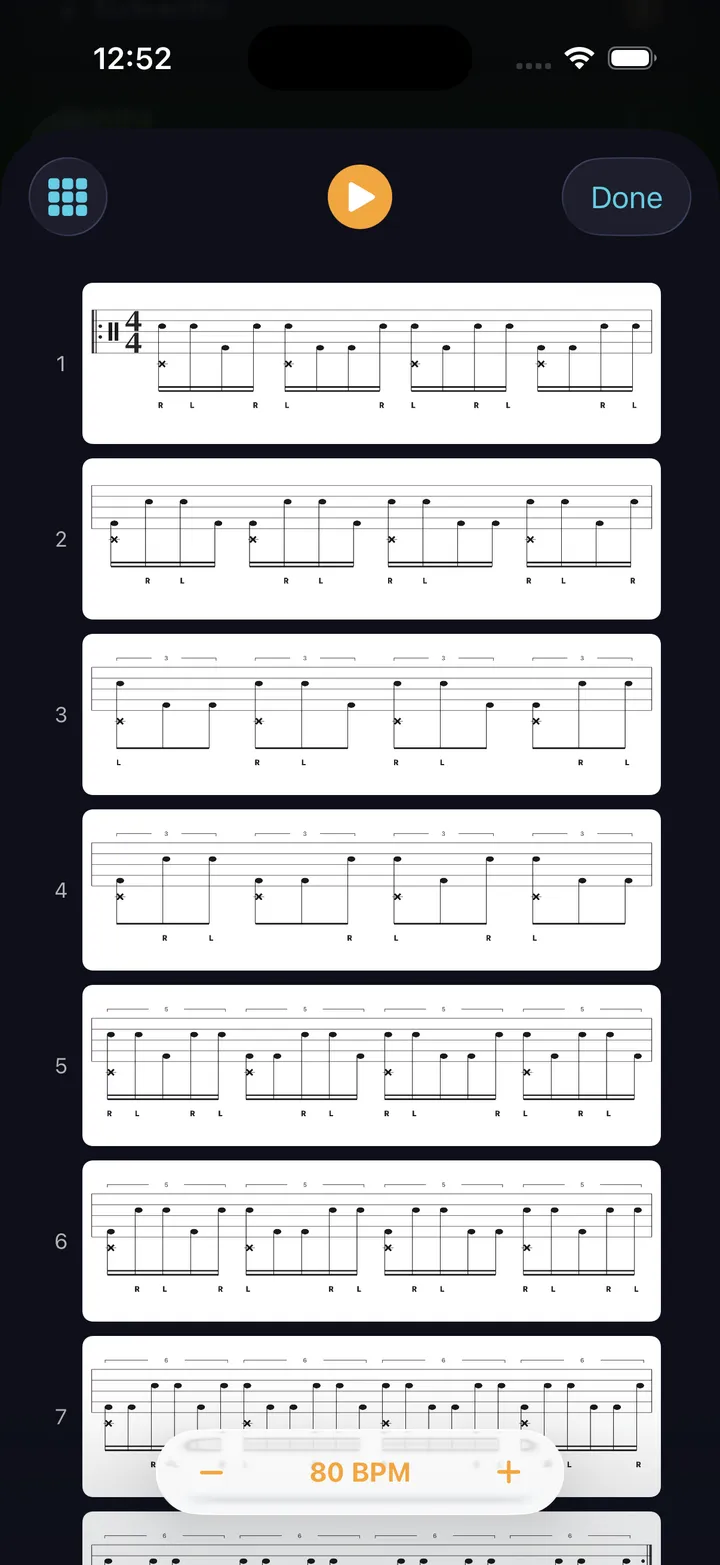
Each bar renders at its own subdivision, so the ladder reads on the staff the way it sounds — and the counting syllables above it change with the rate.
Ladder the feet instead
Route the ladder to the kick and hold a hands ostinato above it. Density ladders on the feet are the canonical double bass drill, and it's the same component.
Four ladders to build
The bar count is derived from the plan, so none of these asks you to work out the length.
The classic pyramid
♩ → ♪ → ⅗ → ♬ → ⅗ → ♪ → ♩Quarters, eighths, triplets, sixteenths, and back down — one bar each, no doubled bar at the peak. The climb is easy and the descent is where you find out whether you were feeling the subdivision or just playing faster. Seven bars, derived automatically from the four subdivisions you checked.
Two-bar rungs
each subdivision × 2 barsChange every two bars instead of every one. The extra bar is where the new rate stops being a surprise and starts being a pulse — which is the actual skill. Set the cadence to two bars and the length recalculates itself.
The ramping ladder
change every 4 bars → 2 → 1Start with four bars per rung, then two, then one. The transitions arrive faster and faster while the material stays identical, so the drill gets harder without adding a single note.
Odd rungs
eighths → quintuplets → sixteenthsPut a five between a four and a four. Quintuplets are on the ladder alongside the ordinary subdivisions, and the jump into and out of them is a different problem from playing them in isolation.
Mixed subdivisions inside one beat
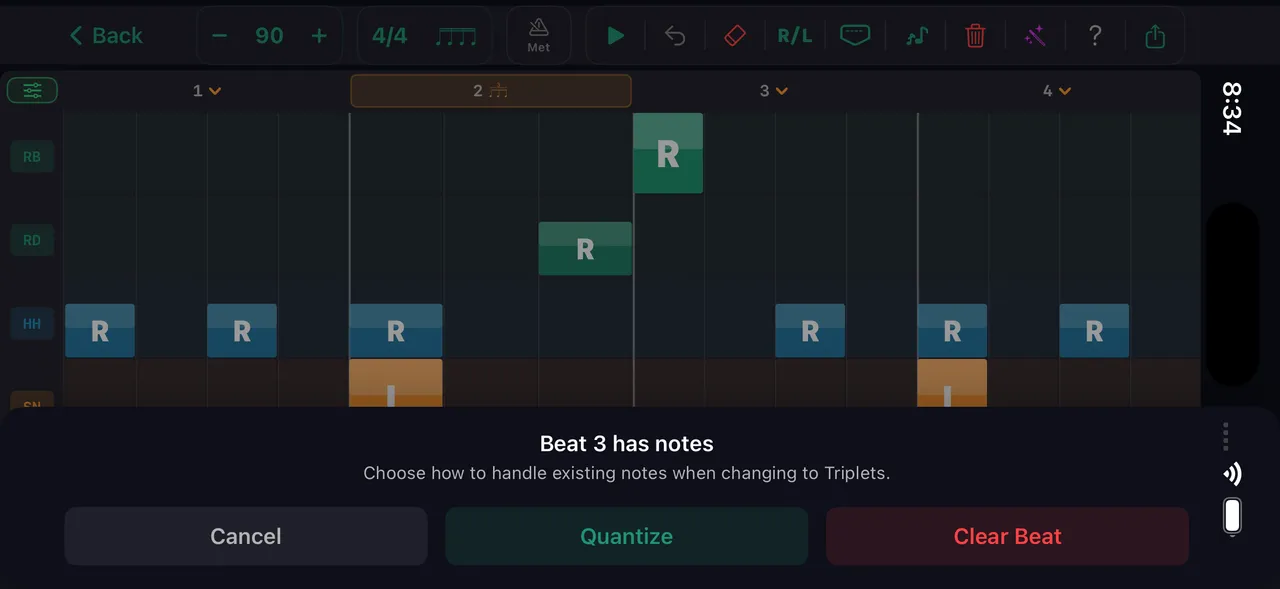
Ladders move the rate bar to bar. If you want it to move inside a single bar — sixteenths on beats one and two, triplets on three and four — the grid supports that too, per beat and even per half-beat.
Every drummer needs
a home base.
Climb it, then come back down.