Drumless tracks,
from the songs you already have.
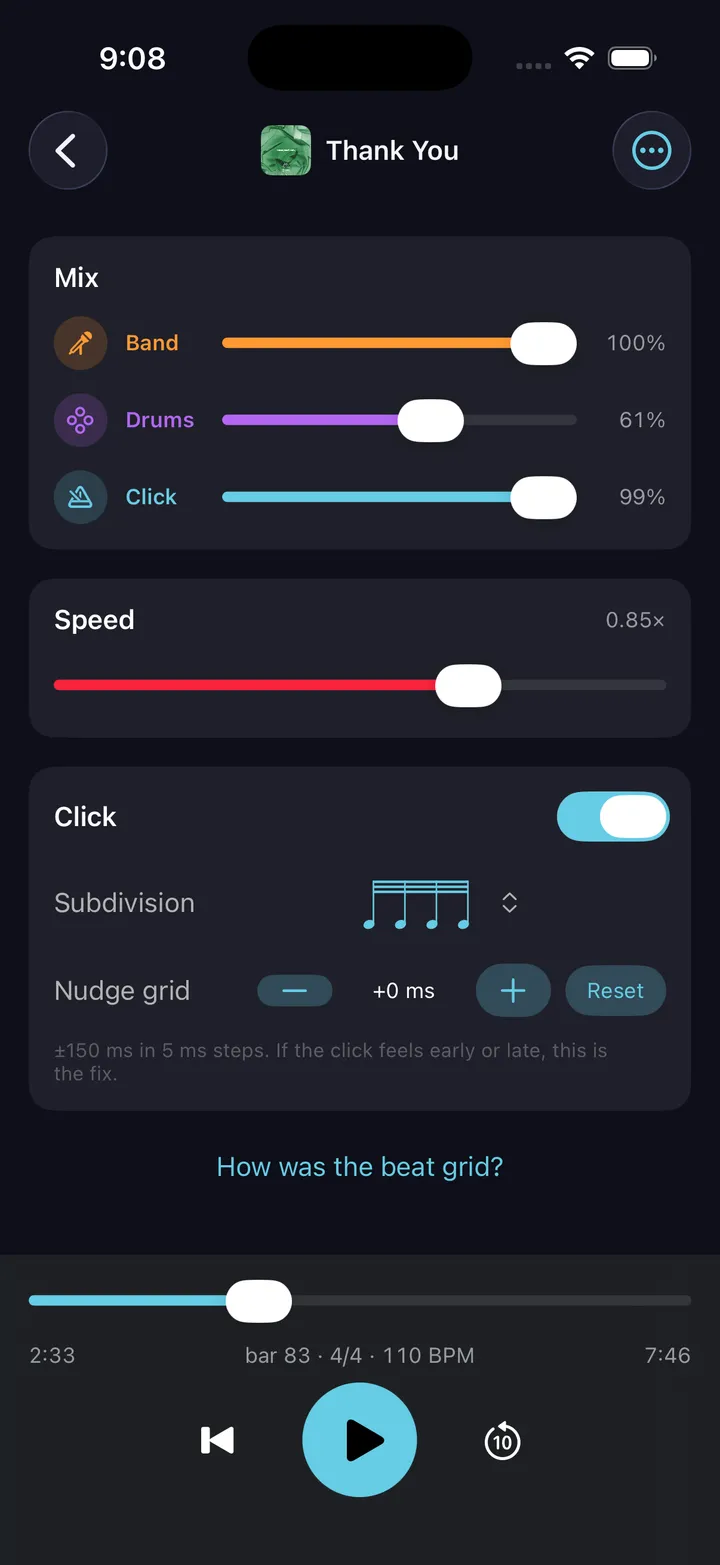
A drumless backing track used to mean finding one somebody else made, in their tempo, at their speed. Upload a song and DrumShed takes the drums out of the one you actually need — then follows it with a click, slows it down at the same pitch, and loops the bars you are working on.
Better than a downloaded drumless track
Your fader, not their mix
The drums come out on a fader you control. Zero for drumless, or a touch left in as a guide. The band stays exactly as recorded.
The song you need
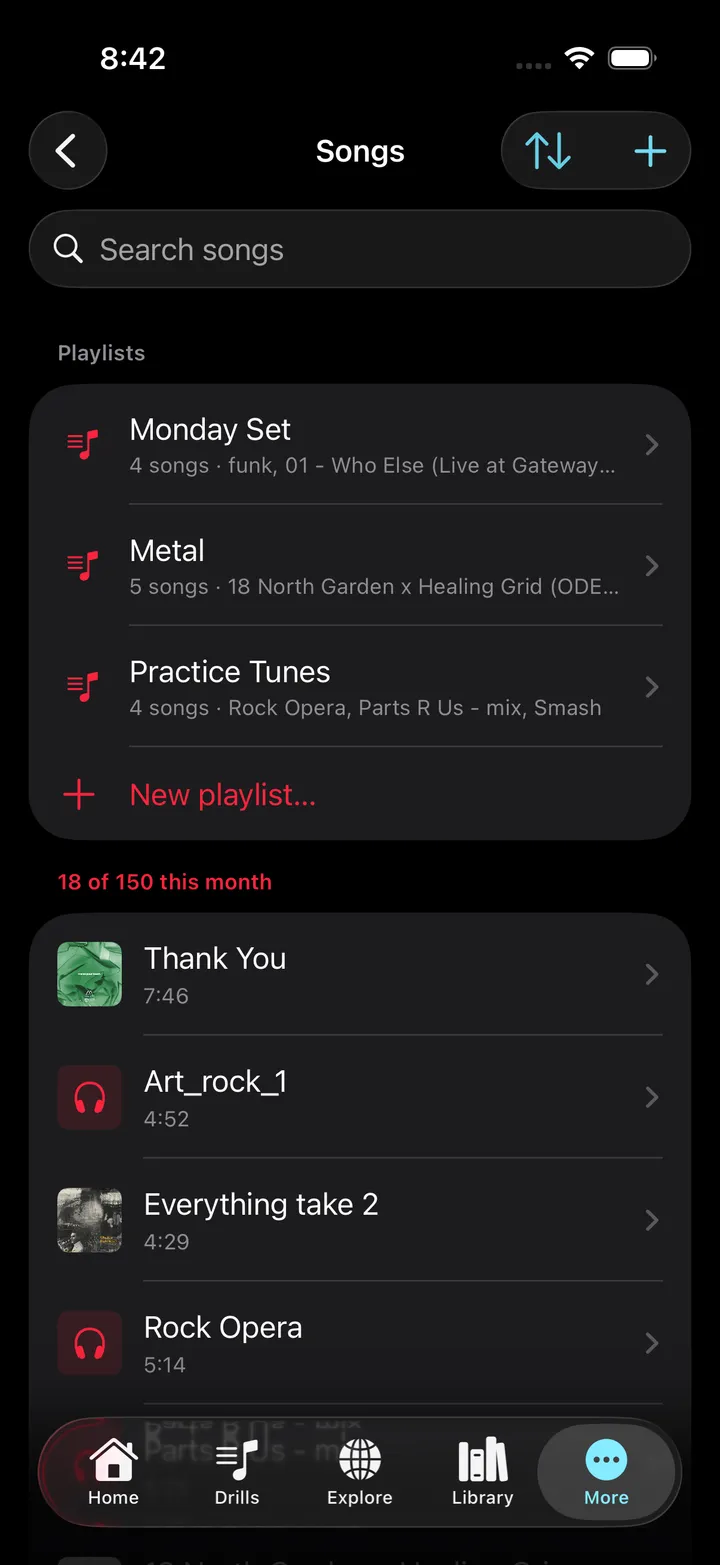
Rehearsal takes, demos, the set for Friday. If you have the file, you have the drumless version — no catalog to search.
Any speed, same key
A downloaded track is one tempo forever. Here it runs from half speed to full without changing pitch.
A click in the pocket of the take
DrumShed finds the downbeats and follows the recording’s own tempo bar by bar, so the click sits with the band instead of on top of it.
Loop a section
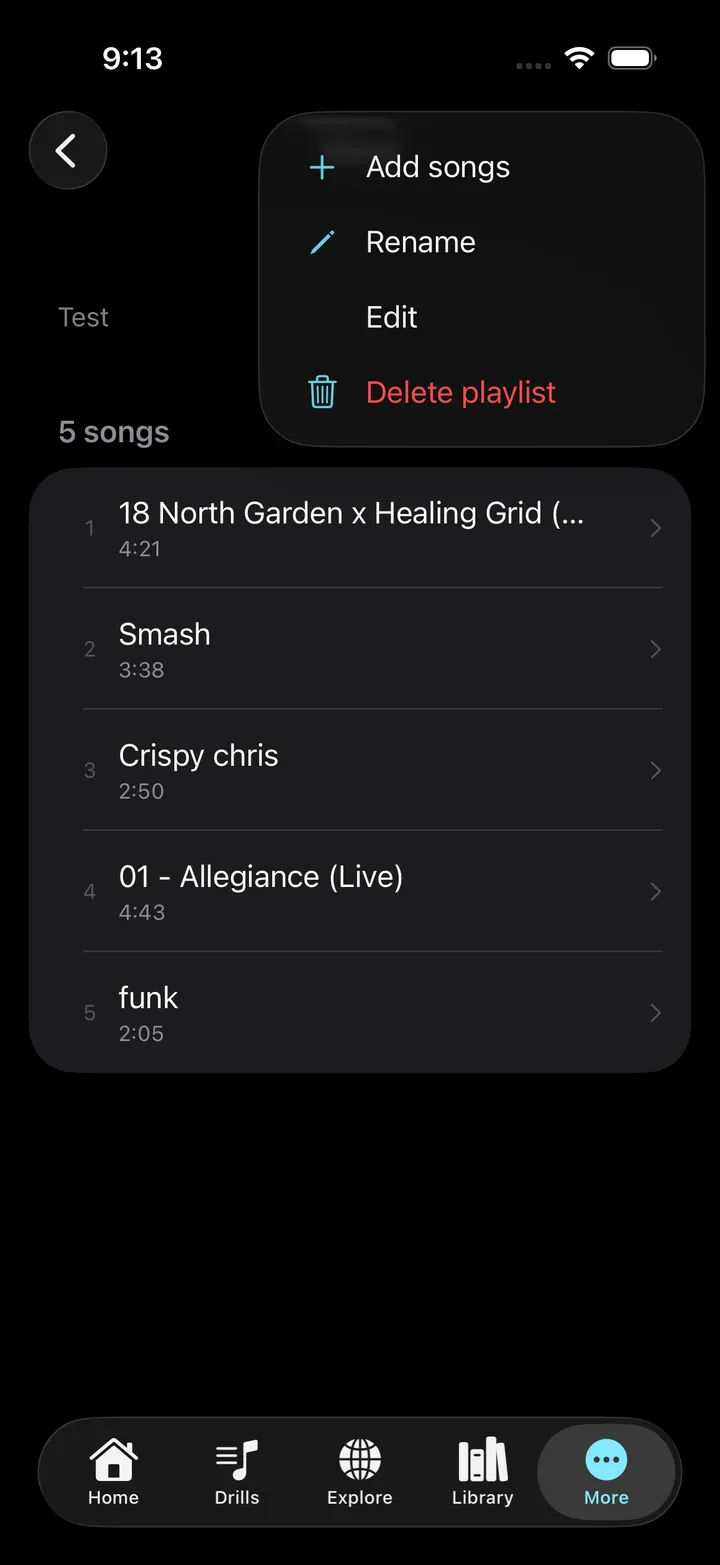
Pick a bar range, loop it in a session next to your drills, and the reps count toward your practice.
Flip it: drums only
The same separation gives you the drum part alone — learn it by ear, then take it out and play it yourself.
From a song to a drumless track
01
Pick a track, or upload a song
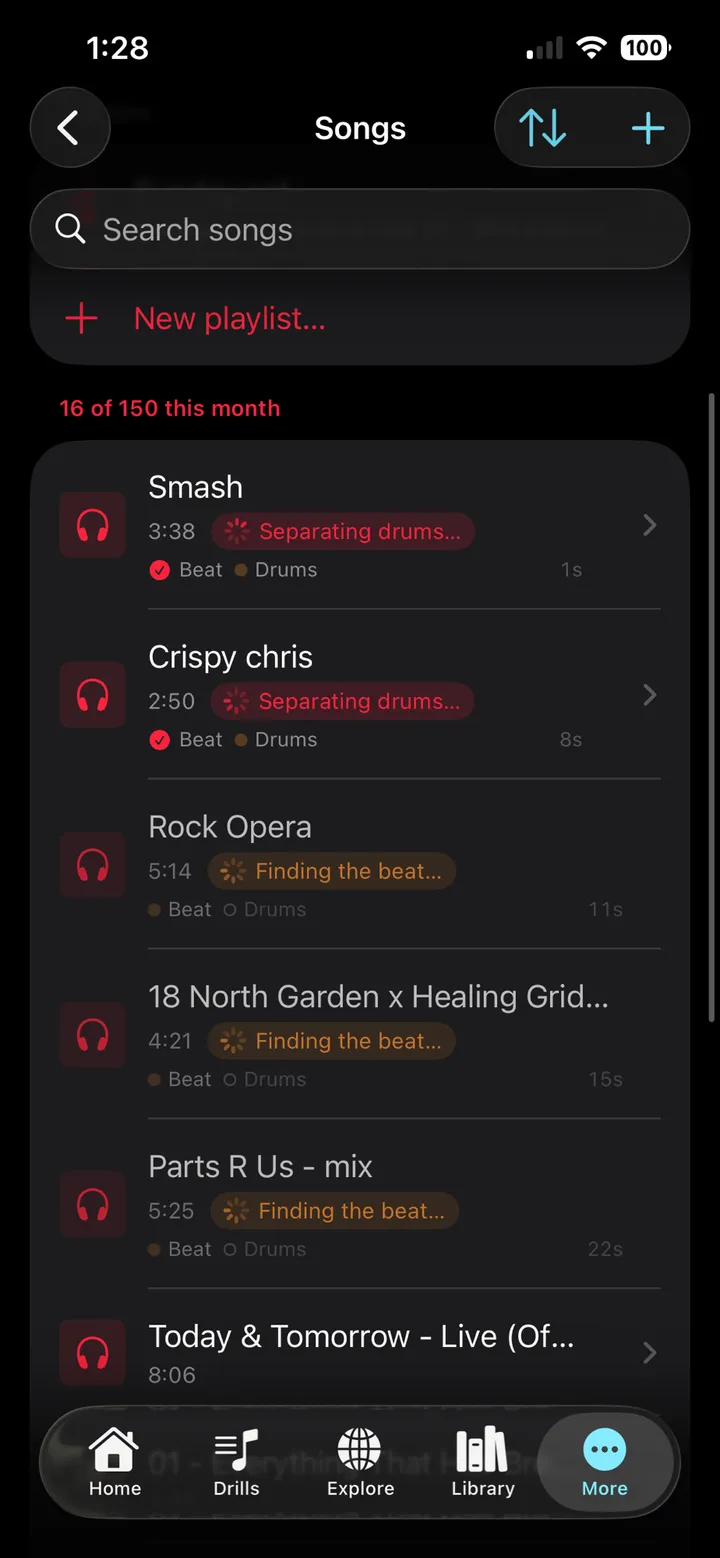
Nearly 200 built-in backing tracks by genre and tempo, drums already out — or an MP3, M4A, WAV or FLAC up to 15 minutes: a rehearsal take, a demo, the track you’re learning. Files only, never a streaming link.
02
DrumShed takes the drums out
The drums are separated from the band, the tempo and downbeats are found, and a grid is laid over the take bar by bar.
03
Sit in
Play along with the band and no drums, solo the drums to learn the part, slow it to half speed at the same pitch, and loop the bars you need.
What a drumless track is for
Practicing to a record with the drums still in is practicing to double someone else. The drumless version is where you find out whether you can actually hold the band: where the time sits, how the fill lands going into the chorus, what happens when nobody is playing the backbeat but you.
For a band, that is the difference between listening to the demo in the car and having played through it before rehearsal. Upload the take from last week, pull the drums out, and run the set at 0.8× until the transitions are clean — then at full speed with the click that follows the recording.
Play it your way
What you can upload, and who can hear it
- Audio files you have the rights to use for your own practice — your band’s recordings, demos, rehearsal takes, lesson material. MP3, M4A, WAV or FLAC, up to 15 minutes. We don’t accept links from streaming services.
- Private by construction. Uploads are never shared, listed, or searchable, and they’re deleted with your account.
- Three songs a month are free. All Access includes 150 song & sheet-music uploads a month (beta), and the separated stems stay for the life of the upload.
How we handle infringement notices is in our Copyright Policy.
Common questions
Where do I get drumless backing tracks?
You make them. Upload a song — your band’s recording, a demo, a rehearsal take — and DrumShed separates the drums from the rest and hands you the band without the drums, with a click that follows the take. No hunting for a version somebody else happened to make, in a key and tempo you did not choose.
Can I keep a little of the original drums in?
Yes. The drums have their own fader. Set them to zero for a true drumless track, or leave 20 percent in to lean on the original while you learn the part.
Do I need my own songs?
No. Songs › Built-in has nearly 200 royalty-free backing tracks spanning sixteen genres — rock, funk, jazz, gospel, Latin, metal and more — each with the drums already separated and a click on its grid. Filter by genre, pick a tempo, play. Uploading is for when it has to be a particular song.
Does it change the pitch when I slow a song down?
No. Speed runs from half speed to full at the same pitch, so a song at 0.6× still sits in its key — you are hearing the band slower, not lower.
How does the click know where the beats are?
When you upload, DrumShed finds the tempo and the downbeats of the take and lays a grid over it bar by bar. The click follows that grid — including tempo drift in a live recording — and you can nudge it earlier or later until it sits right to your ear.
Can I put a song inside a practice session?
Yes. Add a whole song or a bar range — say bars 9 to 16 — as a session item next to your drills, loop it, and it counts toward your practice time and streak like any drill.
Is it free?
Three songs a month are included on every account. All Access includes 150 song & sheet-music uploads a month (beta). The separation runs on our servers, which is why it is metered.
Every drummer needs
a home base.
Every song you have is a drumless track now.