Gospel chops exercises
built from cells, not transcriptions.
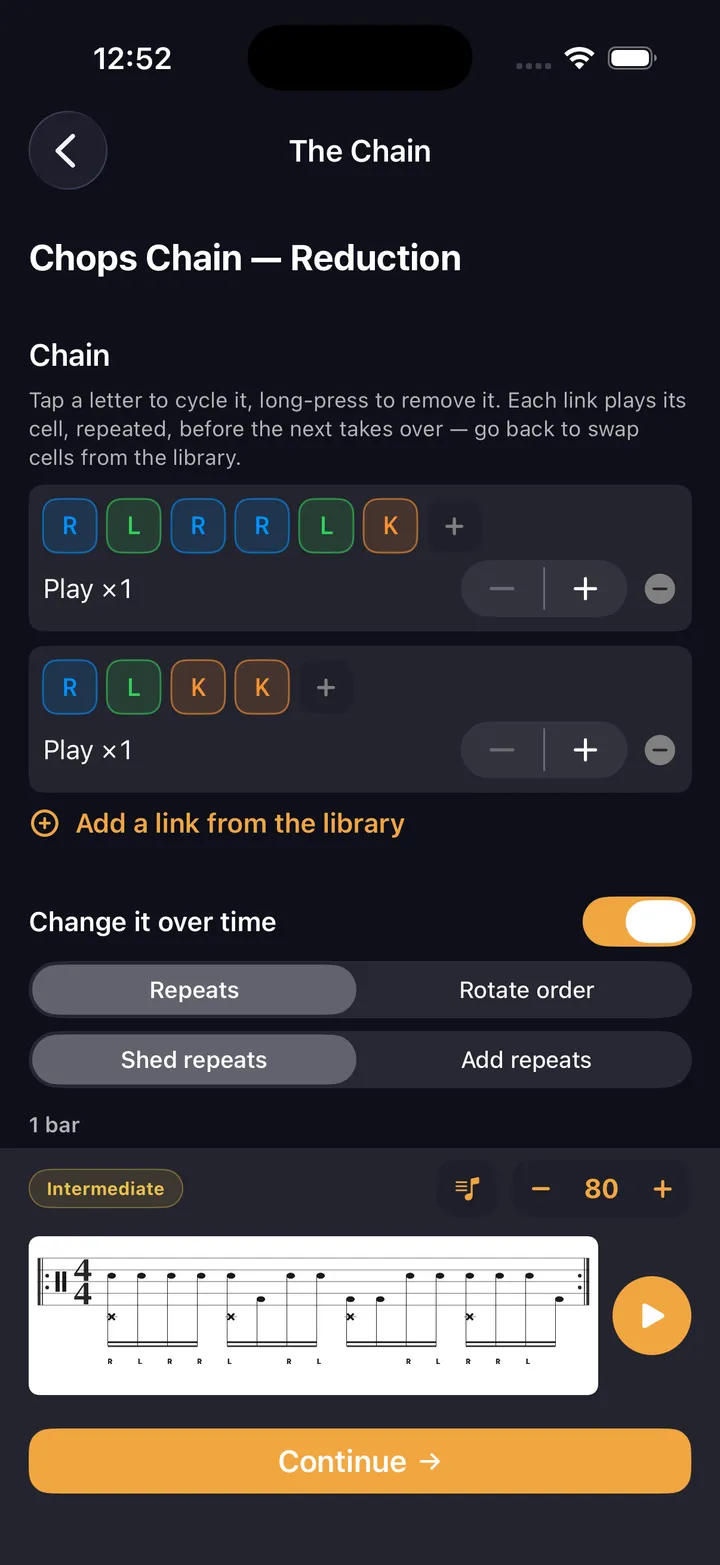
Chops are building blocks chained together and reduced — not licks to memorize. The Chops Lab opens straight into a multi-segment chain on sextuplets, with kick-integrated cells and the reduction drill as a first-class setting.
Learn the system, not the lick
Copying a chops run off a video gets you that run. Chaining cells and reducing them gets you the thing that generated it — and a hundred more you never had to be shown.
Kick-integrated cells
RLK, RLRK, RRLK, herta-plus-kick, and rest-based cells. Hand-only cells drop into the same chain, so a run can breathe between kick figures.
Reduction, front and center
Four times, three, two, once. The Chops Lab gives the decrementing repeat count top billing in the chain's guided options, because that shape is most of the idiom.
Rotate the chain
Cycle which segment leads. A phrase you can only start from the top is a phrase you can't drop into a song.
Sextuplets by default
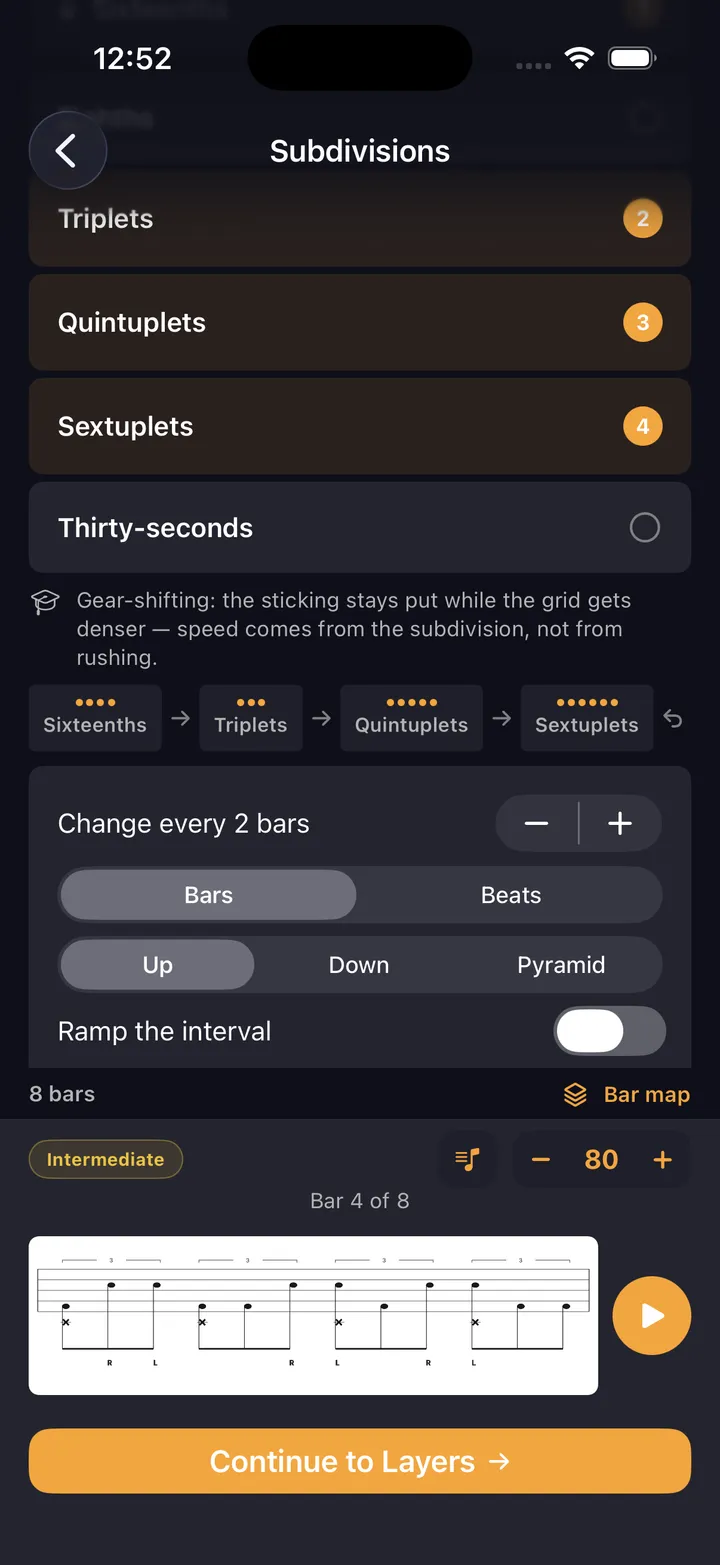
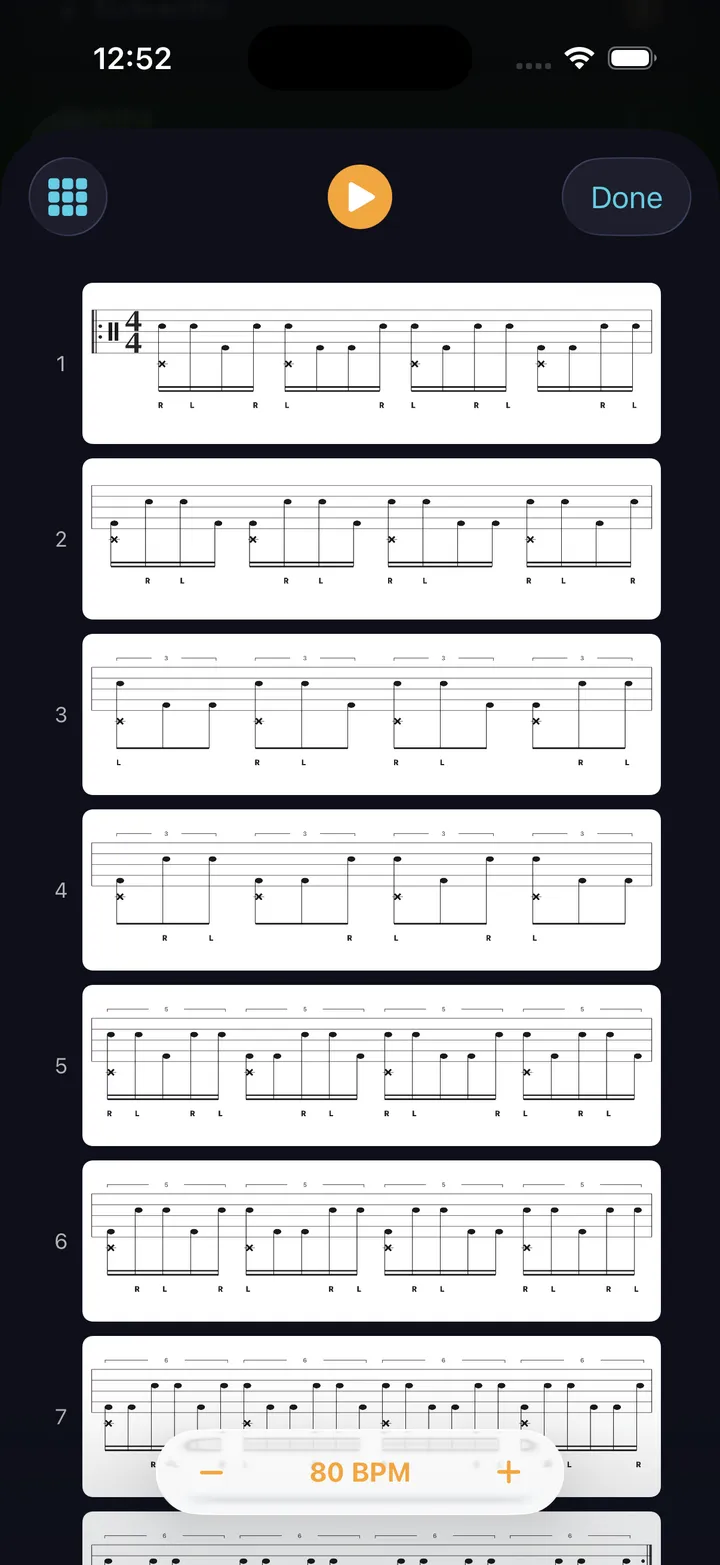
The door opens on triplet and sextuplet grids rather than sixteenths, because that is where the vocabulary lives. Quintuplets are there when you want the phrase to stop resolving neatly.
Voice it around the kit
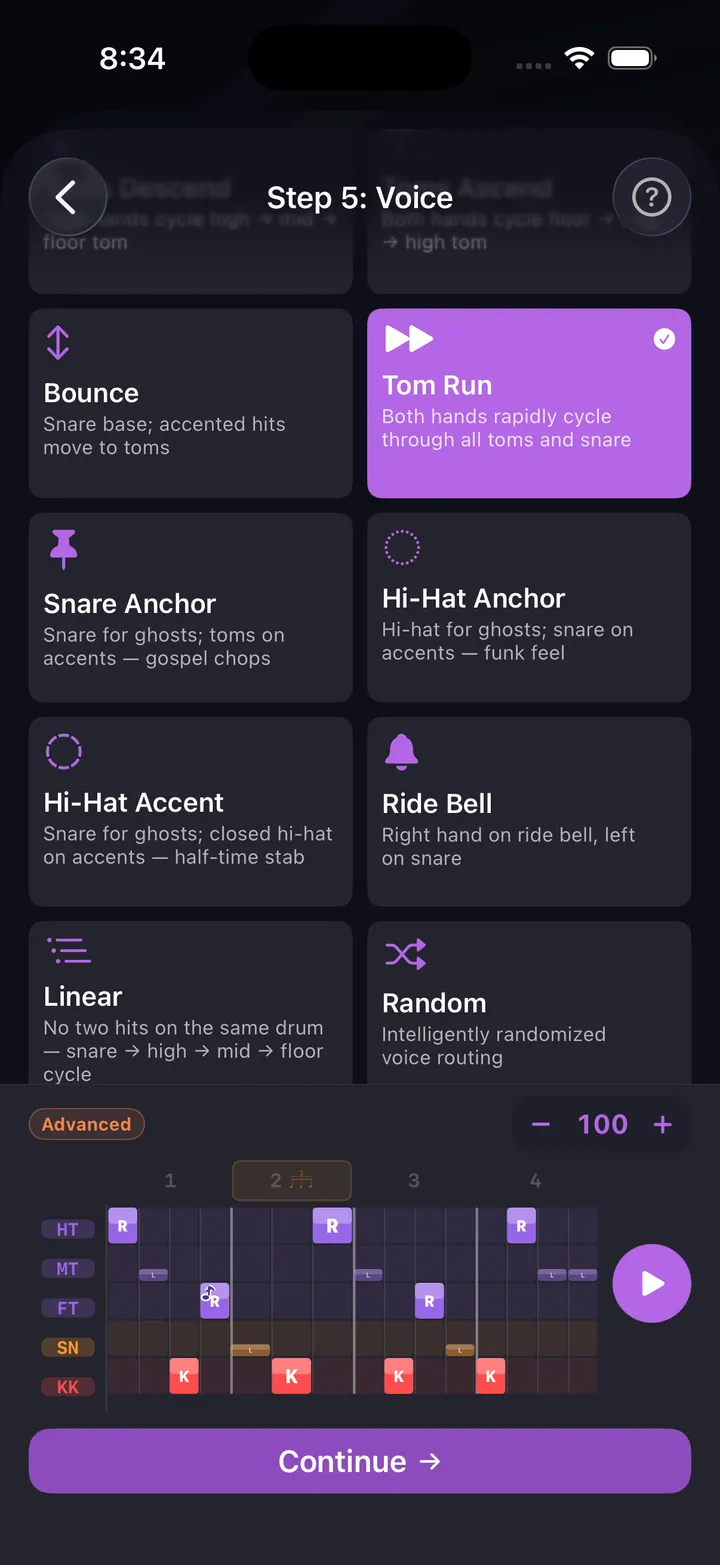
Route the stream across snare, toms, and cymbals with a voicing strategy — accents to the toms, hands split, toms descending — or place every hit yourself in the editor.
A tempo ladder
Start, target, step. Chops are a speed problem you solve slowly, and the drill is configured as a climb rather than a single number you keep nudging.
Four chops drills to build
Every one of these is a chain and a variation setting. None of them is a transcription.
The first kick weave
RLKThree notes, one cell, sextuplets. Two hands and a kick, no note repeated by the same limb — the smallest possible linear phrase. Loop it at 60 until the kick lands with the same weight as the hands, because it will be late and quiet before it is anything else.
Triplet weave into sixteenths
RLK · RLRKA three-note cell and a four-note cell in one chain. The grouping crosses the beat, which is the whole feel — the phrase resolves somewhere other than where you expect. Set the chain to rotate so each cell takes a turn on beat one.
The reduction drill
RLRK ×4 → ×3 → ×2 → ×1The 4-2-1 shape, as a setting. Play the link four times, then three, then two, then once, then start over. The count-down bars are where the phrasing lives and where the tempo collapses — which is why the drill is built around them rather than around the cell.
Sextuplet weave with double kick
RLKK · RLRLKKTwo kicks inside the cell instead of one. This is the point where the feet stop being punctuation and become part of the stream. Start slower than feels reasonable — the tempo ladder exists so you can set 70 as the start and 130 as the target and stop negotiating with yourself.
Then put it in a song
A chops run you can only play as a loop isn’t finished. Move it into the Fill Builder, pick the groove it lands in, and hear the bars either side of it.
Every drummer needs
a home base.
Build the system behind the lick.