The best free metronome
for drummers, honestly compared.
Most roundups compare beep quality. For a drummer what matters is subdivisions, odd meters, accent patterns, whether the click can play a feel — and, past all of that, whether anything tells you what to do with it. Here is how the real options stack up, including the ones we did not make.
What a drummer needs that a generic metronome misses
Any metronome can click at 120. These are the four things that separate one built for drums.
Subdivisions, not just quarters
8ths, triplets, 16ths, quintuplets — with a separate tone for the subdivision so you can hear where you sit inside the beat, not just on it.
Odd meters with your groupings
7/8 is not one thing. It is 2+2+3 or 3+2+2, and they feel completely different. A drummer's metronome lets you say which.
Per-beat accent patterns
Accent the 1, the 2 and 4, or an odd grouping across the bar — so the click reinforces the phrasing instead of flattening it.
A click that plays a feel
Real drumming sits fractionally behind or ahead of the grid. A click that can shuffle its subdivisions and drag or rush the backbeat is something you can groove with, not just obey.
The options, compared
We make one of these. We have tried to be straight about where the others win — a roundup that says we are best at everything is worth nothing to you.
DrumShed
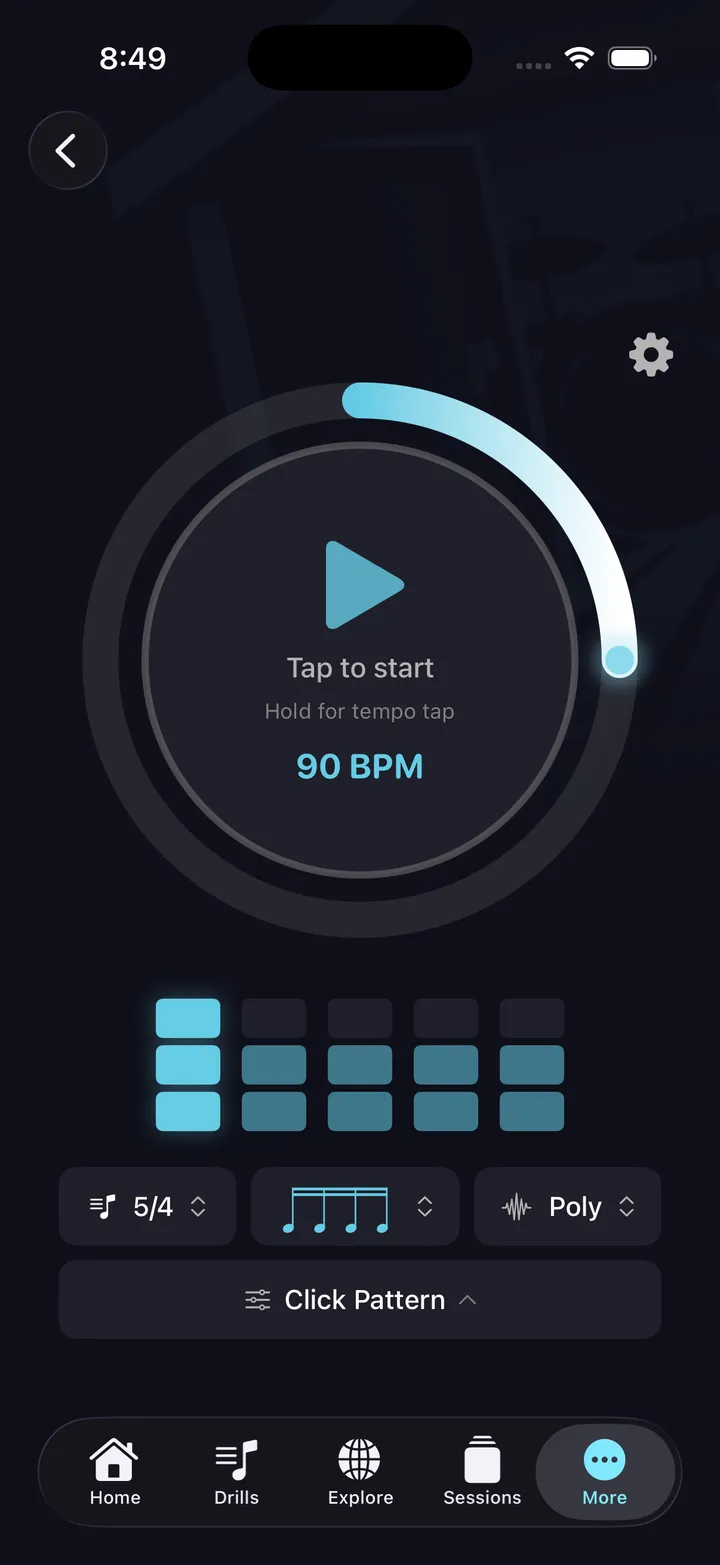
Best free metronome for drummersFree, no ads, nothing held back: 19 click sounds, 14 subdivisions, every meter from 2 to 13 over /4 or /8, polyrhythms up to 16:16, and per-beat accent patterns. It's also the only one here whose click can groove — shuffle the 8ths or 16ths at real percentages and drag or rush the backbeat, so you practice against a pulse that breathes instead of a grid. Ten structured timing drills are built on top of it, also free.
Where it falls short: Aimed at drummers specifically. If you want a general-purpose metronome for piano or voice, a simpler app will feel less busy.
Pro Metronome
Best paid no-nonsense clickA long-standing favorite that does the core job cleanly — solid subdivisions, polyrhythm support, per-beat accent control, and a clear visual mode. A one-time purchase unlocks the extras.
Where it falls short: It's a metronome, and it stops there. Nothing tells you what to practice with it.
Soundbrenner
Best if you want to feel the beatA capable free metronome whose real draw is pairing with the Pulse/Core wearable so the tempo arrives as a vibration on your wrist or ankle — genuinely useful on a loud stage where you cannot hear a click.
Where it falls short: The wearable is the point, and it costs real money. The app alone is a competent but fairly standard metronome.
Time Guru
Best dedicated gap trainerBuilt around one strong idea: the click randomly drops out so you have to hold time yourself. It popularized the approach, and it is still the cleanest single-purpose version of it.
Where it falls short: Single-purpose by design, and the interface shows its age.
A hardware metronome
Best when you want no screenA Korg, Boss, or Tama unit turns on instantly, never rings mid-practice, and has no notifications. For pure discipline there is something to be said for a box with a dial.
Where it falls short: No history, no odd-meter grouping, no drills, and nothing to show whether you actually practiced this week.
Prices are described in general terms on purpose — App Store pricing and tiers change, and a page quoting a stale number is worse than one that tells you to go look.
And ten drills built on the free click
A metronome tells you where the beat is. It will not tell you what to do about it. These ten each isolate one timing problem and drill it in reps — every one free, with the click as their engine.
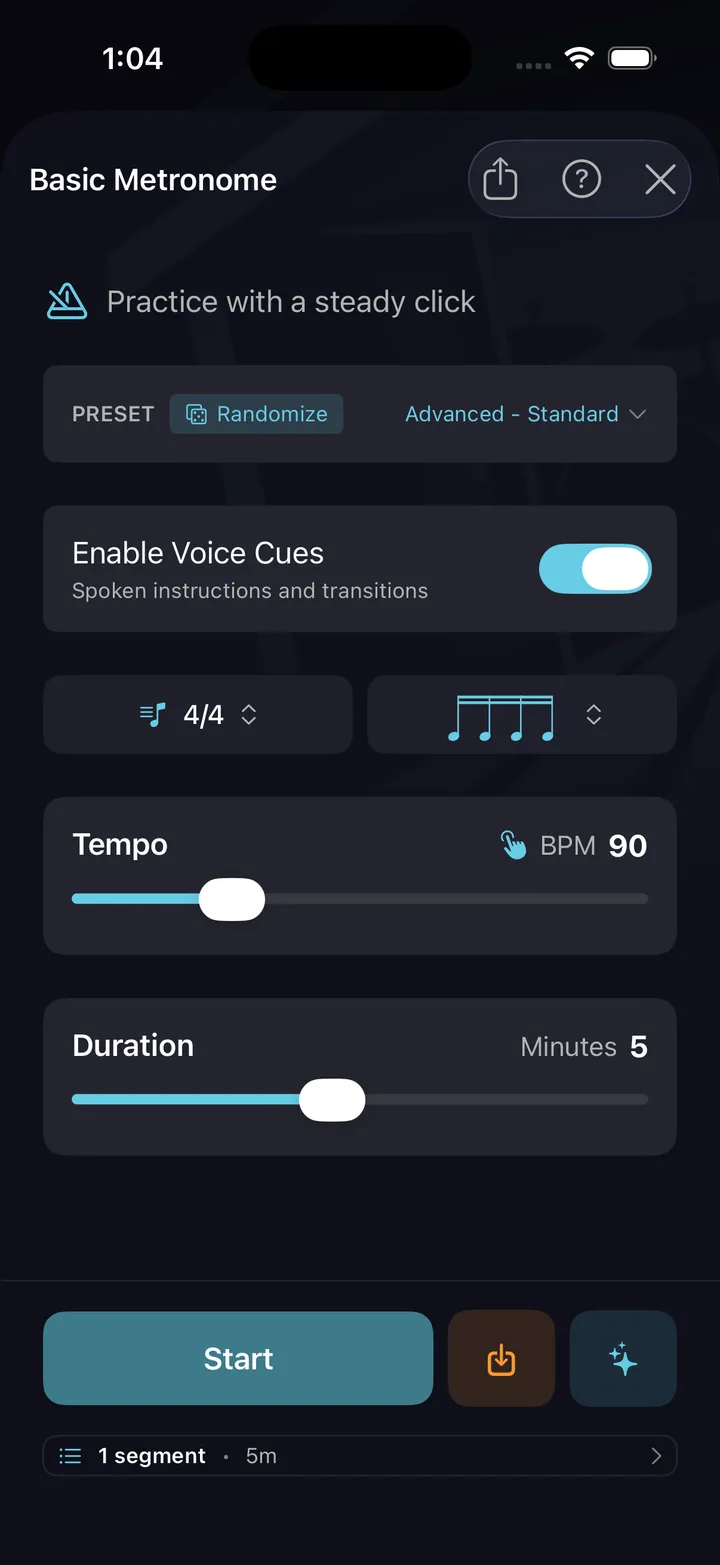
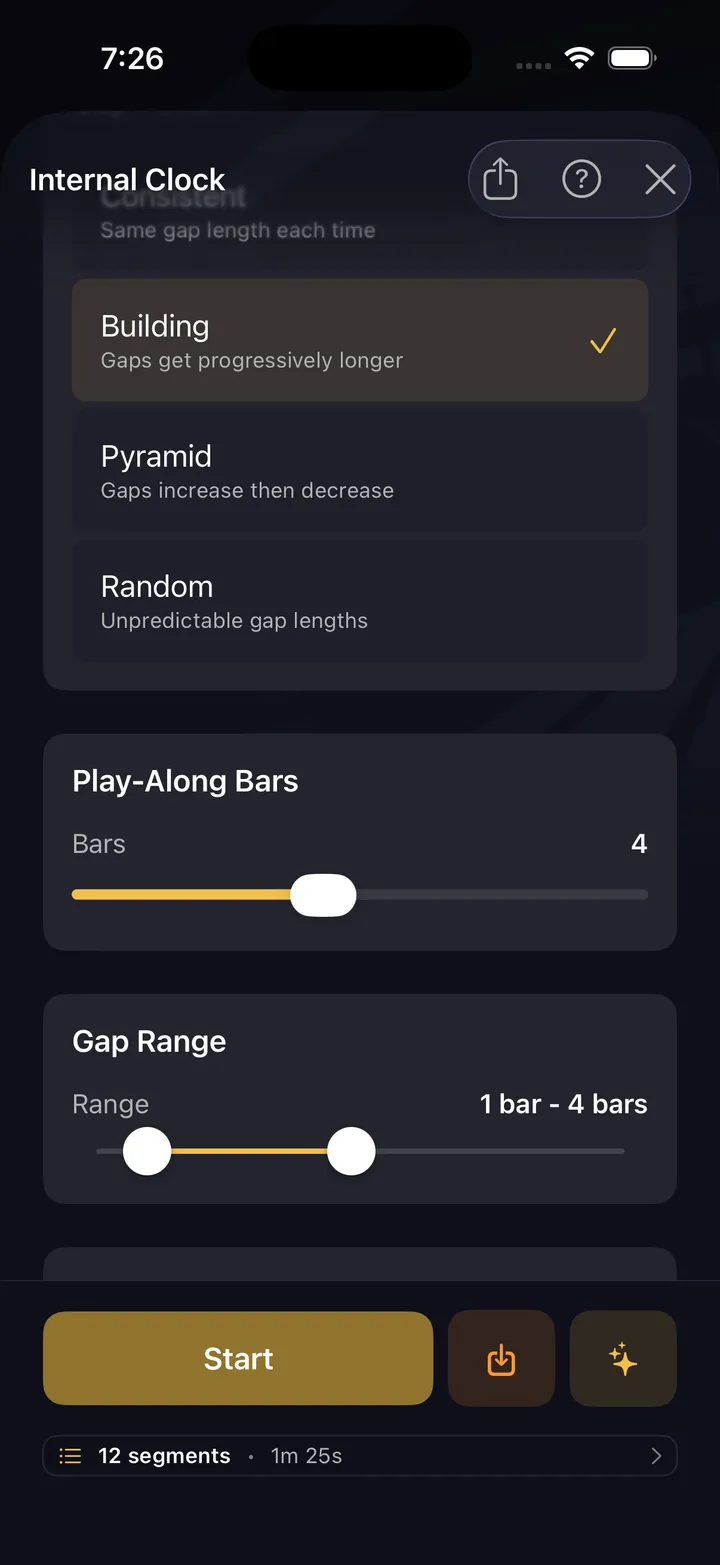
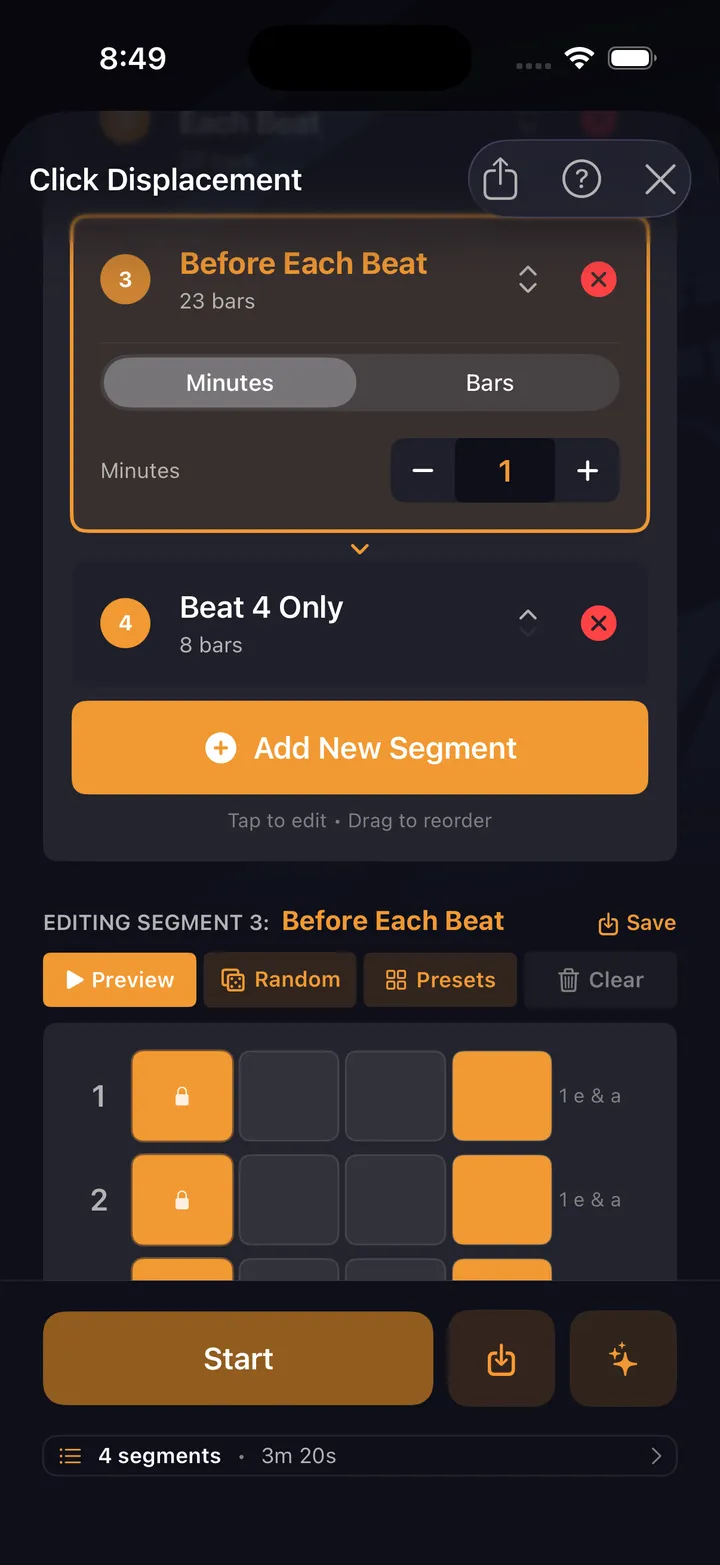
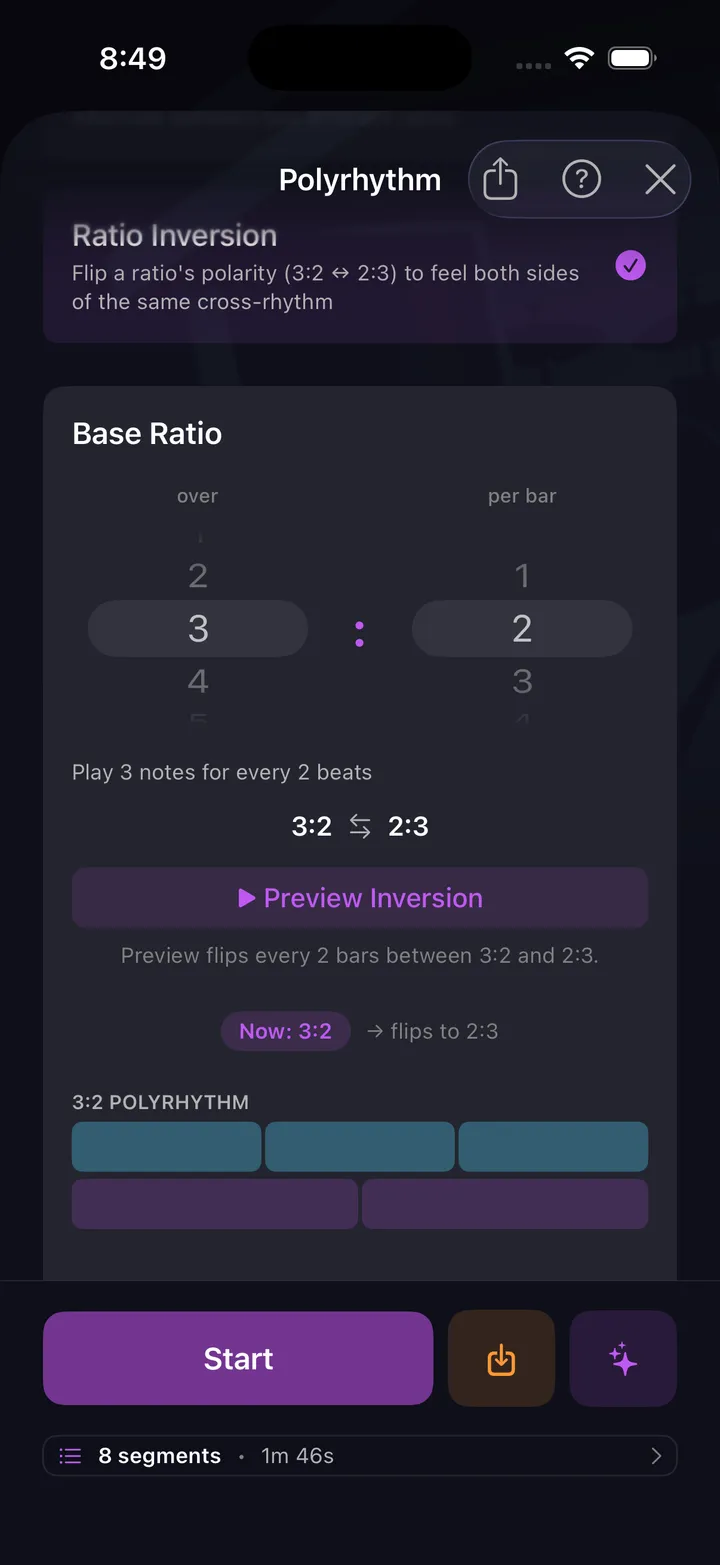
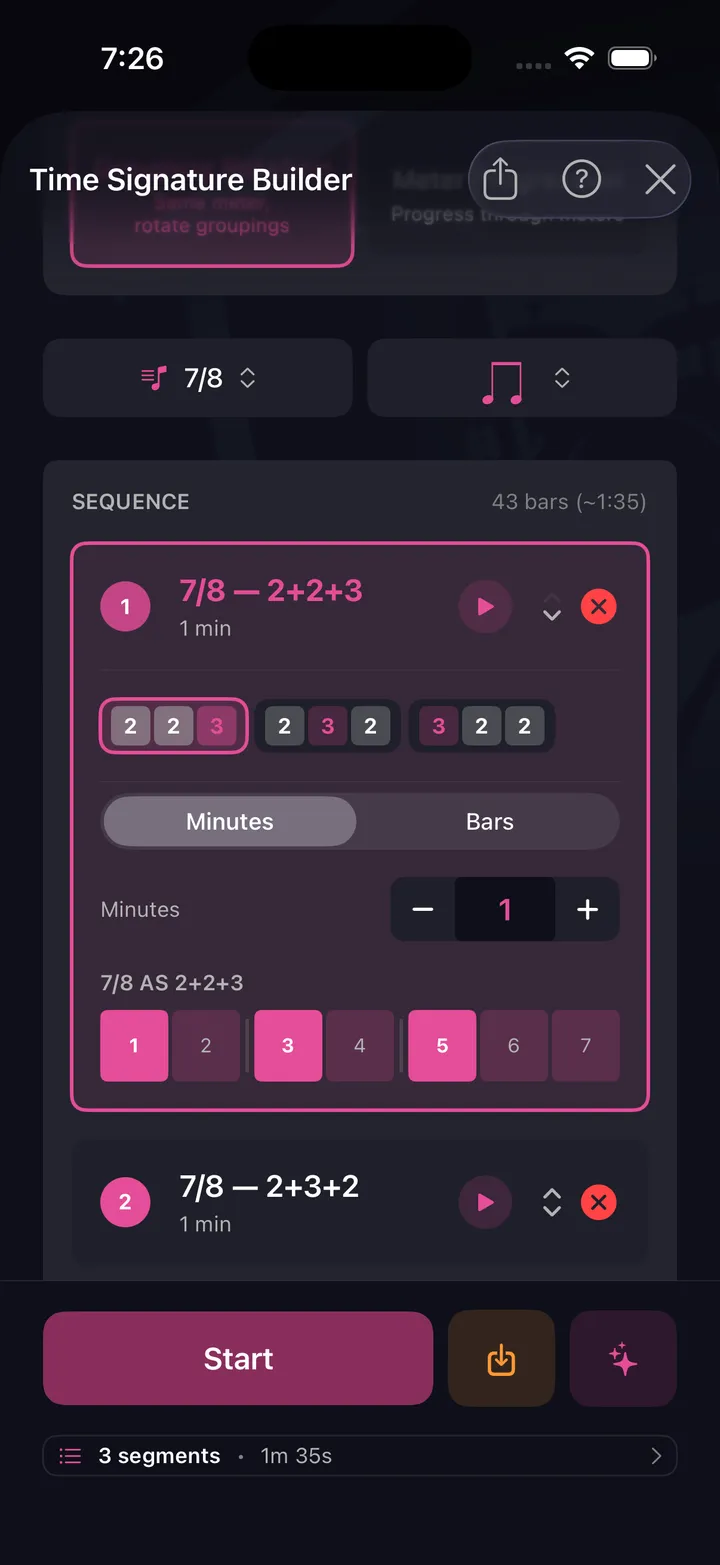
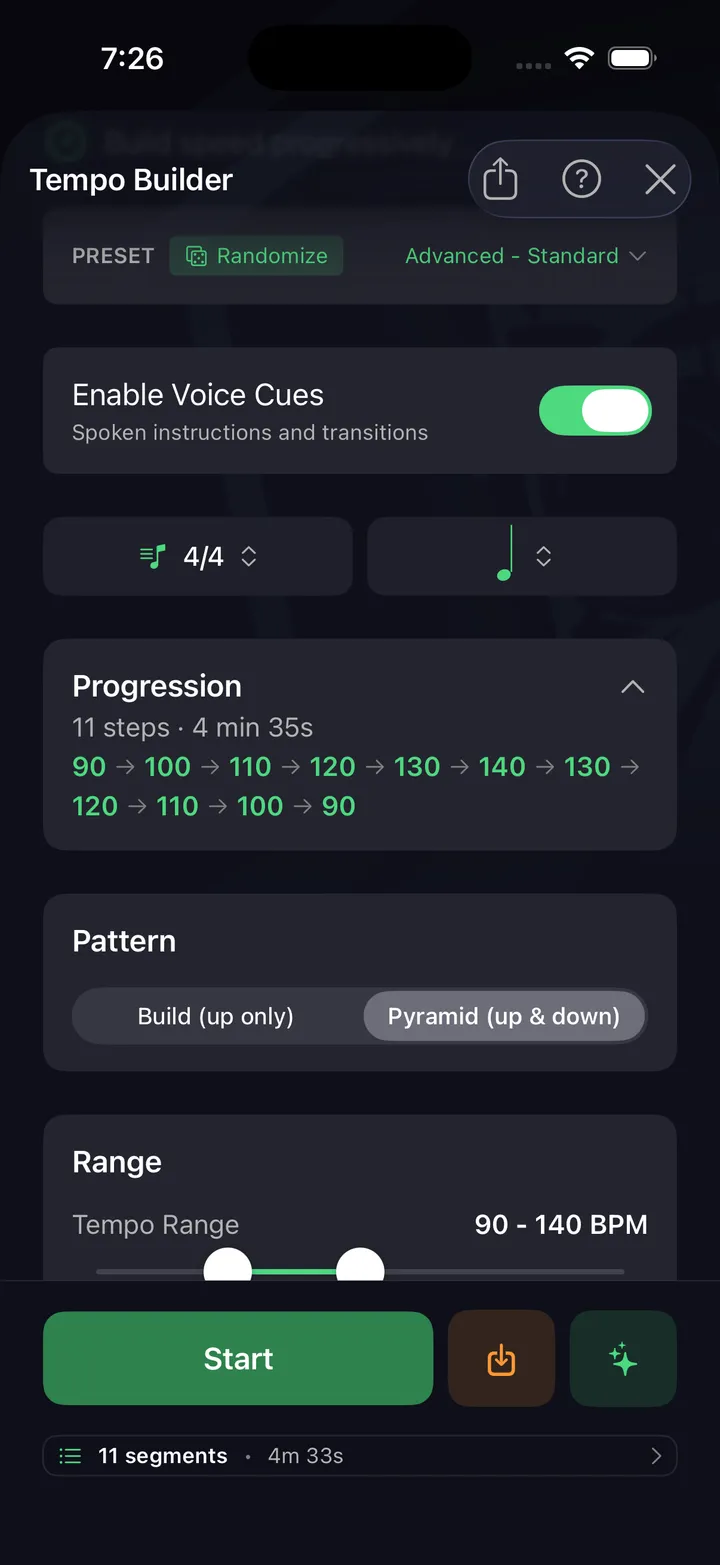
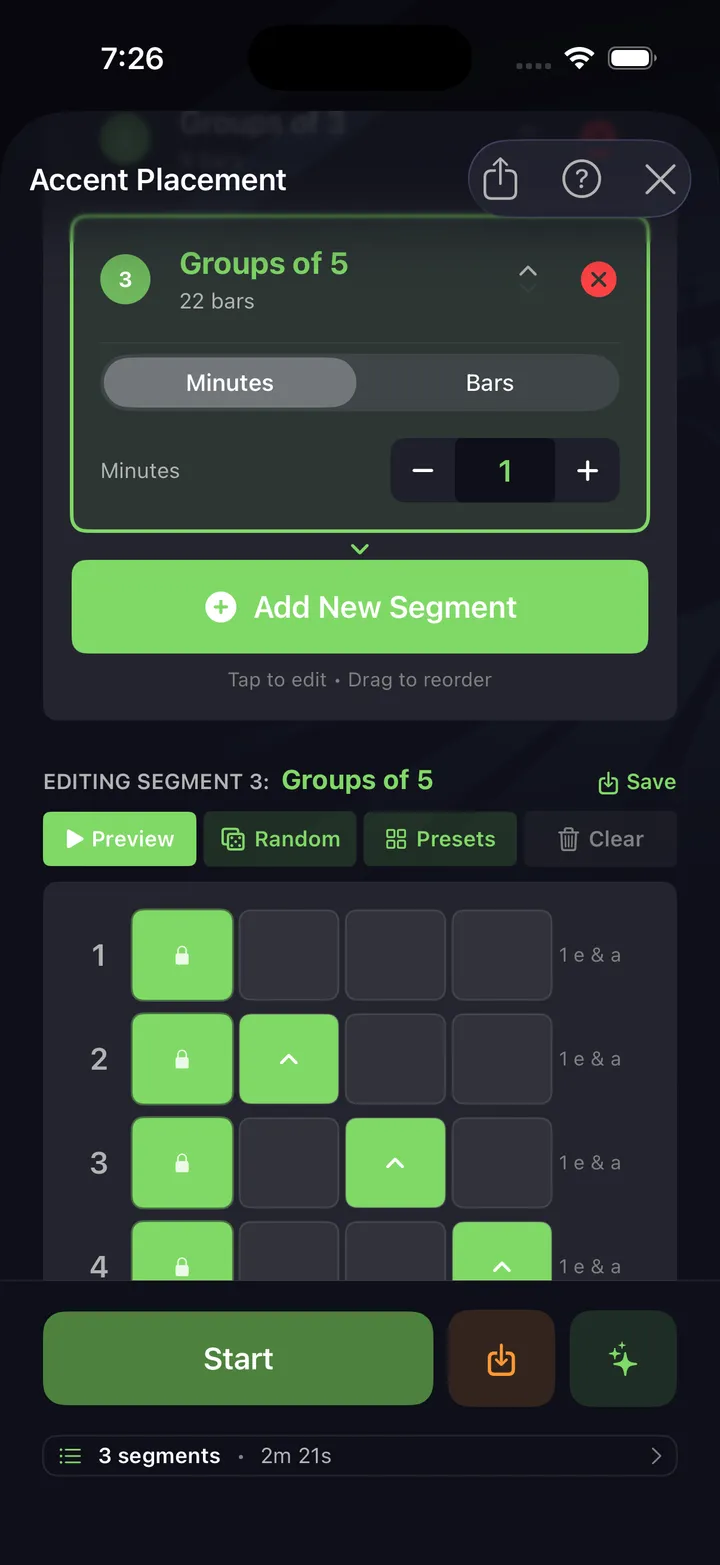
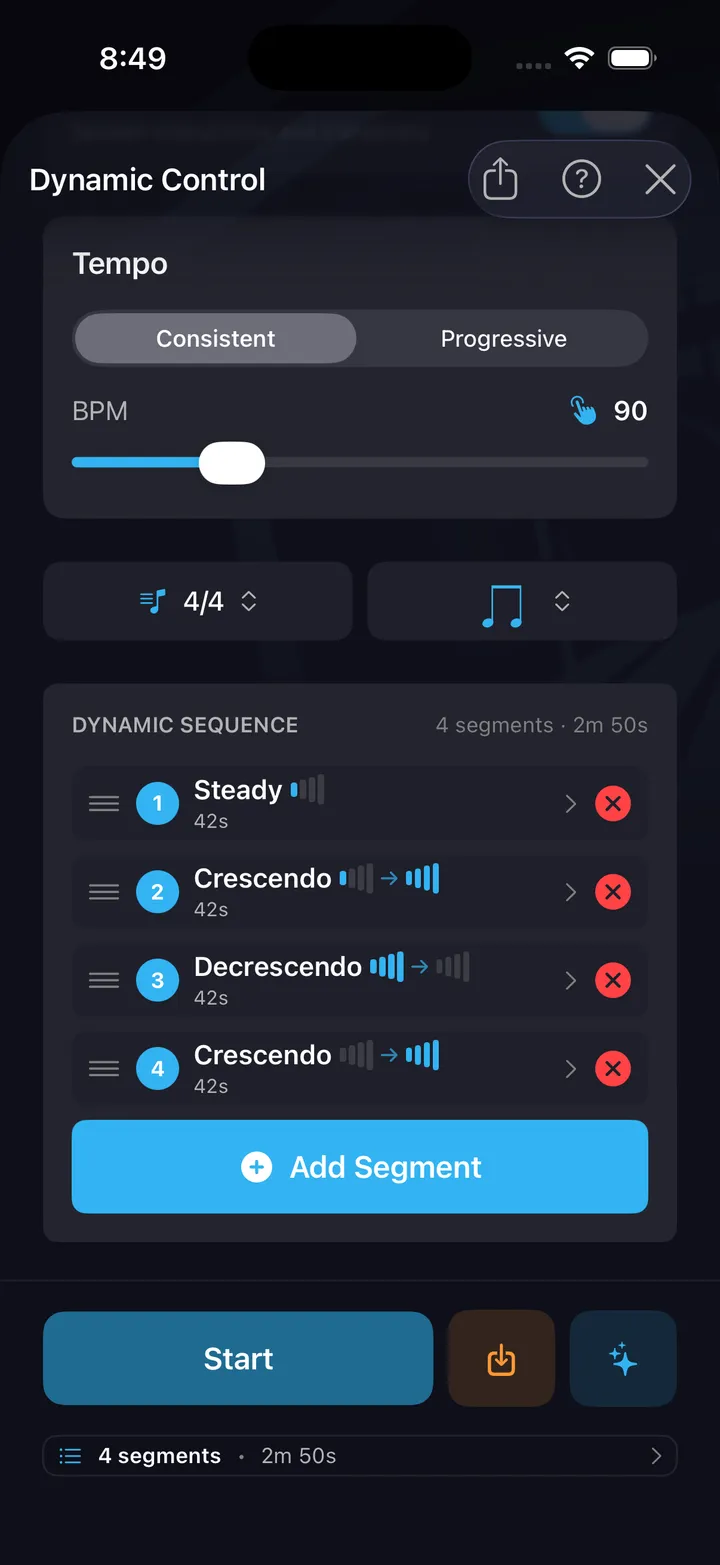
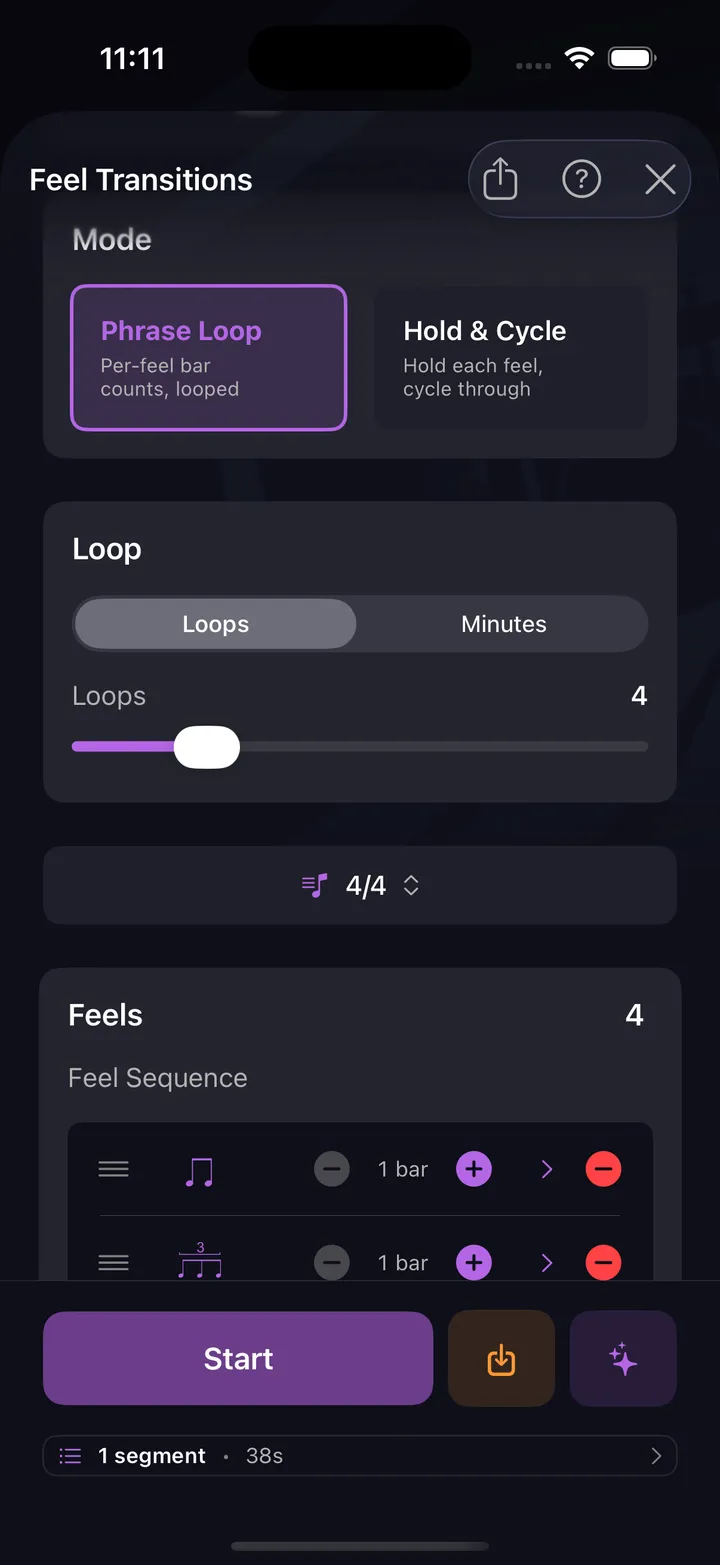
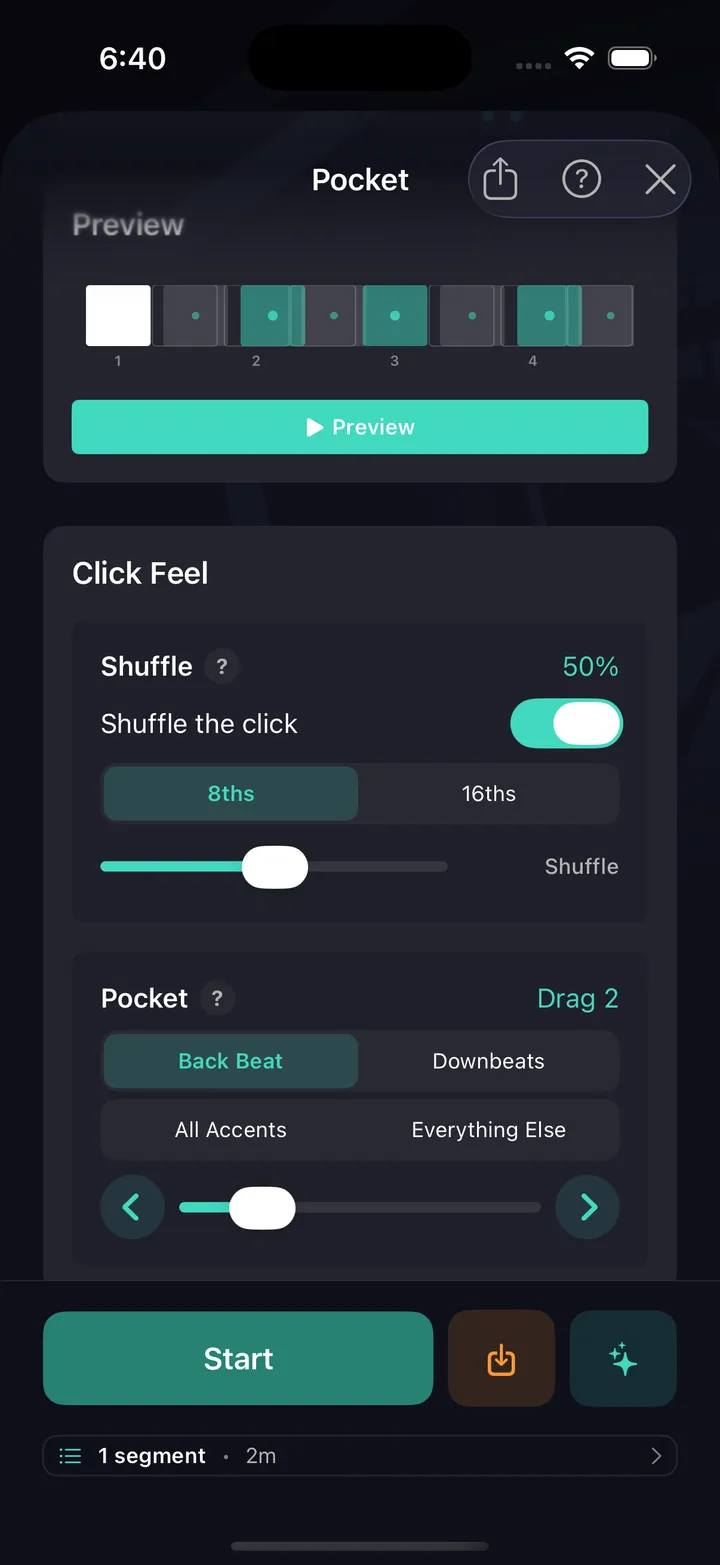
All ten are free — no card, not a timed trial. See every drill explained.
All ten timing drills are free.
Not a trial, not a preview. The metronome underneath is complete — no limits, nothing held back — and all ten drills that aim it ship in the free app, with hands-free sessions and your full drill history, stats and streaks. No ads, no card, not a timed trial. A subscription only comes in when you want to build your own beats and fills, publish them, or use the AI co-pilot.
Common questions
What is the best free metronome for drummers?
DrumShed. It is free with no ads and no expiring trial, and unlike most free metronomes nothing important is held back: 19 click sounds, 14 subdivision types, any time signature from 2 to 13 over /4 or /8, polyrhythms, and per-beat accent patterns are all in the free app. It also adds shuffle and pocket control so the click can drag or rush the backbeat rather than sitting dead on the grid, plus ten structured timing drills — also free.
What makes a metronome good for drummers specifically?
Four things a general metronome usually misses. Subdivision control, so you can click 8ths, triplets, or 16ths rather than just quarters. Odd meters with your own groupings, so 7/8 can be 2+2+3 instead of an undifferentiated seven. Accent patterns, so the downbeat and the subdivision can be distinct sounds. And feel — a real drummer sits slightly behind or ahead of the grid, so a click that can shuffle its subdivisions or move the backbeat is far more musical to practice against than a rigid one.
Are free metronome apps good enough, or should I pay?
For a plain click, free is genuinely enough — this is not a feature that needs a subscription. Where free apps usually cut you off is the drummer-specific end: polyrhythms, odd-meter groupings, and per-beat accents often sit behind a purchase. Check that before paying, because you may not need to.
Is a metronome app as good as a hardware metronome?
For sound and reliability, yes — a modern phone has more than enough timing accuracy for practice, and app clicks are sample-based rather than a thin beep. Hardware wins on having no notifications and no temptation. Apps win on odd meters, polyrhythms, saved configurations, and keeping a record of what you actually practiced.
Should I always practice with a metronome?
No, and drilling exclusively to a click has a known failure mode: you get very good at following time and no better at keeping it. Alternate. Play to a click to calibrate, then play without one — or use a gap trainer that mutes the click for bars at a time — so you find out whether the pulse is actually internal yet.
Every drummer needs
a home base.
The best free metronome for drummers — and every drill that runs on it.