Playing a backline kit? Make it feel like yours.
A backline or house kit belongs to someone else and was set up for the last drummer. Here’s the order to set it up in when the changeover clock is running, what to bring, and how to get it to your own heights and angles instead of close enough.
Why a backline kit feels wrong
On your own kit, memory locks hold every stand at the height you set, and your hands know where each drum is without looking. A house kit was set up for the last drummer, or for nobody. A snare an inch high, a ride tipped the wrong way or a floor tom a hand’s width out is enough to make fills land late and your shoulders work harder all night.
Memory locks only fit the hardware they’re clamped to, and tape marks on your rug don’t travel. What travels is knowing your numbers.
Set it up in this order
Everything is placed relative to where you sit, so build outward from the throne.
- Throne: the height first, so your thighs slope down a little toward the knees. Every other height depends on it.
- Snare: its height against your lap and its tilt. Most drummers set the snare first and fit the rest around it.
- Bass drum and hi-hat pedals: where your feet fall naturally, with the beater hitting the middle of the head.
- Hi-hat: the height over the snare, so the stick clears the snare rim.
- Rack and floor toms: their height and angle against the snare, close enough that you reach them without leaning.
- Ride and crashes last: their height, how far they reach over the toms, and the angle they’re tipped to.
What to bring
On most shared bills the backline is the shells and stands. Drummers usually bring the breakables: sticks, a snare, cymbals, a bass drum pedal and sometimes a throne seat. Add a drum key, cymbal felts and sleeves, and a roll of gaffer tape for anything that slips.
Bring your own snare and pedal if you can. They’re the two pieces you notice most when they’re wrong.
Or bring your whole setup on your phone
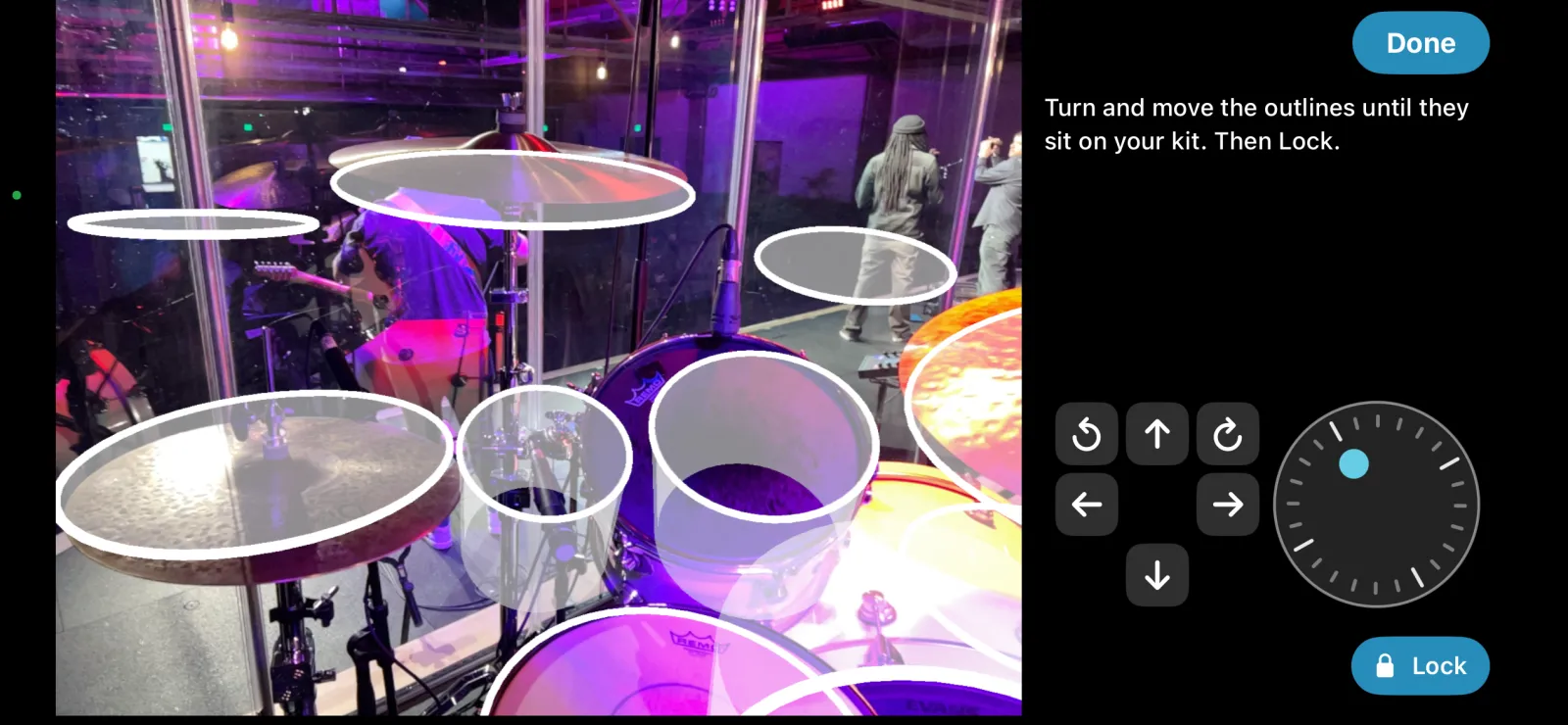
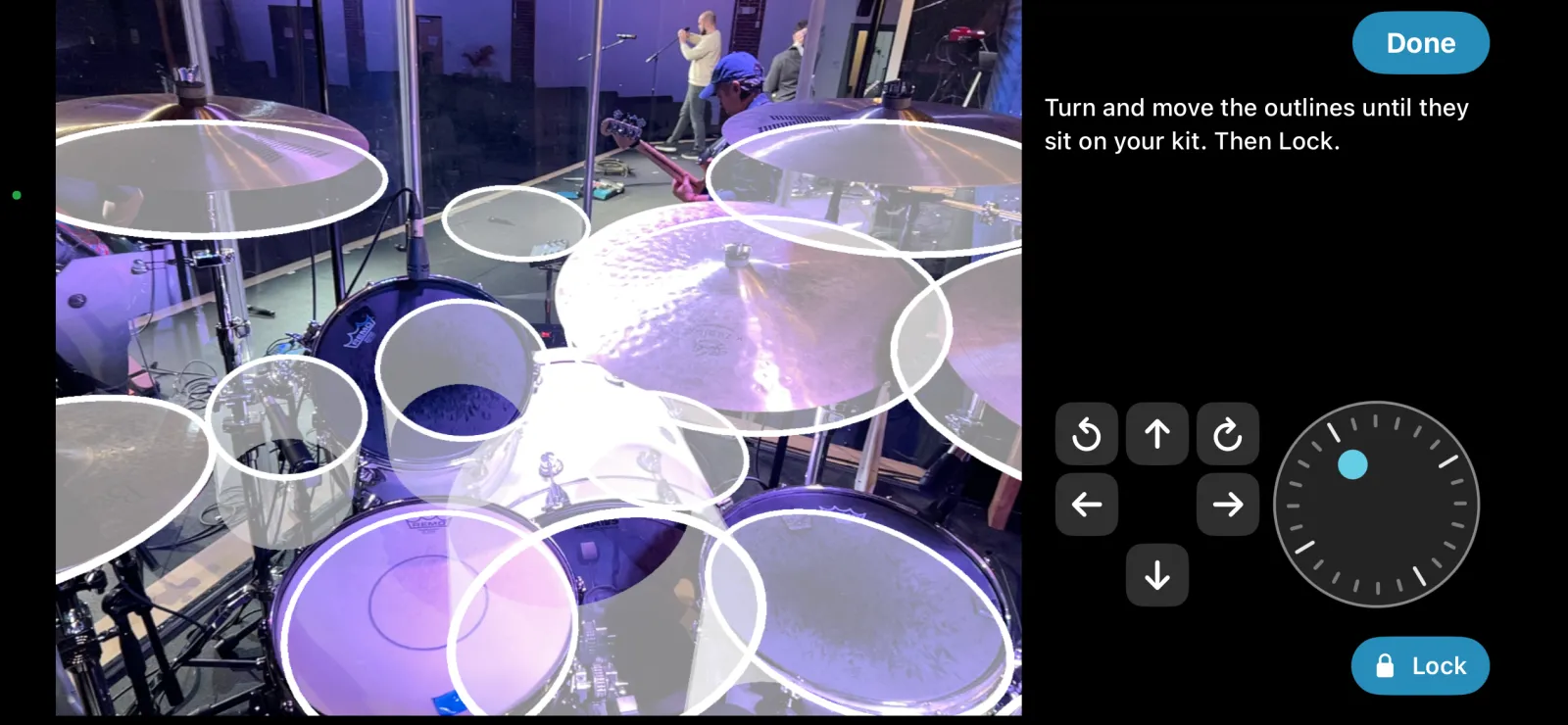
DrumShed’s Map your kit measures your kit at home with the phone’s camera: the height, position and angle of every drum and cymbal, in about five minutes. At the venue, View Kit Overlay draws your kit over their kit on the camera. Turn the outlines into place, then move each stand and tilt each piece until it sits in its outline.
Common questions
What is a backline drum kit?
A drum kit provided for a show rather than brought by the band: rented by the promoter, owned by the venue, or lent by the headliner and shared by every drummer on the bill. "Backline" covers the amps and drums at the back of the stage. A house kit is a backline kit the venue owns.
What do drummers bring to a backline gig?
Usually the breakables: sticks, a snare, cymbals, a bass drum pedal and sometimes a throne seat, plus a drum key and a hi-hat clutch. Check the rider or ask the venue what the kit includes.
How long should setting up a house kit take?
On a shared bill, often only the changeover between bands, which can be ten to fifteen minutes for everything. Set the throne, snare and pedals first so the most important pieces are right even if time runs out.
Can I move the house kit’s stands?
Usually yes, but ask the stage manager or the drummer whose kit it is first, and put it back the way you found it if they ask you to. A photo of how it stood before you touched it helps.
How do I remember my exact drum setup?
Measure it: the throne and snare height, and where each piece sits from the snare. Or map it once with DrumShed and pull the map up as an overlay on the kit in front of you.