Drum memory locks. And the kits they can’t reach.
Memory locks keep your stands at the height you set. Here’s how they work, how to set them up, the size to buy, and what to do on a kit that isn’t yours.
What a memory lock is
A memory lock is a small clamp that sits on a stand’s tube, a tom arm or a rack bar, right against the joint. Set the piece where you like it, slide the lock up against the joint and tighten it. Next time you set up, the tube drops back to the same spot and stops there.
Many kits come with a few, often on the tom arms and stands. You can add more to any tube they fit, and racks use them at their clamps.
Setting them up
Do it once, at home, with the kit exactly where you play it.
- Set the throne first, then each piece, until the whole kit feels right.
- Slide a lock onto each tube or bar you want to keep, up against the joint.
- Tighten it with a drum key. On a rack, set one on each side of a clamp that tends to slide.
- Leave the locks on when you pack up. Loosen the joint, not the lock.
Buy the right size
Memory locks are made for a tube or bar diameter, and brands use different ones. Racks mostly use 1.5 inch bars; stand tubes and tom arms vary by brand and model. Measure the tube, or check the hardware’s spec sheet, before you buy.
Where memory locks fall short
They hold a height and sometimes an angle, but only on the joint they’re clamped to. Cymbal tilters and many ball joints have nowhere to put one, so the angle of each cymbal still comes back by eye.
And they only work on your own hardware. At a gig with a backline or house kit, your memory locks are at home on your stands. That kit was set up for somebody else.
Memory locks for any kit
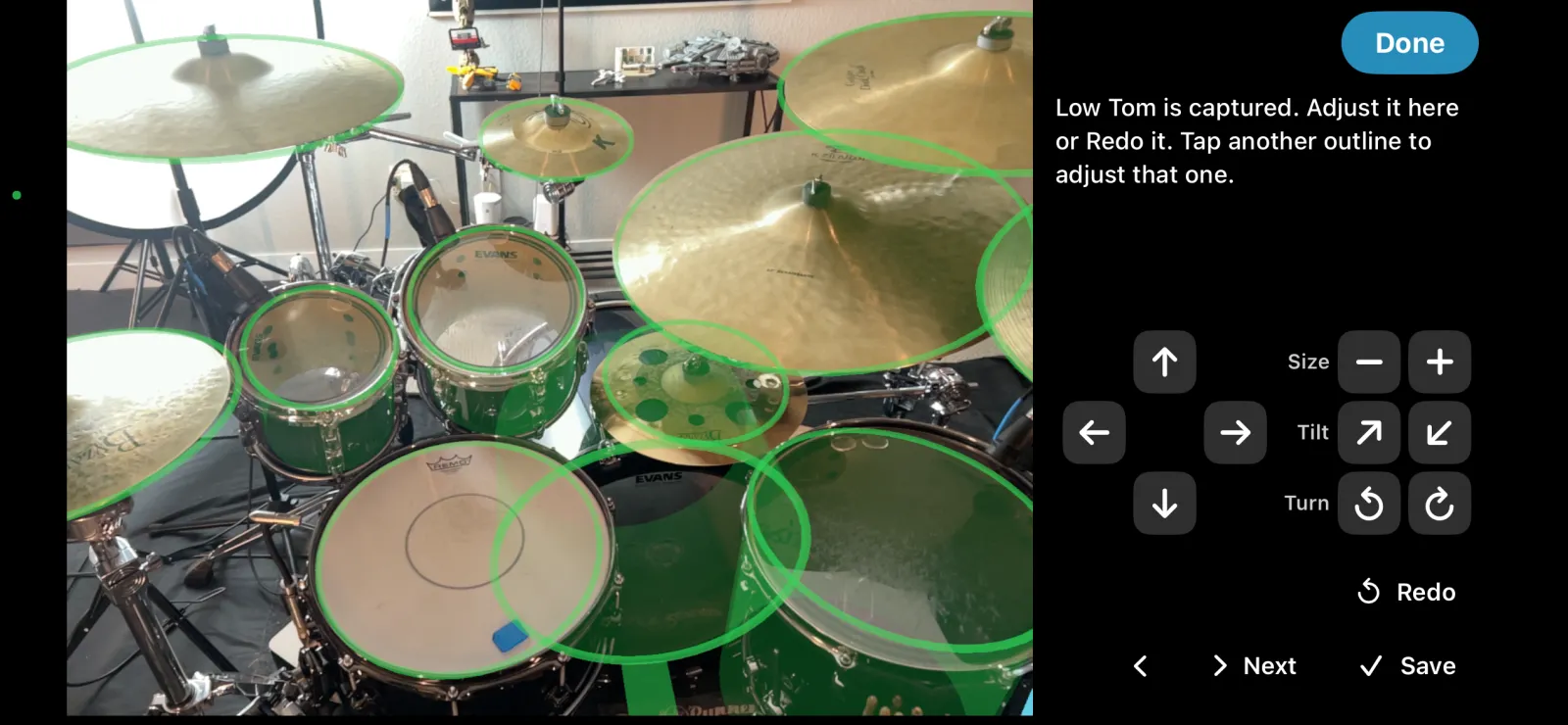
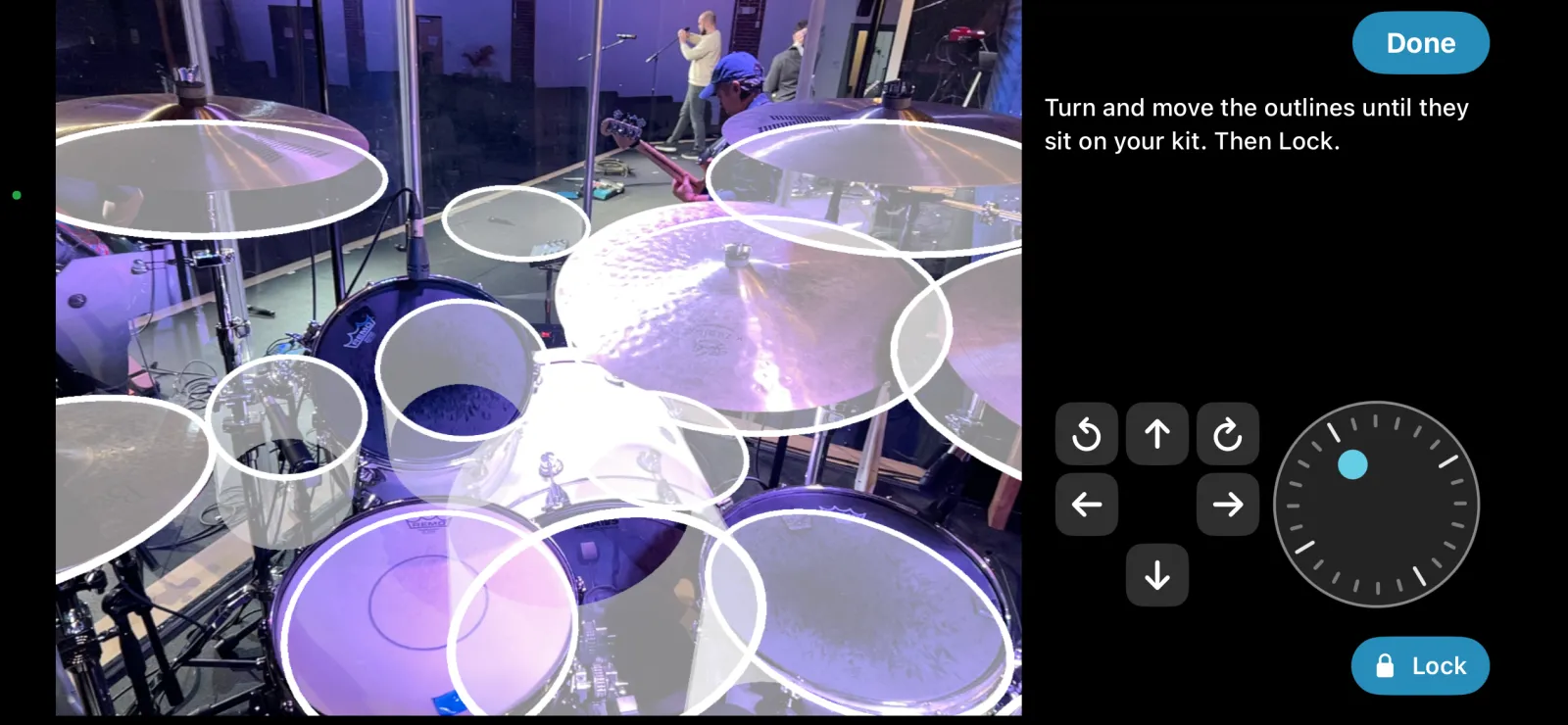
DrumShed’s Map your kit is the part memory locks can’t do. Map your kit with your phone’s camera in about five minutes: the height, position and angle of every drum and cymbal. On a house kit, View Kit Overlay draws your kit over theirs, and you move each stand and tilt each piece until it sits in its outline.
Common questions
What are memory locks on drums?
Small clamps that sit against a joint on a stand, a tom arm or a rack bar, so the piece goes back to the same height every time you set up.
Do memory locks fit all drum hardware?
No. Each lock is made for a tube or bar diameter, and brands use different sizes. Measure the tube or check the hardware’s specs before buying.
Do memory locks keep cymbal angles?
Mostly not. A cymbal tilter usually has nowhere to put one, so the angle has to be set by eye or by a mark. Map your kit in DrumShed records each cymbal’s angle along with its height and position.
Can I use my memory locks on a house kit?
Only if you bring your own stands. Memory locks stay on the hardware they’re clamped to. On a backline or house kit, a kit map on your phone does the same job.